
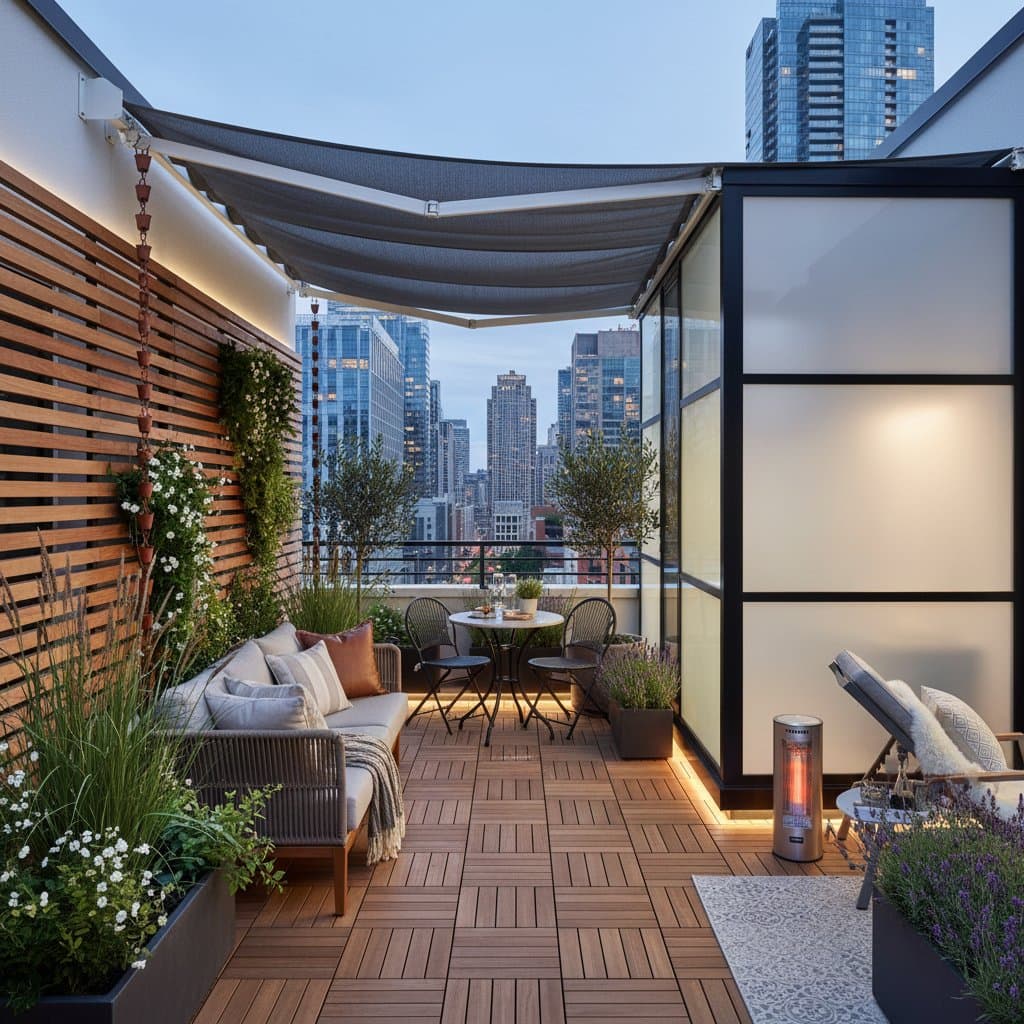
Crafting Cozy Microclimates for Your Urban Balcony
City balconies often face challenging conditions, such as strong winds in spring or intense heat in summer. These compact spaces may feature both drafty areas and overly sunny sections. The solution lies in designing microclimate zones that enable year-round enjoyment. Through strategic use of materials and placement, individuals can regulate temperature, airflow, and light exposure effectively.
This guide defines microclimate zones, outlines balcony-specific creation methods, and details seasonal adjustments. Readers gain insights into employing plants, screens, and surfaces to enhance comfort, all without requiring extensive renovations.
Understanding Microclimates on Balconies
A microclimate refers to a localized area with distinct temperature, wind, and humidity levels compared to its broader environment. Balcony elements like walls, railings, and furnishings naturally generate these variations. For instance, a shaded nook might maintain temperatures ten degrees lower than an exposed edge.
By mapping these inherent differences, one transforms the balcony into multiple inviting areas suited to seasonal needs. Common microclimate types on balconies include:
- Warm zones adjacent to solid walls or heat-retaining dark floors.
- Cool zones positioned near open railings that permit breeze circulation.
- Sheltered zones protected by glass panels or screens that reduce wind velocity.
Identification of existing patterns serves as the foundation for targeted enhancements.
Essential Tools and Materials
Significant alterations prove unnecessary for microclimate development. Assemble these accessible supplies:
- Wind barriers such as transparent acrylic sheets, bamboo fencing, or elevated planters.
- Shade providers including exterior curtains, freestanding umbrellas, or adjustable awnings.
- Thermal regulators like dark ceramic tiles, weather-resistant rugs, or composite wood decking.
- Vegetative elements comprising tall potted trees, intermediate shrubs, and cascading vines.
- Seating enhancers such as weatherproof cushions, lightweight blankets, compact heaters, or oscillating fans.
Allocate a budget of 150 to 400 dollars for initial improvements on a modest balcony. Begin with a single zone to evaluate effectiveness before expanding.
Step-by-Step Implementation
Step 1: Assess Existing Conditions
Observe the balcony across various times of day. Record sensations of wind, intense light, or cold drafts. Sketch a basic diagram to highlight these zones, guiding subsequent barrier or shade placements.
Step 2: Mitigate Wind Through Layering
Position tall vegetation or screens along the prevailing wind direction. Barriers that obstruct 50 to 60 percent of airflow diminish gusts while avoiding disruptive eddies. Maintain a minimum six-inch gap between screens and railings to facilitate even air distribution.
Safety Consideration: Secure all screens and planters using mounting brackets or weighted bases to eliminate tipping risks.
Step 3: Retain Heat in Seating Areas
Incorporate darker floor coverings or rugs proximate to lounging spots. These materials capture solar energy and release it gradually into the evening. Supplement with a compact outdoor heater or radiant lamp during colder periods.
Safety Consideration: Position heaters at least three feet from combustible fabrics or foliage.
Step 4: Introduce Adjustable Shade
Deploy an umbrella or retractable canopy above the most sun-exposed section. Such movable options allow precise light management without perpetual dimming. Select pale fabrics that reflect rather than absorb thermal energy.
Step 5: Incorporate Plants for Humidity Balance
Cluster three to five mid-sized containers with broad-leafed varieties. These contribute evaporative cooling and visual screening. Opt for resilient options like bamboo, boxwood, or ferns adapted to breezy conditions.
Step 6: Adapt Zones for Seasonal Changes
Reposition furniture and floor coverings biannually. Direct seating toward sun-warmed walls in winter and shaded retreats in summer. This routine adjustment sustains optimal comfort with minimal effort.
Essential Safety Guidelines
- Ensure planters and rugs do not obstruct drainage openings.
- Employ cords rated for exterior use with any electrical devices like heaters or illumination.
- Verify railings retain accessibility and structural integrity post-installation of screens.
- Evaluate airflow in each zone prior to igniting open flames or activating heating elements.
Common Challenges and Solutions
Persistent Wind Issues: Install a secondary screen angled slightly to guide rather than fully block airflow.
Excessive Glare: Suspend lightweight, translucent curtains to soften light intensity while preserving outward views.
Plant Dehydration: Integrate self-irrigating reservoirs or cluster containers to foster mutual moisture retention.
Temperature Inconsistencies: Combine surface types; stone remains cool, while wood retains warmth. Relocate rugs or cushions to fine-tune as needed.
Cost and Timeline Estimates
Assemble a foundational two-zone configuration over a single weekend. Anticipate expenditures as follows:
- 50 to 100 dollars for screens or protective panels.
- 40 to 80 dollars for planters and growing medium.
- 60 to 150 dollars for rugs, cushions, or auxiliary heaters.
Professional assistance for installing screens or awnings may add 100 to 200 dollars in labor costs.
Sustaining Year-Round Enjoyment
Inspect vegetation monthly for vitality and cleanse screens using gentle detergent solutions. Alternate cushion and rug positions biweekly to avert color degradation. Apply sealant to wooden surfaces annually to guard against water damage.
Building Your Ideal Balcony Retreat
Initiate with a single area to establish a welcoming microclimate. Spend time there, assess performance, and refine elements. Gradually incorporate additional plants or barriers informed by observations of local wind and illumination patterns.