
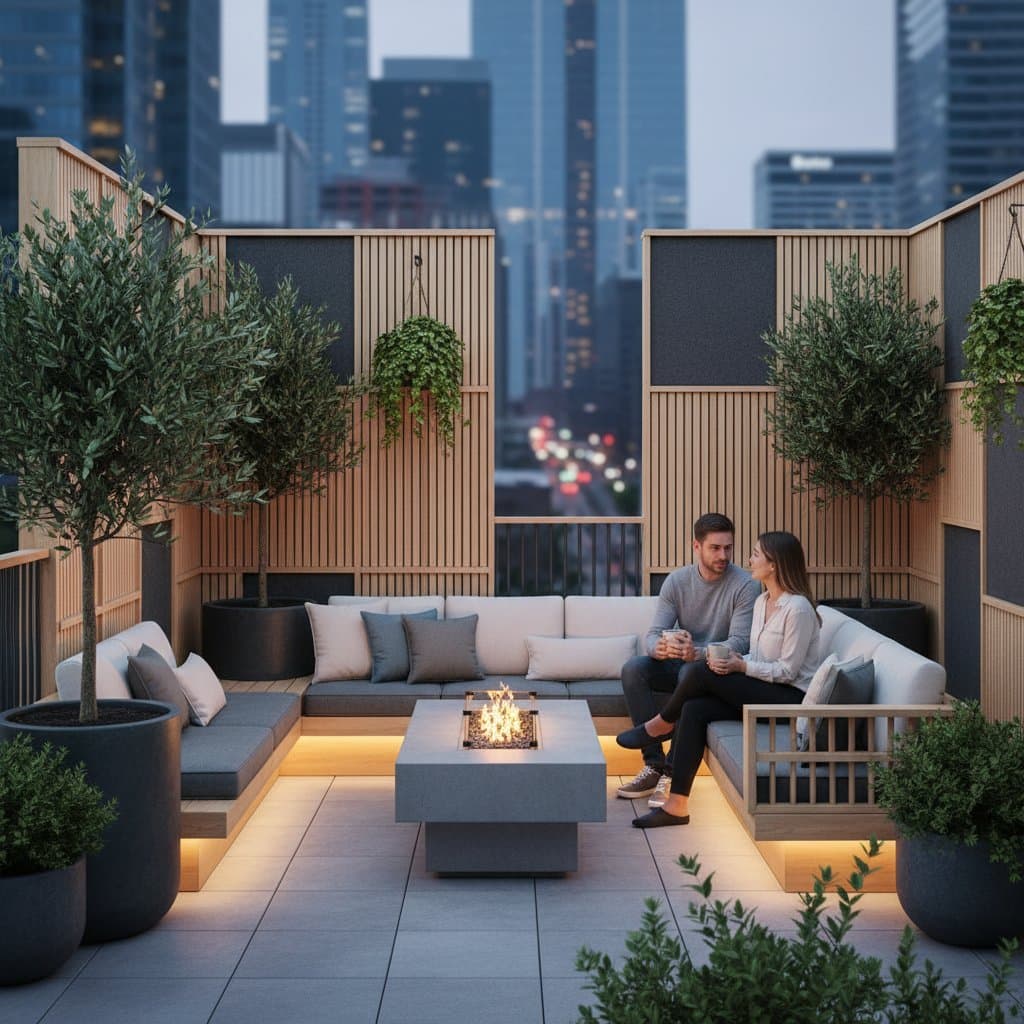
Acoustic Panels Reduce Deck Noise on Urban Decks
Your deck should serve as a calm outdoor space rather than an echo chamber filled with traffic sounds or nearby voices. Many city decks encounter this issue when sound reflects off hard surfaces such as walls, floors, and railings. Outdoor acoustic panels address the problem by absorbing sound waves and lowering overall noise levels.
This guide covers how these panels function in exterior settings along with practical steps for selection, placement, and installation. Readers will find details on suitable materials, safety practices, and long term care.
Required Tools and Materials
Basic equipment suffices for most installations. Gather these items before beginning work.
- Tape measure
- Level
- Drill or driver
- Screw anchors or masonry screws
- Utility knife
- Stable ladder
Select outdoor rated panels that measure 1 to 2 inches thick. Additional supplies include mounting brackets or Z clips, silicone sealant, and rust resistant screws. Four to six panels sized 24 by 48 inches typically cover a main seating area of 48 to 72 square feet.
Safety Practices
Follow these precautions to protect yourself and the installation.
- Wear gloves when handling mineral fiber or fiberglass panels because fibers may irritate skin.
- Position ladders on flat ground and have an assistant secure the base during drilling.
- Locate and avoid hidden electrical lines before inserting screws into walls.
- Apply sealant to all edges to prevent water intrusion that could damage panel cores.
- Maintain at least 2 inches of clearance around vents or fan outlets.
Cost and Time Estimates
A modest project remains affordable. Budget for the following items.
- Panels: 4 to 6 units at 60 to 100 dollars each
- Mounting hardware: 25 to 40 dollars
- Sealant and anchors: 15 to 30 dollars
Total expenditure usually falls between 275 and 650 dollars. Two people can complete the work in 3 to 5 hours. Factory finished panels cost more yet eliminate painting steps, while do it yourself fabric covers reduce expenses by 20 to 30 percent.
Seasonal Storage Solutions
Compact city dwellings require thoughtful storage plans. Consider these approaches.
- Install vertical racks by mounting a plywood board in a garage or closet and adding hooks for upright hanging.
- Construct deck benches that incorporate 12 inch deep bins lined with plastic sheeting.
- Hang panels on heavy duty wall hooks positioned behind curtains or screens.
Mark each panel location with painter tape to speed up reinstallation.
Situations That Require Professional Help
Most homeowners manage installation independently. Seek expert assistance when the following conditions apply.
- Drilling into brick walls above 10 feet in height.
- Integration of outdoor speakers or lighting near panel locations.
- Evidence of water seepage behind existing mounts.
During a consultation, request recommendations on material thickness for local climate conditions, edge sealing methods, and removable hardware options. A brief visit often costs less than 150 dollars and avoids future repairs.
Placement and Performance Strategies
Combine wall panels with soft furnishings such as rugs or curtains to increase coverage. Address sound reflections from glass railings and metal furniture by adding fabric wraps or cushions. Begin with two panels and measure results before expanding coverage. Dark colors conceal dirt yet absorb heat, while lighter shades remain cooler but reveal stains more readily. Smartphone sound meter applications help confirm a reduction of 3 to 5 decibels after installation.
Maintaining Long Term Performance
Inspect panels each season for sealant wear or moisture damage. Clean surfaces with a soft brush and mild detergent. Reapply weatherproofing as needed to preserve acoustic properties and appearance throughout the year.