
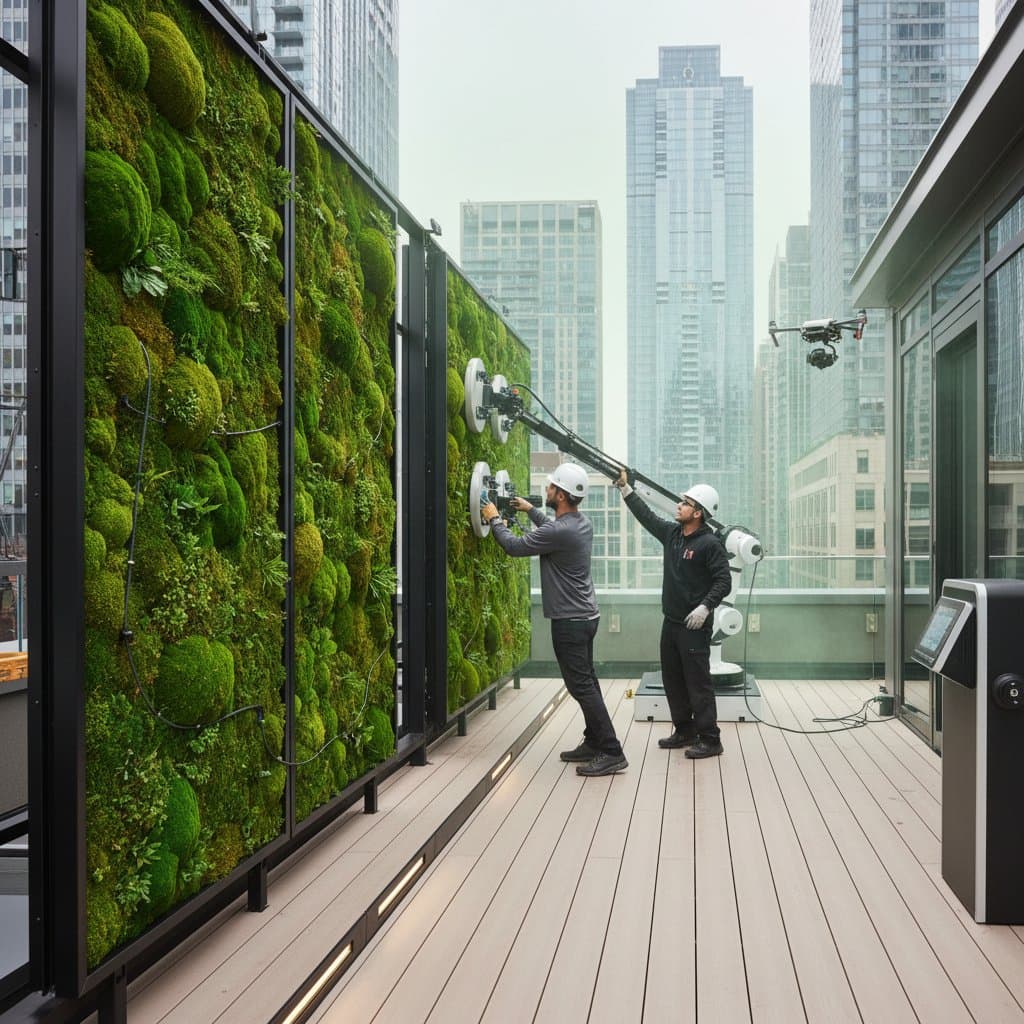
Preparation: Measure and Plan
Outline the intended area for the moss wall using masking tape on the surface. Maintain a minimum clearance of two inches between the panel base and the deck floor to promote adequate airflow and prevent moisture accumulation.
Evaluate the structural capacity of the wall or railing. Living moss panels may weigh eight to ten pounds per square foot when saturated, equivalent to 39 to 49 kilograms per square meter. Preserved moss panels impose a lighter load, approximately two pounds per square meter, or nine kilograms per square meter.
Safety Consideration: Refrain from attaching substantial panels to slender railings unless reinforced with supplementary anchors to distribute weight evenly.
Assembly: Construct or Acquire Panels
Acquire pre-fabricated moss panels or assemble custom ones. For custom builds, trim waterproof backing material to the designated dimensions. Secure mesh or landscape fabric over the backing with staples positioned at intervals of three inches.
When incorporating living moss, apply a slender layer of sphagnum or coconut fiber between the backing and mesh. Firmly press moss segments into the damp substrate to ensure adhesion. For preserved moss, apply low-volatile organic compound adhesive to affix clusters, achieving complete coverage through consistent pressure.
Allow assembled panels to lie flat for 24 hours. This period facilitates bonding and stabilization prior to installation.
Installation: Secure the Panels
Select mounting rails or screws compatible with the deck material. On wooden surfaces, drill pilot holes to avoid splintering. For brick or concrete, employ masonry anchors for firm attachment. Position panels in aligned rows, ensuring seams do not exceed one-quarter inch in width.
Verify stability by applying gentle upward pressure to the top edge of each panel. Movement should not surpass a minimal fraction of an inch.
Safety Consideration: Engage an assistant to support panels during placement, particularly for elevated installations, to minimize risk of falls or misalignment.
Initial Care: Mist and Stabilize
Upon mounting, apply a fine mist to living moss until evenly moistened; the texture should yield springily without excess saturation. For preserved moss, a light misting clears surface dust and revitalizes appearance.
Steer clear of high-pressure hose application, as it may displace moss fragments or flood the substrate.
Enhancements: Incorporate Framing and Lighting
Install wood or metal framing around panel edges to provide a tidy finish and shield against wind displacement. Fasten frame elements with corrosion-resistant screws along the perimeter.
Integrate low-voltage LED lighting to accentuate moss contours during evening hours. Position fixtures at least two inches from the moss surface to dissipate any generated heat effectively.
Essential Safety Guidelines
- Load Assessment: Confirm that the deck framework accommodates additional weight; standard decks typically support 40 pounds per square meter, or 195 kilograms per square meter, sufficient for most moss installations.
- Moisture Management: Prevent prolonged exposure to water; pooled moisture risks detaching the backing or fostering mold growth.
- Electrical Precautions: Maintain dryness around lighting and wiring; utilize only fixtures rated for outdoor conditions.
- Tool Handling: Wear protective eyewear during drilling or cutting operations to safeguard against debris.
- Ladder Use: Secure a spotter at the base when accessing elevated areas to ensure stability.
Common Issues and Solutions
Discoloration to Brown: Excessive direct sunlight or insufficient hydration often causes this. Adjust exposure to shade or administer gentle misting every few days until vibrancy returns.
Detachment of Moss: Inadequate adhesion or gusty winds may contribute. Clean the substrate, reapply adhesive, and repress the moss securely; consider adding a protective mesh layer for reinforcement.
Mildew Development: Restricted ventilation or over-misting promotes growth. Remove impacted sections, allow thorough drying, and enhance air circulation around the panels.
Irregular Expansion: In living moss setups, uneven light distribution leads to this. Rotate panels periodically, every few weeks, to promote uniform development.
Frame Distortion: Humidity can cause wooden frames to expand. Opt for pre-sealed or composite materials to maintain structural integrity over time.
Cost and Timeline Estimates
Project Expenses:
- Living moss panels range from $20 to $35 per square foot.
- Preserved moss panels cost $15 to $25 per square foot.
- Backing materials and hardware total $50 to $100 for a moderate-sized installation.
- Supplementary lighting adds $60 to $120.
For a compact 24-square-foot deck wall, expect expenditures of $400 to $800, varying by selected components.
Duration:
- Panel construction requires two to three hours.
- Installation and final touches take an additional two hours.
- Complete the project in one afternoon with two participants.
To optimize costs, repurpose available wood scraps for backing and select preserved moss, which eliminates the need for irrigation and reduces long-term expenses.
Ongoing Maintenance Practices
Moss walls demand minimal intervention, yet routine checks preserve their appeal.
Monthly Routines:
- Apply a light mist to dispel dust accumulation.
- Inspect edges and fasteners for security.
- Clean adjacent light fixtures to avoid residue transfer.
Seasonal Upkeep:
- Clear debris such as fallen leaves.
- Examine backing for dampness retention.
- Reapply sealant to any visible wood surfaces.
Preserved moss benefits from sporadic dusting alone. Living moss thrives with occasional misting in shaded conditions; address arid spots promptly with even hydration until suppleness returns.
Guidance: Eschew harsh chemicals; employ water or a diluted vinegar solution to eliminate residues without compromising moss integrity.
Versatile Applications for Storage and Privacy
Extend moss principles to horizontal configurations for functional storage or screening.
Adaptations for Compact Decks:
- Install slim moss accents between shelving units to serve as natural partitions.
- Position a moss panel behind organizational hooks or racks to dampen ambient noise.
- Apply preserved moss to cabinet fronts for a humidity-resistant, organic aesthetic.
Such integrations minimize visual disorder and foster tranquility. The inherent sound-absorbing qualities of moss enhance serene outdoor dining experiences.
Seasonal Protection Strategies
Urban decks endure varying weather challenges including heat, winds, and freezes. Perform targeted inspections to safeguard the installation.
Spring Protocols:
- Assess panels for winter-induced damage.
- Gently brush and mist to refresh.
- Secure any loosened framing components.
Summer Measures:
- Provide shade for living moss during peak sun hours.
- Mist early in the day for optimal absorption.
- Ensure unobstructed airflow behind the panels.
Fall Procedures:
- Promptly remove leaf litter to avert moisture trapping.
- Refresh protective sealants on frames.
- Diminish misting frequency amid rising humidity.
Winter Safeguards:
- Encase living moss in permeable fabric if temperatures fall below freezing.
- For preserved moss, expose to elements but perform light dusting to counter dirt accumulation.
Professional Assistance Indicators
Seek expert intervention if panels exhibit separation or if dark staining appears behind the backing, signaling potential drainage issues. A qualified deck specialist can evaluate and remedy anchoring or moisture problems.
Consult a licensed electrician for lighting setups involving concealed wiring or outlet integration to verify compliance and incorporate features like timers.
Engage a vertical garden specialist for expansive walls exceeding eight feet in height. Professionals can integrate automated irrigation for moisture-dependent living systems.
Implementation Guide
Commence with a modest scale. Install a single two-foot panel to observe moss performance under site-specific light and humidity conditions. This trial informs subsequent expansions.
Follow this sequence:
- Identify a wall segment receiving predominantly bright, indirect light.
- Secure one preserved moss panel to evaluate color persistence.
- Introduce a living moss panel in proximity and monitor hydration requirements.
After several weeks of observation, determine the optimal moss variety for the environment. Proceed to construct additional panels or a comprehensive privacy barrier.
Core Benefits: Moss retains hydration within its form, sustaining greenery absent roots or soil. Proper anchoring withstands breezes while capturing airborne particles for cleaner air.