
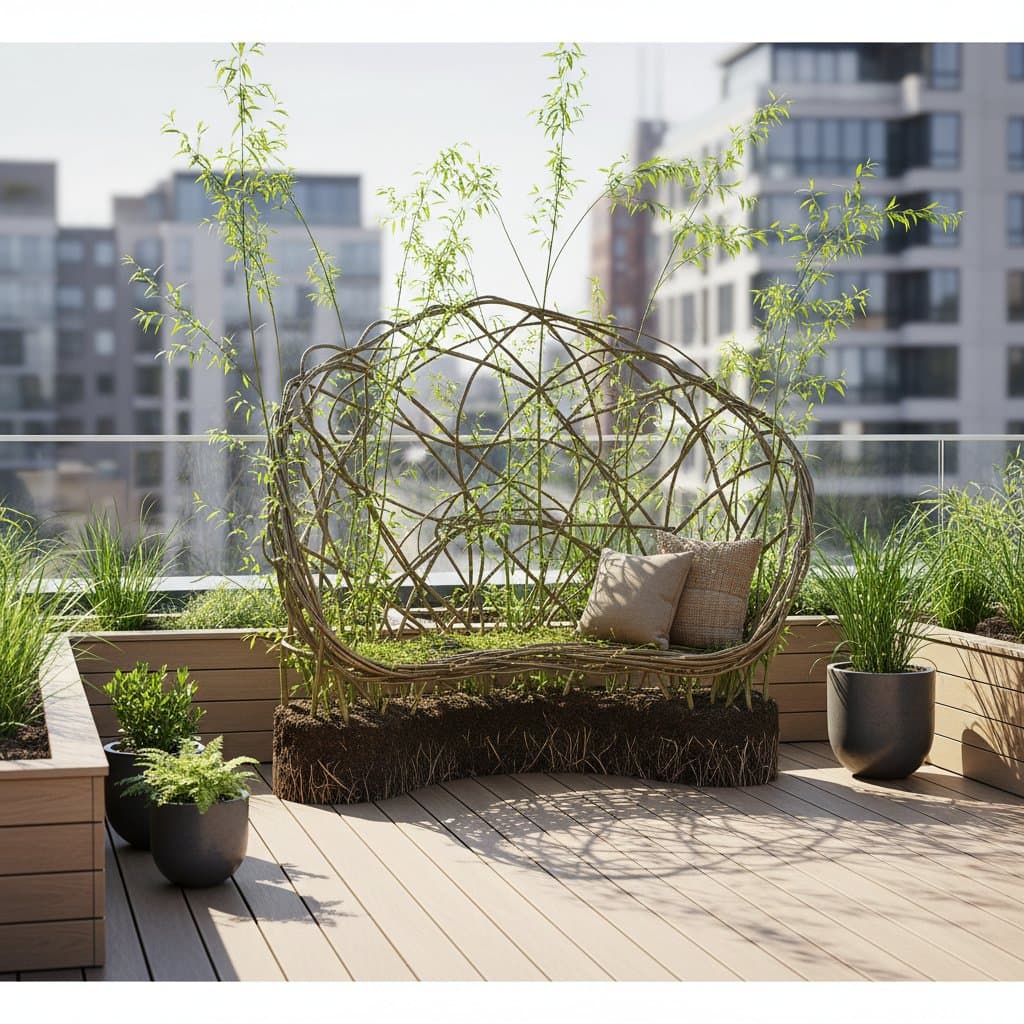
Living Willow Benches Root and Grow Right on Your Deck
A living willow bench brings greenery, shade, and natural seating to any deck. The structure starts as a simple frame and planter setup. Over time the willow rods root and sprout, creating a self-sustaining feature that improves with each season.
Materials and Cost Breakdown
Expect to spend between 240 and 310 dollars for a complete two-seat bench. Willow rods account for most of the expense at 130 to 200 dollars. A basic wood frame and hardware cost about 50 dollars. Sealant and plant ties add another 20 dollars.
Construction takes one weekend. The willow typically produces new shoots and leaves within four to six weeks after planting.
Building the Frame and Planters
Select two large, sturdy planters with good drainage holes. Position them at the desired distance for the bench length. Build a simple seat frame from pressure-treated lumber and attach it securely to the tops of the planters.
Apply a waterproof sealant to all wooden surfaces. This step protects the frame from moisture and extends its life. Once the frame is stable, you are ready to add the willow rods.
Planting and Weaving the Willow
Fill the planters with compost-rich soil. Insert 60 to 80 fresh, unrooted willow rods around the perimeter of each planter. Space the rods evenly so they can be woven together later.
Bend the longest rods over the seat frame to form the backrest and sides. Weave shorter rods horizontally through the uprights to create a lattice pattern. Tie intersections with soft plant ties and water thoroughly after planting.
Smart Storage and Seasonal Care
In cold climates or windy locations, add casters to the base of each planter. This allows easy movement to sheltered spots. Coir liners inside the containers help retain moisture during dry periods.
Group the planters near a wall during winter to reduce wind exposure. Wrap the base with burlap if frost threatens. The roots remain the most vulnerable part of the structure.
Space-Saving Options
A single-seat version works well in tight areas. Use 30 to 40 rods and a frame about 24 inches long. Follow the same planting and weaving steps with smaller planters.
When Professional Advice Is Useful
Consult a structural engineer or licensed carpenter if your deck sits above living space or shows drainage concerns. They can assess load capacity and recommend a drainage tray that protects the area below.
For larger living willow domes or arches, an arborist can guide rod spacing and pruning. Proper training keeps growth healthy rather than dense and weak.
Sourcing Quality Materials
Purchase willow rods from local nurseries or reputable online growers in spring or early summer. Choose species such as Salix viminalis or Salix purpurea. Confirm that the rods are fresh-cut and unrooted, because dried craft willow will not root.
Next Steps for Success
- Source your willow rods early in the growing season.
- Prepare the planters with quality soil and verify drainage.
- Set aside one weekend for assembly and initial weaving.
New shoots will emerge from the joints within weeks. The structure thickens each year and provides cooler air in summer along with a gentle rustle in the wind. Building the bench combines practical design with the ongoing reward of working with living materials.