
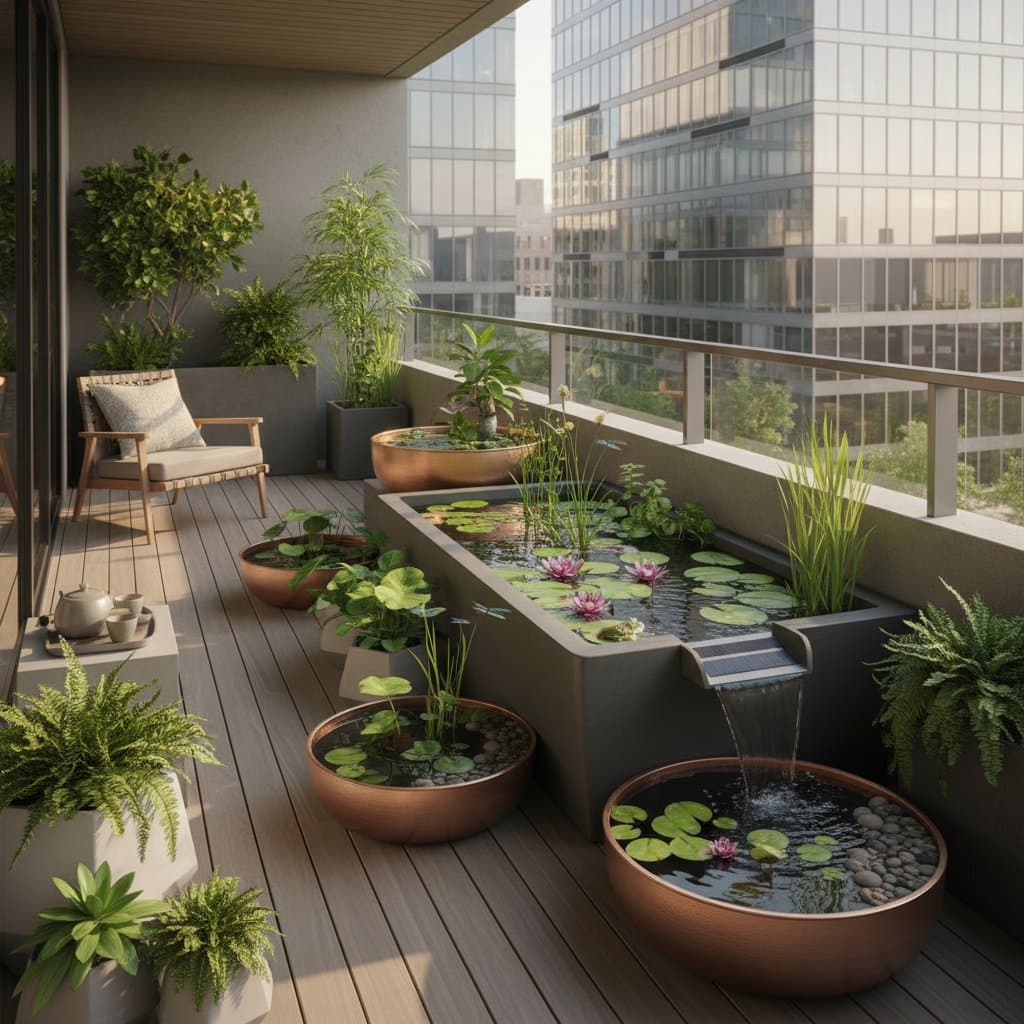
Introduction to Balcony Ponds
Urban living often means limited access to nature, yet balconies offer untapped potential for creating personal sanctuaries. A balcony pond serves as a compact water feature that introduces tranquility, cools surrounding air through evaporation, and fosters a miniature ecosystem. These setups require minimal space and effort while delivering substantial benefits, such as reduced stress and enhanced biodiversity in concrete environments.
Professionals in urban gardening recommend starting small to ensure success. Suitable for apartments or high-rises, balcony ponds utilize weatherproof containers and native aquatic plants. The result is a self-sustaining feature that evolves into a focal point for relaxation and observation.
Benefits of a Balcony Pond
Beyond aesthetics, these ponds contribute to environmental harmony. They attract pollinators like bees and butterflies, providing essential water sources in arid cityscapes. The gentle water movement generates soothing sounds that mask urban noise, promoting mental well-being.
In terms of functionality, ponds regulate microclimates by lowering temperatures on hot days. Studies from urban ecology experts highlight how such features support wildlife corridors in densely populated areas. For residents, the pond becomes a daily ritual of care that connects them to natural cycles.
Materials Needed
Gather essential items before beginning. Select a sturdy, watertight container such as a ceramic planter, plastic tub, or halved whiskey barrel, ensuring it holds at least five gallons to maintain stability. Other necessities include aquatic soil or gravel substrate, a selection of water plants, a small pump for circulation, and dechlorinator for tap water.
Budget-conscious options abound at local nurseries or online suppliers. Prioritize non-toxic materials to safeguard any fish or invertebrates added later. Tools like a trowel and net simplify the process.
Step-by-Step Construction
1. Select and Prepare the Container
Choose a location on your balcony that receives partial sun, ideally four to six hours daily, to support plant growth without excessive algae. Secure the container firmly to prevent tipping from wind or accidental bumps. Clean the vessel thoroughly with mild soap and rinse well to eliminate residues.
Elevate the container slightly using bricks or pot feet for better drainage and access. Line the bottom with landscape fabric if using a porous material to retain soil while allowing water flow.
2. Add Substrate
Fill the bottom one-third with aquatic planting medium, such as heavy clay-based soil or pea gravel mixed with compost. This layer anchors plants and filters water naturally. Avoid standard potting soil, which floats and clouds the water.
Press the substrate firmly to create a stable base. For deeper containers, layer gravel at the bottom for drainage, followed by soil for planting zones. This setup mimics natural pond beds and promotes healthy root development.
3. Plant Aquatic Species
Select hardy, low-maintenance plants suited to small spaces. Oxygenators like hornwort or anacharis release nutrients into the water, while floaters such as water lettuce provide shade and cover. Marginal plants, including dwarf cattails or pickerelweed, add vertical interest along edges.
Plant oxygenators directly into the substrate, spacing them evenly. Position marginals around the perimeter and float surface plants loosely. These choices thrive in urban conditions and require little intervention once established.
4. Fill with Water
Pour water slowly into the container to minimize soil disturbance. Maintain approximately two inches of headspace from the top to accommodate evaporation and plant growth. If utilizing tap water, allow it to stand uncovered for 24 hours to dissipate chlorine, which can harm aquatic life.
Use rainwater when possible for its natural minerals, or treat tap water with a commercial dechlorinator. Fill gradually over several hours if adding to an established setup, observing for leaks or shifts in the substrate.
5. Introduce Motion and Inhabitants
Install a compact submersible pump or air stone connected to an airstone to circulate water and prevent stagnation. Position the pump near the bottom for optimal flow. This equipment runs on low voltage and consumes minimal energy.
Enhance the ecosystem with natural cleaners like snails or gambusia fish, which consume algae and larvae. Limit to one or two small fish per five gallons to avoid overcrowding. Monitor introductions carefully to ensure compatibility with your pond's scale.
6. Decorate and Observe
Incorporate elements like smooth stones, driftwood, or a modest solar-powered fountain for visual and textural appeal. These additions create habitats for insects and birds without overwhelming the space.
Position seating nearby to appreciate the evolving scene. Over time, the pond attracts pollinators, dragonflies, and avian visitors seeking hydration, turning your balcony into a lively observation post.
Ongoing Maintenance
Once balanced, a balcony pond demands little attention, as plants perform much of the filtration. Perform weekly inspections of water levels and clarity to catch issues early.
Monthly Responsibilities:
- Skim surface debris or fallen leaves using a fine-mesh net.
- Prune wilted foliage to inhibit decay and maintain tidiness.
- Replenish evaporated water, treating it as needed.
- Rinse the pump's filter under gentle water flow every two to three weeks.
Seasonal Adjustments:
- Relocate sensitive tropical plants indoors during winter to protect from frost.
- Provide afternoon shade via umbrellas or screens in summer to curb algal blooms.
- For fish-keeping, employ a submersible heater to prevent complete freezing in cold snaps.
Steer clear of chemical treatments, which disrupt beneficial bacteria. Instead, introduce nutrient-absorbing plants like water hyacinth to sustain clarity naturally.
Common Issues and Solutions
Algal Discoloration: Excess sunlight fuels green water. Introduce additional floating vegetation to intercept light, and replace one-third of the volume weekly until transparency returns.
Insect Breeding: Stagnant conditions invite mosquitoes. Maintain circulation with pumps, and add predator fish to eliminate larvae effectively.
Unpleasant Odors: Decaying organic matter or excess feeding causes smells. Scoop out visible waste and perform a partial water change to restore freshness.
Container Leaks: Inspect joints and bases periodically. Seal minor fissures in plastic with aquarium-grade silicone, allowing full curing before refilling.
Temperature Extremes: Direct sun can overheat water in peak summer. Relocate to shadier spots or add frozen water bottles periodically for cooling.
Cost and Time Investment
Assembly requires roughly two hours, encompassing site preparation and planting. Initial expenses range from 60 to 150 dollars, covering the container, vegetation, and circulation device. Ongoing costs remain modest at about 10 dollars seasonally for supplements like dechlorinators or spare plants.
For expanded designs, repurpose items like oak barrels or resin liners, keeping totals under 200 dollars. Larger setups offer greater capacity for wildlife but follow the same principles of simplicity.
Building Your Balcony Pond
Begin by assessing available space and sketching a layout. Source materials from nearby garden centers, focusing on native species for resilience. Follow the steps methodically, then allow one to two weeks for the ecosystem to stabilize.
Regular interaction fosters a deeper connection to this urban retreat. As your pond matures, it not only beautifies the ledge but also enriches daily life with its quiet vitality.