
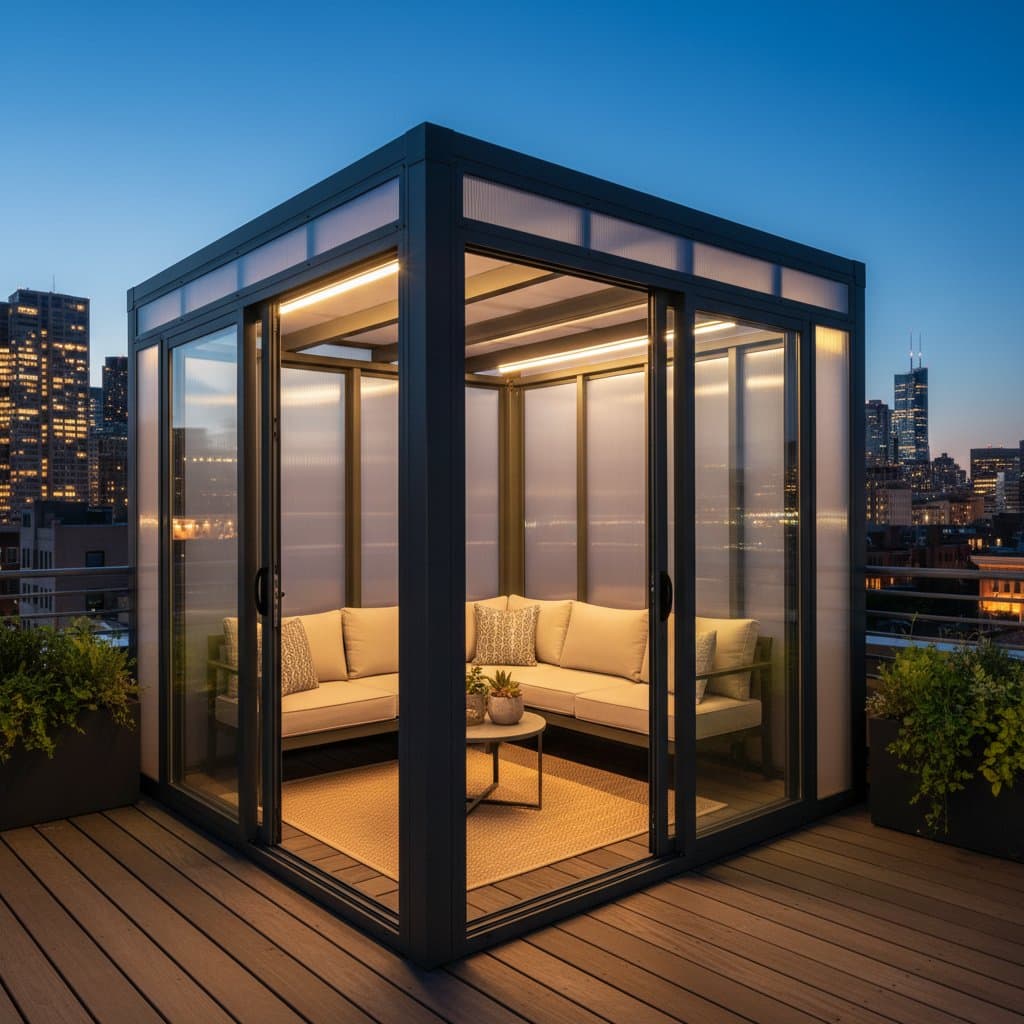
7. Install Side Panels or Screens
Secure the side panels or screens after confirming the roof structure remains stable. Opt for zippered panels that effectively shield against rain and wind while permitting natural light to filter through. Magnetic closures facilitate swift operation for frequent access. For enhanced privacy, select UV-resistant fabrics designed to block up to 90 percent of light transmission. Begin attachment at the corners, aligning edges precisely with the frame to prevent gaps that could allow moisture entry. Test each panel by gently tugging to ensure firm connections, which contribute to the overall integrity of the enclosure.
8. Incorporate Lighting and Furnishings
Install string LED rope lights along the upper beams to create ambient illumination for evening use. Position a compact bistro table or a modular sectional bench to define seating areas. Prioritize furniture featuring rust-resistant aluminum or powder-coated steel frames paired with quick-drying, mildew-resistant cushions. Calculate the total added weight to remain below 500 pounds on smaller decks, adhering to typical structural guidelines. Arrange items to optimize space flow, leaving pathways clear for movement. Consider solar-powered options for lighting to minimize wiring needs and enhance energy efficiency in outdoor settings.
Common Issues and Solutions
Address potential challenges promptly to maintain the pergola pod's performance and longevity.
Water accumulation on the roof surface:
Increase fabric tension through adjustment mechanisms or introduce a subtle one-inch elevation on one side to promote natural runoff. Regularly inspect during wet seasons to catch minor sags early.
Unsteady frame movement:
Double-check all anchor connections for secure fastening. Incorporate diagonal cross-bracing between posts if instability persists, a straightforward addition that bolsters rigidity. Budget-friendly corner L-brackets, available for less than ten dollars, provide extra reinforcement at key joints.
Emerging rust on metal components:
Remove affected areas with a wire brush, then apply matching touch-up paint or a protective clear sealant. Maintain a compact maintenance kit with these essentials nearby for immediate response to wear.
Sticking mechanisms on canopy tracks:
Apply a light coat of silicone-based lubricant to the rails for smooth gliding. Steer clear of oil-based alternatives, as they tend to accumulate dust and grime over time.
Ongoing Maintenance Practices
Implement a consistent routine to preserve the pergola pod's condition and extend its service life beyond initial expectations. Focus on preventive measures that address environmental exposures common to rooftop installations.
Monthly inspections:
Examine all bolts and fasteners for signs of loosening, tightening as required to uphold structural stability. Use a garden hose to rinse the roof canopy and surrounding surfaces, clearing away accumulated debris like leaves or pollen that could trap moisture.
Quarterly deep cleans:
Wipe down frame elements using a solution of mild soap and water, followed by thorough drying to prevent corrosion. Scrutinize fabric seams, panel connections, and zippers for early indications of fraying or degradation. Reapply silicone lubricant to moving parts to ensure operational ease.
Semiannual comprehensive reviews:
Clear the base around anchor points of dirt or salt buildup, particularly in coastal or urban environments. Address any paint chips with targeted touch-ups to protect exposed metal. Evaluate overall weight distribution, redistributing or relocating heavier furnishings if loads approach limits.
In anticipation of severe weather events, retract retractable fabric sections or detach removable panels for indoor storage. This precaution safeguards materials from high winds and heavy precipitation, reducing the risk of damage and associated repair costs.
Efficient Storage Strategies
Maximize the pergola pod's utility by integrating smart storage solutions that preserve accessibility and protect items from the elements. These approaches keep the space tidy and functional across seasons.
Position storage beneath built-in benches or table undersides to conceal cushions, spare lighting, and accessories. Select plastic bins equipped with airtight gasket seals to repel moisture and pests effectively. Affix labels to each container for effortless retrieval during use.
On limited deck areas, incorporate foldable chairs and stackable nesting tables that collapse compactly when idle. Shield these pieces within the pod using a fitted waterproof cover during inclement weather, preventing unnecessary exposure.
Mount a pegboard inside a sealed, weatherproof enclosure for organizing tools such as wrenches, spare bolts, and tension adjusters. This setup ensures quick access for minor adjustments, minimizing downtime and frustration.
Essential Insights
- Pergola pods deliver a fully enclosed, weather-resistant outdoor space at a cost below $3,000.
- Assembly typically completes in a single afternoon using standard household tools.
- Prioritize anchoring and sealing procedures to guarantee safety and long-term resilience.
- Consistent maintenance routines safeguard both the fabric elements and metal framework.
- Thoughtful storage and periodic evaluations prepare the installation for continuous seasonal performance.
Steps to Launch Your Project
Commence by accurately measuring the available rooftop area and consulting local building regulations for compliance. Upon obtaining necessary approvals, select a pergola pod model suited to your dimensions and load capacities, ensuring it includes essential anchors and weatherproofing sealants.
Schedule assembly for a dry, calm day to facilitate safe handling. Enlist a helper for elevating and positioning beams to avoid strain or misalignment. Frequently employ a spirit level during construction and secure every bolt completely prior to proceeding to panel installation.
Following completion, simulate rainfall with a hose to verify waterproofing efficacy. Fine-tune the roof angle if water gathers in low spots. Integrate lighting fixtures and seating arrangements to cultivate an inviting atmosphere.
Diligent attention through monthly care transforms a simple deck into a resilient sanctuary. The investment remains economical, the setup process accessible, and the resulting benefit encompasses reliable comfort overlooking urban vistas in all weather conditions.