
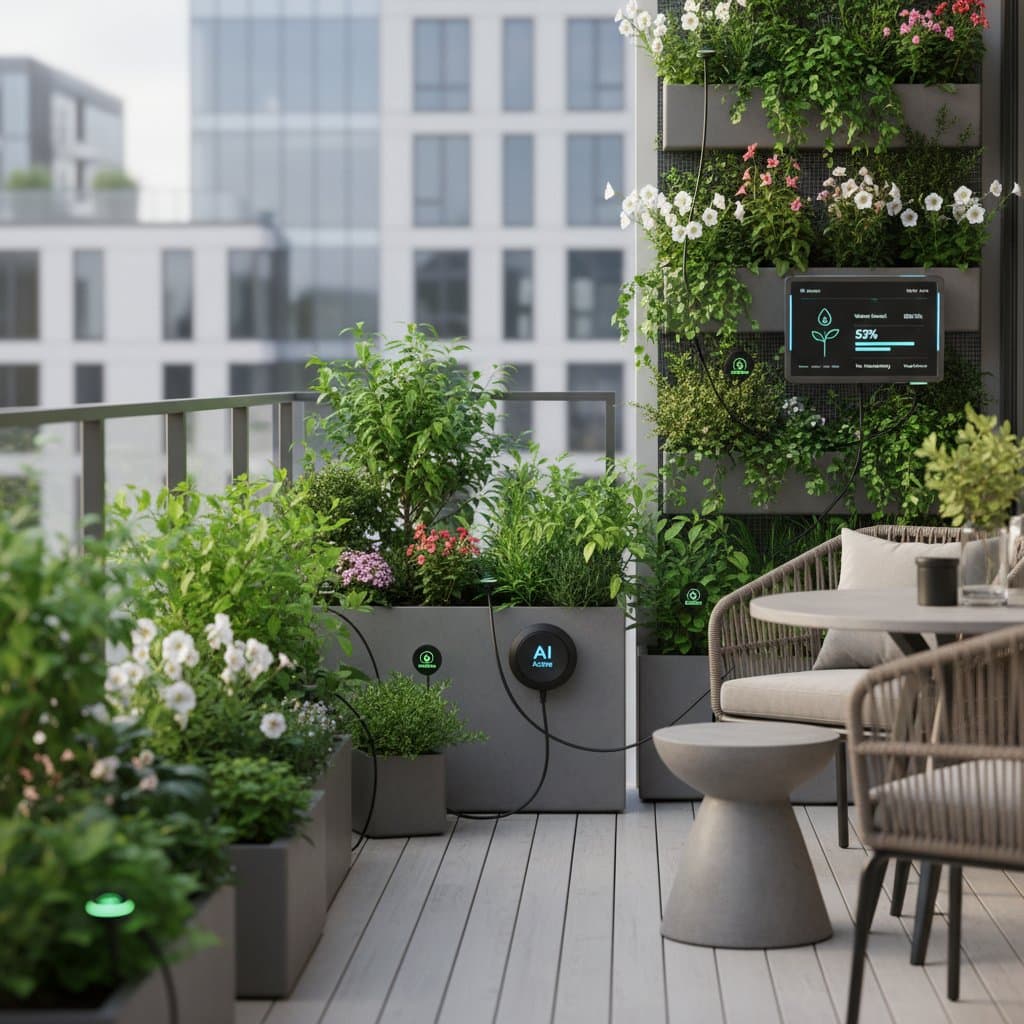
AI-Powered Drip Irrigation for Effortless Balcony Gardening
Balcony gardeners often face the challenge of maintaining healthy plants amid busy schedules. Daily watering can lead to inconsistent moisture levels, resulting in stressed foliage or root issues. AI-powered drip irrigation addresses these concerns by automating the process, ensuring precise hydration that supports vibrant growth with minimal intervention.
This system integrates sensors and algorithms to monitor and respond to environmental conditions. Users benefit from reduced water consumption and freed-up time for enjoying their outdoor space. The following guide details the components, installation process, and ongoing management to achieve reliable results in compact urban settings.
System Fundamentals
AI-powered drip irrigation employs moisture sensors, compact pumps, and app-based controls to deliver water efficiently. The technology assesses soil dryness, incorporates weather data, and optimizes schedules to prevent under- or overwatering. For balcony applications, this setup promotes steady nutrient uptake and minimizes evaporation losses associated with traditional methods.
Drip emitters release water slowly at the root level, fostering deeper root systems and healthier plants. In limited spaces, such precision reduces the risk of water runoff onto surfaces below. Key advantages include consistent growth patterns, water savings of up to 50 percent, adaptable routines for diverse plant varieties, and remote oversight via smartphone.
Urban gardeners particularly value this balance, as it counters common pitfalls like erratic rainfall or heat spikes that affect container gardens.
Essential Components
Assembly requires straightforward, modular parts suitable for small-scale installations. Select items that align with the balcony's dimensions and power availability. The list below covers core elements for a typical setup serving four to six containers.
- Wi-Fi-enabled smart controller for automated adjustments
- Soil moisture probes, one per watering zone
- 1/4-inch (6 mm) flexible drip tubing for routing between pots
- Pressure-compensating emitters rated at 0.5 to 1 gallon per hour (1.9 to 3.8 liters per hour)
- Submersible pump paired with a 2- to 5-gallon (7.5- to 19-liter) reservoir, if no faucet access exists
- Assorted fittings including tees, elbows, and caps for secure connections
- Adhesive clips or ties for organizing lines along railings
- Weatherproof power adapter or solar charger for the controller
- Companion mobile application for configuration and alerts
Existing basic timers can integrate with AI upgrades, adding intelligence without full replacement. This approach streamlines costs for those with partial systems already in place.
Installation Process
Layout Planning
Begin by mapping the balcony's configuration, identifying each container's position and sunlight patterns. Cluster plants by hydration requirements; for instance, drought-tolerant succulents demand less frequent cycles than thirsty greens like spinach. This zoning enables the AI to tailor outputs effectively.
Position the controller in a protected spot, ensuring strong Wi-Fi connectivity. Verify that water sources remain accessible, with tubing paths avoiding high-traffic areas.
Water Source Preparation
For faucet-equipped balconies, install a dual-outlet adapter to preserve hose functionality. Attach the main drip line to the secondary port using a filter to trap debris. In faucet-free scenarios, position a stable reservoir elevated slightly above pot level to aid gravity flow.
Secure the reservoir firmly; a full unit exceeds 15 pounds (6.8 kg) and requires a non-slip base to prevent tipping.
Tubing and Emitter Placement
Measure and cut tubing segments to span from the source to individual pots, allowing slack for adjustments. Employ fittings to create branches without leaks. Install one emitter per small pot or two for larger ones, staking them 1 to 2 inches (2.5 to 5 cm) from stems.
Anchor the primary line to railings or walls with clips spaced every 12 inches (30 cm), elevating it to eliminate ground clutter.
Sensor Integration
Position probes midway between plant bases and pot rims, burying them to the depth of active roots—typically 2 inches (5 cm) for shallow-rooted herbs or 4 inches (10 cm) for vegetables. Calibrate each in the app by assigning to specific zones based on plant profiles.
Controller Setup and Testing
Connect the controller to power and pair it with the app. Input details such as species, container volumes, and exposure levels to initialize the AI models. Initiate a trial run, observing for uniform drips and adjusting pressures to avoid surface saturation.
AI Learning Phase
Allow the system to monitor conditions over three to five days without manual interference. It refines predictions based on evaporation rates and usage patterns. Establish daily caps on water volume through the app, which notifies of anomalies like persistent dryness.
Safety Considerations
Prioritize electrical integrity by selecting GFCI-protected outlets and enclosing connections in waterproof housings. Route all lines and cords to sidestep foot traffic, using covers if necessary. Isolate the irrigation from household plumbing to comply with building codes.
Regularly inspect reservoirs for stagnation, which fosters microbial growth; refresh water weekly during active use.
Common Issues and Resolutions
Dry Spots in Pots
Clogs from mineral deposits or bends in lines often cause uneven distribution. Disassemble affected emitters, soak in a vinegar-water mix, and straighten tubing before reinstalling.
Sensor Connectivity Failures
Signal interference or power drain may disrupt readings. Relocate the controller for better reception or swap to fresh batteries; Bluetooth fallback modes enhance stability in spotty Wi-Fi zones.
Wilting Despite Moisture
Excessive saturation signals drainage problems. Lower emitter rates and drill supplemental holes in pot bases to facilitate excess outflow.
Routine Upkeep
Sustain performance through periodic checks that take under 30 minutes monthly.
- Flush inline filters biweekly to maintain flow
- Sanitize reservoirs with a diluted vinegar rinse quarterly
- Examine probes for buildup, wiping gently with a soft cloth
- Apply app updates to refine AI precision
Seasonal reviews involve inspecting for wear; swap deteriorated tubing promptly. Keep replacement parts organized for swift repairs.
Off-Season Storage
Prepare for dormancy by systematically disassembling components.
- Deactivate the controller and unplug all sources
- Detach and drain tubing, hanging to air-dry fully
- Purge and scrub the reservoir interior
- Pack items in a dry, shaded indoor container
These steps guard against winter damage like ice expansion or mold. Upon reactivation, flush the network before resuming operations.
Cost and Effort Overview
Initial investment ranges from $50 for entry-level kits to $300 for advanced, multi-zone configurations with robust sensors. Annual expenses cover minor replacements and supplies, typically under $20.
Installation demands 1 to 2 hours for basic arrays, extending with custom reservoirs. The time savings—eliminating 10 to 15 minutes of daily tasks—quickly offset the effort.
Adapting to Seasons
The AI handles fluctuations, but manual tweaks ensure optimal function.
- Spring Startup: Verify seals and run diagnostics post-storage
- Summer Demands: Augment reservoir capacity amid higher evaporation
- Fall Adjustment: Dial back volumes as growth decelerates
- Winter Protection: Fully drain if frost risks persist
Professional Assistance Options
Complex integrations, such as tying into building utilities, warrant expert involvement from certified technicians. They ensure code adherence and mitigate structural risks.
Consult specialists for advanced features like API connections to smart home devices or bespoke programming for exotic flora. Analytics tools can track sustainability metrics for eco-conscious users.
DIY suits most compact balconies, delivering satisfaction through hands-on control.
Implementing Your System
Scale gradually: Automate a single zone initially to build confidence in the technology. Monitor moisture logs to fine-tune settings before full deployment.
Renters favor self-contained units with portable tanks, facilitating easy relocation.
Immediate Actions:
- Inventory your containers and group by water preferences
- Research AI-compatible brands emphasizing sensor accuracy
- Dedicate time this weekend for initial assembly and calibration
AI drip irrigation elevates balcony cultivation by prioritizing precision over routine labor. Plants receive tailored care, conserving resources while enhancing urban living. Step onto your balcony to a garden that thrives independently, ready for your appreciation.