
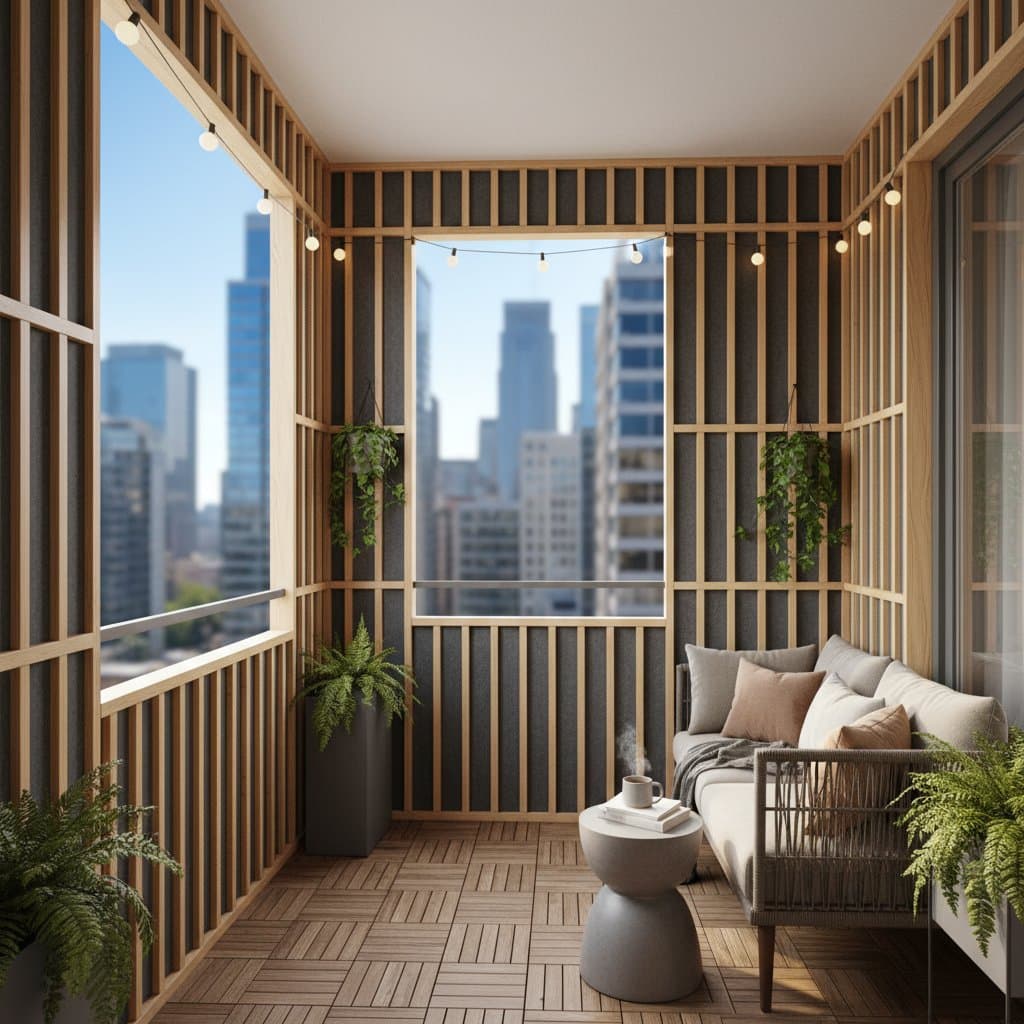
Turn Your Noisy Balcony Into a Peaceful Retreat
City life brings constant sound from traffic, construction, and neighboring spaces. Acoustic screens offer a practical way to reduce noise, increase privacy, and create a calm outdoor area. This guide covers selection, installation, and upkeep so you can enjoy a quieter balcony throughout the year.
How Acoustic Screens Work
An acoustic screen absorbs or deflects sound waves through dense materials and strategic placement. On a balcony these panels can lower street noise by 5 to 15 decibels while blocking views from adjacent units. The result is clearer conversation and greater comfort without sacrificing airflow.
Tools and Materials
Gather these items before beginning:
- Measuring tape
- Level
- Drill with appropriate bits
- Outdoor rated screws and anchors
- Heavy duty zip ties or mounting clips
- Acoustic panels designed for exterior use
- Rubber washers to limit vibration
- Gloves, goggles, and hearing protection
Optional additions include planter boxes, weather sealant, and an outdoor rug to absorb reflected sound.
Planning and Measurement
Measure the length and height of the railing or wall you intend to cover. Note the loudest direction, usually the street side, and aim to shield 70 to 90 percent of that exposure. Review building rules to confirm whether permanent fasteners are permitted or if removable panels are required.
Selecting Suitable Panels
Choose outdoor rated materials such as perforated metal with foam cores, sealed wood fiber, acoustic fabric on aluminum frames, or dense green wall systems. A two inch thickness provides good sound absorption while remaining light enough for balcony mounting. Verify moisture and UV resistance before purchase.
Installation Steps
Clean the mounting surface thoroughly and allow it to dry. For railing installation align each panel and secure it with clips or zip ties spaced 18 inches apart. For wall mounting mark locations, drill pilot holes, insert anchors, and fasten panels with rubber washers between surfaces.
Support panels during fastening to prevent slippage. After installation walk the space while speaking to identify remaining echoes. Fill gaps wider than one quarter inch with weather stripping and add an extra panel in the noisiest corner if needed.
Adding Sound Absorbing Layers
Hard surfaces reflect noise. Introduce outdoor rugs with rubber backing, cushioned seating, and hanging fabric shades. Three or four such elements can reduce echo by another two to three decibels and improve visual comfort.
Safety Considerations
Confirm your balcony load capacity before adding weight. Use a stable ladder on level ground and avoid drilling near electrical fixtures. Never obstruct drainage openings with panels.
Common Issues and Solutions
Panels that rattle in wind benefit from added rubber spacers and tighter fasteners. Water trapped behind screens can be prevented by tilting the bottom edge outward slightly. Persistent sound from lower gaps responds well to a low planter box lined with acoustic foam.
Budget Ranges and Timeframe
Basic fabric or bamboo options start around 120 dollars. Mid range composite panels fall between 300 and 600 dollars. Custom or green wall systems reach 1200 dollars. A typical 10 foot railing requires about three hours for two people.
Ongoing Care
Inspect panels every two months and tighten hardware as needed. Reapply sealant at anchor points annually. In winter remove or cover fabric screens to avoid damage from ice and snow. Store vertical panels with spacers for airflow and mark the top edge for easy reinstallation.
When Professional Help Is Advised
Contact a contractor for balconies with structural concerns, installations above six feet, or systems that incorporate lighting. A professional can also measure actual decibel reduction with calibrated equipment.
Seasonal Adjustments
Spring calls for cleaning and UV protection renewal. Summer heat may require slight loosening of clips. Autumn maintenance includes clearing leaves from drainage paths. Winter preparation focuses on protecting or storing removable elements.
Effective Design Combinations
Pair vertical and horizontal barriers for balanced coverage. Layer materials of differing densities to address a wider sound spectrum. Maintain a one inch air gap behind each panel to enhance absorption. Soft colors and living plants further promote a restful atmosphere.
Begin with a single panel on the loudest side. Evaluate the improvement, then expand as time and budget allow. Most setups are complete within a half day and deliver lasting outdoor comfort.