
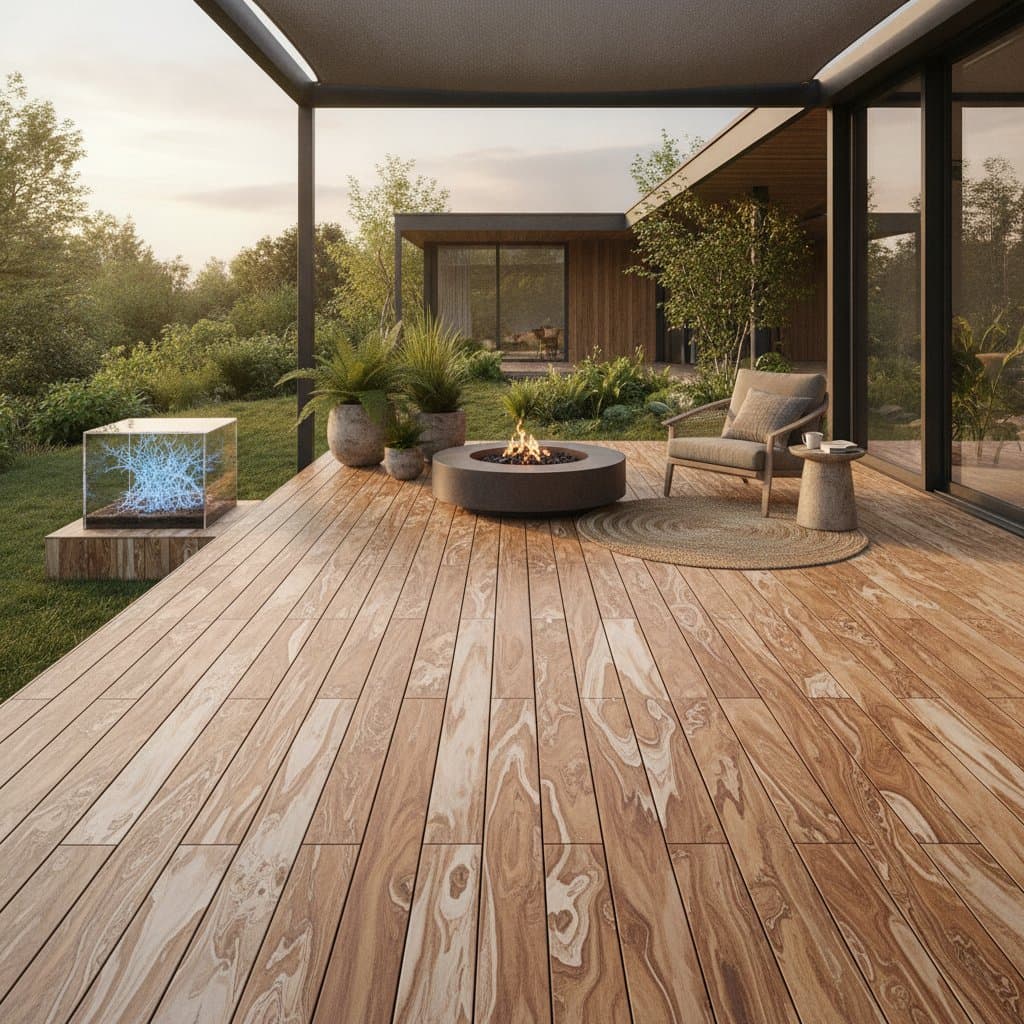
Mycelium Decking: Outdoor Surfaces That Compost
Mycelium decking offers a renewable alternative to traditional wood and composite materials. Grown from fungal networks combined with agricultural waste, these panels provide a stable surface that returns to the soil at the end of its life. The approach reduces reliance on petroleum products and supports local material cycles.
Core Advantages
Mycelium boards lock carbon during growth and release it harmlessly during composting. A 200 square foot installation diverts roughly 300 pounds of farm waste from landfills. Local growers often use regional feedstocks such as corn stalks or wood chips, which lowers transport emissions.
The finished surface resembles light toned wood yet feels slightly softer underfoot. It accepts foot traffic well when properly sealed and maintains structural integrity across seasonal temperature shifts.
Installation Steps
Begin by constructing a raised subframe of standard lumber or composite joists set on pavers or concrete blocks. This keeps the mycelium panels clear of soil moisture.
Cut boards with a fine tooth saw while wearing gloves and eye protection. Position each panel with a 3 millimeter gap for drainage, then fasten with screws fitted with washers to avoid crushing the softer material.
After placement, clean the surface and apply a natural oil or compatible sealant. A second coat enhances ultraviolet resistance. The full process for a 100 square foot platform typically requires two days for an experienced builder, including drying time.
Safety and Handling
Store unused panels flat in a shaded, dry location beneath a breathable cover. Avoid plastic wrap that can trap condensation.
Never apply chemical stains, which interfere with the material later biodegradation. Keep boards dry before sealing to prevent warping during curing.
Common Issues and Fixes
Warping often results from uneven moisture exposure. Sand the raised area lightly and reseal, while ensuring clear airflow beneath the structure.
Soft spots develop when water remains on the surface for extended periods. Wipe spills promptly and renew the protective oil every two years.
Light gray streaks appear naturally with age. For a uniform appearance, sand gently and apply a tinted oil finish.
Loose fasteners can be addressed by switching to hidden clips designed for composite decking.
Cost Considerations
Material prices range from 10 to 15 dollars per square foot, comparable to mid grade composite products. A hybrid approach that uses mycelium only for the walking surface and conventional lumber for the frame reduces overall expense.
Leftover pieces work well for garden paths, low tables, or planter bases, extending their utility before composting.
Ongoing Care
Sweep the deck weekly and wash with mild soap seasonally. Avoid pressure washing, which can erode surface fibers. Reapply oil as needed and remove damaged sections by composting them directly in garden soil.
Professional Involvement
Engage a carpenter for decks exceeding 12 feet in span or those elevated above grade. Ask about prior experience with bio based materials, recommended sealants, and under deck ventilation practices.
Practical Next Actions
Test the material first on a bench or small platform to observe performance through wet and dry periods. Order from suppliers that verify load capacity and moisture tolerance. This measured approach confirms suitability before larger commitments.