
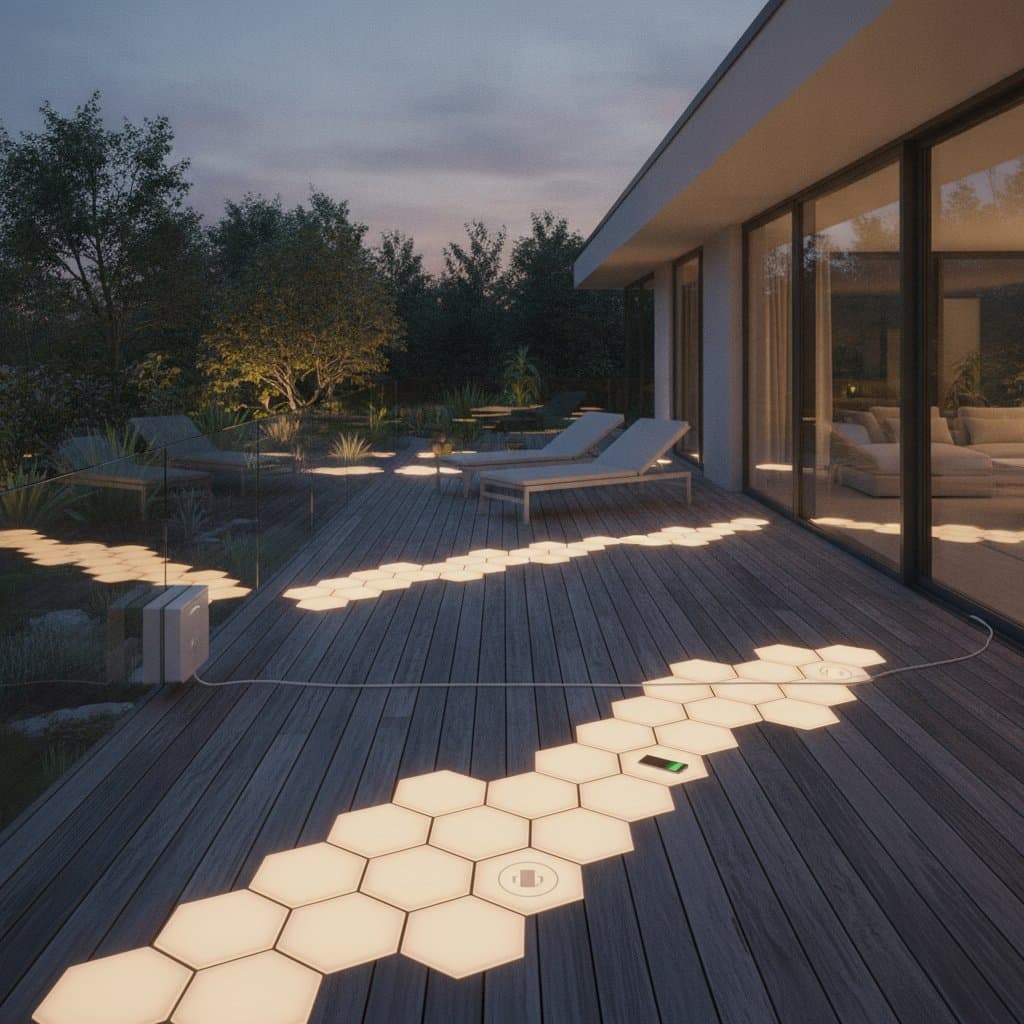
Solar Pavers That Provide Lighting and Device Charging
Your deck can deliver both style and utility when fitted with solar pavers. These units gather sunlight during the day, store the energy, and release it at night to illuminate walkways or power small electronics. The result is added safety, reduced reliance on extension cords, and a cleaner outdoor area.
This guide covers how solar deck pavers function, the materials required for installation, cost ranges, and seasonal care practices. Readers will also find guidance on deciding between a do it yourself approach and professional help.
Required Tools and Materials
Prepare a complete set of items before beginning work on a typical 100 square foot section that needs 12 to 16 pavers.
Tools include a tape measure, level, rubber mallet, pry bar, cordless drill with bits, wire brush, bucket, and protective gloves with safety glasses.
Materials consist of solar pavers that contain LED modules, spare lithium batteries when required, a sand or gravel leveling base, exterior sealant, and a USB cable if charging ports are present.
Clear the workspace and review the manufacturer instructions for any model specific warnings.
Safety Considerations
Keep every paver flush with the surrounding deck boards to prevent trips. Position units away from grills or fire features because excess heat shortens battery life.
Wear gloves and eye protection during handling. Verify that accessory voltage matches port output before use, and leave sealed battery compartments untouched unless replacement follows printed directions.
Inspect each unit after installation. Replace any paver that becomes warm or flickers.
Project Costs and Duration
Individual solar pavers range from 20 to 50 dollars each. A set of 16 units therefore totals between 320 and 800 dollars before accessories.
Add roughly 50 dollars for sealant and basic tools if they are not already on hand. A homeowner can finish a small layout in three to four hours.
Professional installation typically costs 500 to 1000 dollars and often includes an extended warranty. Savings come from bulk purchases and models that accept user replaceable batteries.
Care Through the Seasons
Spring
Examine seals for winter damage. Clean surfaces with warm water and mild detergent, then confirm that every LED responds to darkness.
Summer
Prune nearby foliage that casts shade on the panels. Provide ventilation beneath the deck to limit heat exposure to the cells.
Fall
Remove leaves each week. Check connectors ahead of heavy rain and renew sealant where it shows wear.
Winter
Clear snow with a plastic shovel. Skip chemical de icers that could etch the glass surface.
Situations That Warrant Professional Installation
Contact a qualified installer when the project exceeds 30 pavers, when integration with household wiring or a smart home system is planned, or when repeated battery issues appear.
Request details on waterproof ratings, spare part availability, and warranty length before work begins.
Energy Performance and Site Benefits
Each paver generates between 1.5 and 3 watts under full sun. Sixteen units can therefore operate pathway lights for several hours nightly or supply modest device charging.
Because no trenching or conduit is required, material use and labor both decline. Spent batteries can be taken to local recycling points, keeping the overall environmental load low.
Appearance and Lighting Options
Paver surfaces are offered in clear, frosted, or tinted versions. Color temperatures range from warm white suitable for evening gatherings to cooler white that improves visibility on stairs.
Mix finishes to suit the deck setting and intended activities.