
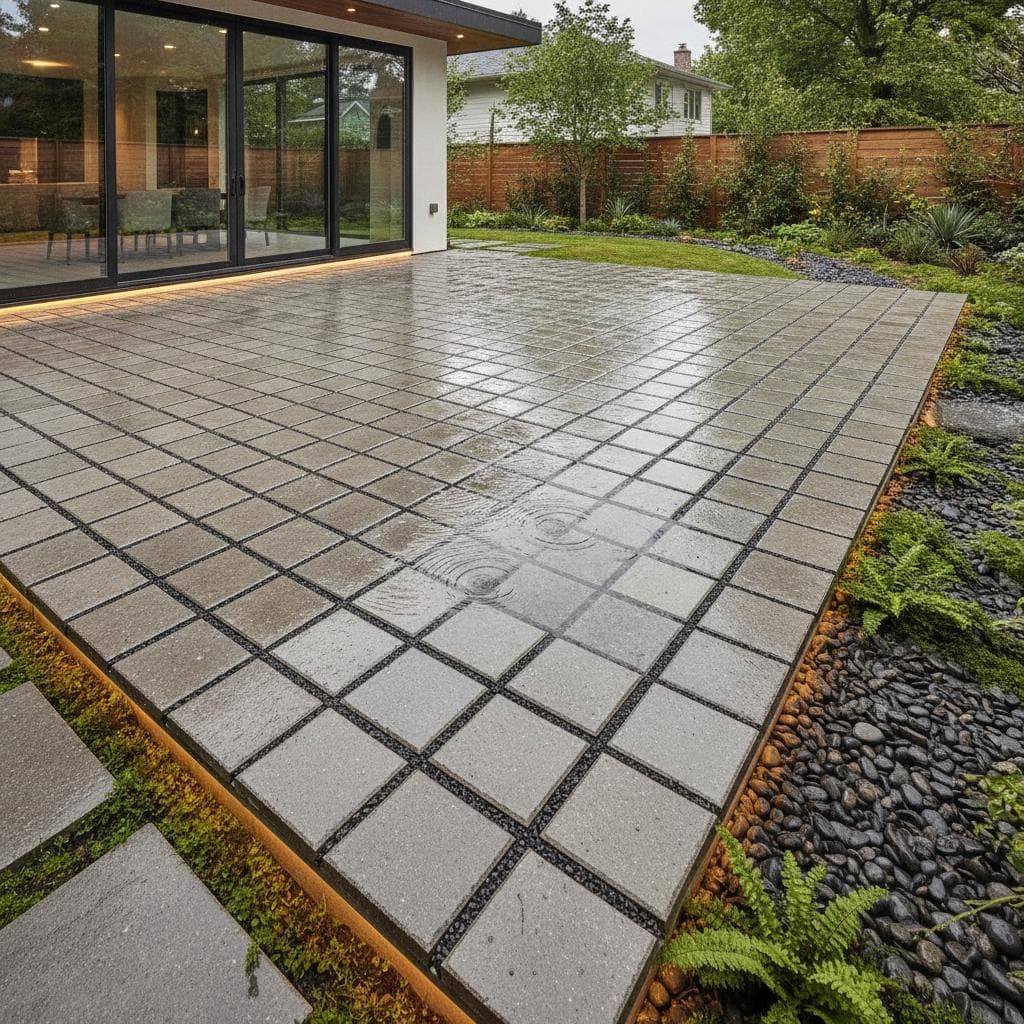
Permeable Pavers Meet Modern Urban Deck Standards
Heavy rain tests paved surfaces across many cities. Water collects quickly and overwhelms storm drains when traditional concrete or tight paver joints direct runoff into streets. Permeable pavers reverse this pattern by allowing water to pass through the surface into a prepared base below.
City codes in numerous districts now mandate permeable surfaces for new or renovated decks. The requirement reduces pressure on municipal drainage systems and limits localized flooding. Homeowners gain a durable outdoor surface that satisfies regulations while supporting better site drainage.
Regulatory and Environmental Drivers
Impermeable decks increase runoff volume during storms. Excess water carries pollutants into local waterways and raises flood risk for nearby properties. Permeable pavers capture the first inch of rainfall, the portion that typically holds the highest contaminant load.
These systems also protect building foundations by reducing standing water near structures. Property owners in regulated zones avoid potential fines and contribute to improved neighborhood water quality when they adopt the materials.
Site Preparation Steps
- Inspect the area after rainfall to identify puddles, slopes, and drainage paths.
- Verify that existing deck framing can support the added weight of roughly ten pounds per square foot.
- Mark the perimeter with string lines and confirm a slope of one inch per eight feet toward open soil.
- Remove old decking or pavers and clear debris down to the structural base or soil.
- Excavate six to eight inches depending on expected traffic loads, then compact the subgrade firmly.
Base and Paver Installation
Spread crushed stone in two inch layers and compact each lift to create stable water storage. Add one to two inches of clean gravel or coarse sand as a leveling bed without heavy compaction. Place pavers tightly from one corner outward, seating each with a rubber mallet and checking level every few rows.
Sweep fine gravel or polymeric sand into the joints to lock the surface while preserving drainage. Install metal or plastic edge restraints staked at twelve inch intervals to prevent shifting. Rinse the finished surface and confirm that water infiltrates without pooling.
Addressing Common Issues
Remove and reset pavers that settle unevenly after several weeks, adding and compacting extra base stone as needed. For persistent pooling, test soil composition and consider a deeper base or an underdrain pipe directed to a garden area. Monthly sweeping prevents debris buildup that could restrict joint permeability.
Ongoing Care Practices
Sweep the surface every few months to maintain open pores. Rinse annually with a garden hose or low pressure washer and avoid any sealers that reduce infiltration. Refill joints when gaps exceed one quarter inch and prevent adjacent soil or mulch from washing onto the pavers.
Professional Support Options
Large, elevated, or rooftop connected decks benefit from contractor expertise in load calculations and waterproofing details. Request proof of permeable system certification and a written drainage plan that satisfies inspection requirements.
Extended Service Life
A properly installed permeable paver deck maintains performance for twenty years or longer with routine attention. Extra pavers stored flat and labeled filler material allow quick repairs that preserve both appearance and function.