
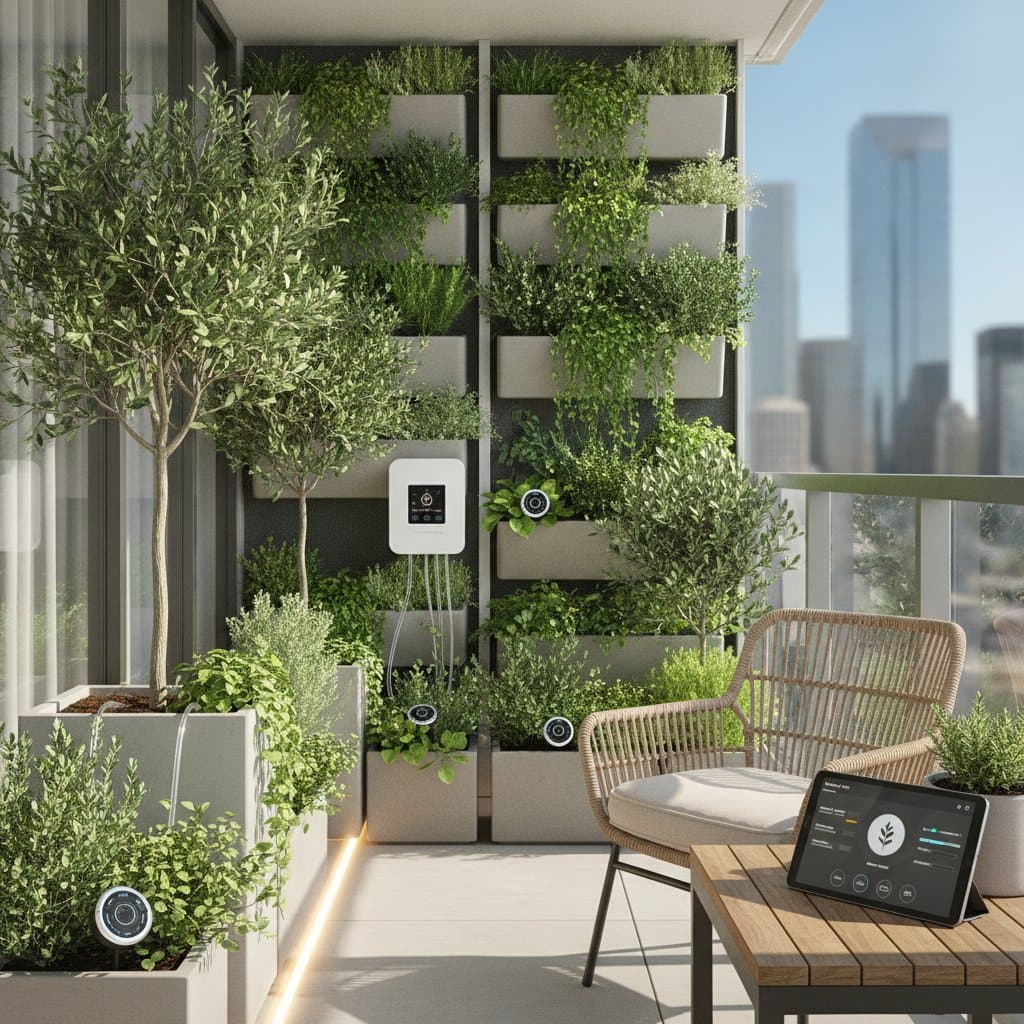
AI Sensors Keep Balcony Plants Watered Automatically
AI powered sensors paired with compact pumps create reliable self watering setups for balcony gardens. These systems monitor soil conditions and deliver water only when needed. The result is healthier plants with less daily effort and reduced water waste.
Proper installation begins after you have selected a suitable controller and pump sized for your space. Focus next on positioning components for accurate readings and consistent delivery.
Installing Sensors and Controller
Step 4: Place and Connect Sensors
Insert one moisture sensor per small pot or two sensors for larger boxes. Push each sensor into the soil about halfway down, between the root zone and the pot edge. Connect the wires to the controller. Wireless models sync automatically and reduce visible wiring.
Step 5: Pair the Smart Controller
Download the companion app. Pair the controller over Wi Fi or Bluetooth. Follow the prompts to assign each sensor to its plant zone. Test every valve and pump cycle to confirm steady flow.
Step 6: Calibrate Moisture Levels
Set target moisture ranges for each group of plants. Herbs typically need 40 to 60 percent. Succulents perform well at 20 to 30 percent. Run a manual cycle and verify that sensors reach the chosen level. Adjust the setting if the soil feels too wet or too dry after the cycle.
Step 7: Test the Automation
Allow the system to operate for two or three days. Observe watering patterns and sensor stability. Reduce the threshold or shorten tubing on any planter that remains soggy. Aim for consistent damp soil rather than standing water.
Safety Guidelines
- Always unplug the pump before refilling or cleaning the reservoir.
- Protect electrical parts from direct rain with a small plastic cover.
- Keep tubing ends above soil level to avoid backflow.
- Wear gloves when handling wet soil or algae.
Common Issues and Fixes
Plants still appear dry.
Flush each line until flow is steady. Mineral deposits often block tubing before water reaches the roots. Install a small mesh filter between the pump and tubing to trap debris.
Sensors report inaccurate values.
Clean the probe tips and recalibrate in fresh potting mix. Surface dirt or corrosion interferes with conductivity. Wipe the sensors with a damp cloth once a month.
Pump activates too frequently.
Raise the moisture threshold or reposition the sensor slightly deeper. Shallow placement detects only surface dryness. Re test the system after twenty four hours.
Ongoing Care
Empty and rinse the reservoir every two weeks to limit algae growth. Flush tubing with a mild vinegar solution. Store spare parts in a dry container. Before cold weather arrives, drain all lines and bring the pump indoors to prevent freeze damage. Recharge wireless sensor batteries before storage.
Cost and Time Expectations
A basic system for four planters ranges from 120 to 250 dollars. Assembly usually requires two to four hours. Weekly inspections take less than ten minutes. Efficient scheduling can reduce water consumption by up to twenty five percent.
Professional Assistance
Hire a licensed electrician when outdoor outlets are limited or wiring is complex. Consult an irrigation specialist to connect directly to a water line. Request proof of prior outdoor work and a calibration demonstration before the technician departs.
Seasonal Adjustments
During warm months check reservoir levels twice weekly. Pause cycles through the app during extended rain to protect roots. Disconnect the pump in winter and keep dormant soil slightly dry. Clean and test the full system each early spring before new plantings.
Begin Assembly
Measure the balcony and mark planter locations. Purchase an outdoor rated sensor kit and pump. Dedicate one afternoon to connect components and verify the first automated cycle.