
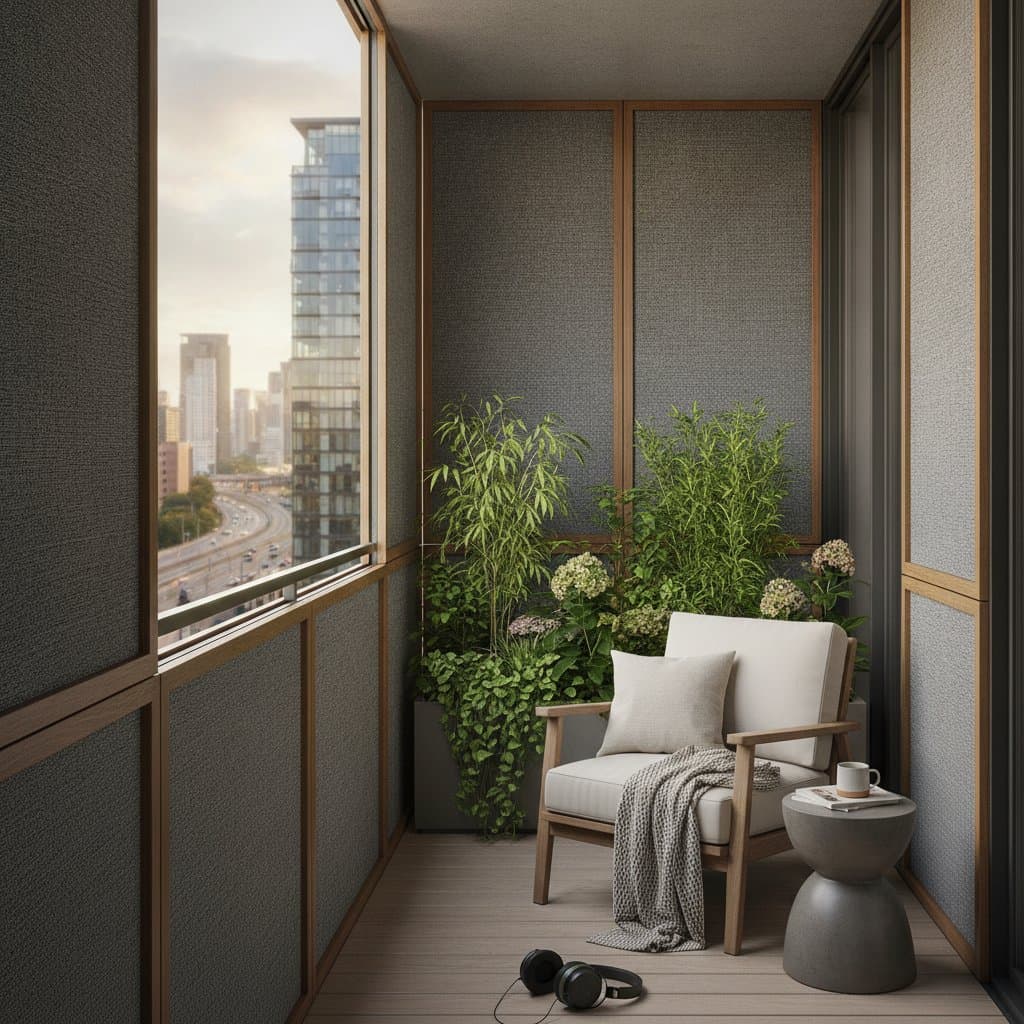
Acoustic Screens Reduce Balcony Noise
Acoustic screens create effective barriers that absorb and deflect sound waves from urban traffic and street activity. Proper selection of dense materials combined with careful installation yields noticeable improvements in outdoor comfort. These screens also enhance privacy while maintaining airflow and light where needed.
Selecting Materials
Choose outdoor rated panels made from composites, mineral wool, or perforated metal with sound absorbing cores. Fabric wrapped options provide a softer appearance and additional absorption when layered over rigid cores. Verify weight limits for your railing system before purchase to ensure safe mounting.
Installation Process
Prepare the Frame
Measure the railing area accurately and cut support posts to fit. Secure brackets at multiple points along the railing using corrosion resistant hardware. Confirm that all mounts sit level to avoid future alignment issues.
Attach Screens
Lift panels into the frame and fasten them starting from the bottom. Work upward to maintain square alignment throughout. Apply acoustic caulk to seal small gaps between panels and prevent sound leakage.
Add Finishes
Attach outdoor fabric or a vine covered trellis for a natural appearance and extra absorption. Install a narrow shelf along the interior face to hold candles or small planters. These additions soften sound reflections without blocking views.
Test and Adjust
Sit on the balcony and evaluate sound levels from typical sources. Add foam strips or corner posts where leaks remain. Small refinements at edges often produce the largest gains in performance.
Safety Considerations
- Wear gloves when handling metal edges or hardware.
- Avoid over tightening screws that could damage railing surfaces.
- Keep electrical cords and lights away from areas that collect water.
- Never block required ventilation or fire exits with solid panels.
A sound barrier must improve comfort without introducing new hazards.
Troubleshooting Common Problems
Problem: The balcony still sounds echoey.
Solution: Add fabric curtains or outdoor rugs to absorb reflections from hard surfaces.
Problem: Panels rattle in the wind.
Solution: Tighten all mounting points and insert rubber washers to reduce vibration.
Problem: Water pools at the base.
Solution: Drill small drainage holes or use spacer feet to lift panels slightly.
Problem: The screen darkens the balcony too much.
Solution: Select perforated or translucent panels that block sound while allowing light through.
Maintenance and Storage
Inspect screws and brackets every two months for signs of rust. Clean panels with mild soap and water followed by thorough rinsing and drying. Brush fabric surfaces regularly to remove dust and pollen that reduce absorption.
Store panels indoors during harsh winter months. Label each piece by position and wrap edges with towels or foam. Lay them flat to prevent warping. Reapply caulk each spring wherever gaps reappear.
Budget and Time Expectations
Small balcony projects typically range from 80 to 400 dollars depending on material choice. Fabric and composite rolls cost less while rigid panels offer longer service life. One person can complete installation in two to four hours. Professional help adds 100 to 200 dollars but ensures precise drilling and alignment.
When Professional Help Is Needed
Contact a licensed contractor when balconies have load restrictions or visible structural cracks. Professional installation is also advisable for shared walls or areas above neighboring spaces. Discuss weight limits, wind resistance ratings, and sound transmission class values. Screens rated at 25 or higher deliver meaningful outdoor noise reduction.
Seasonal Care
- Spring: Re seal joints and check hardware after freeze thaw cycles.
- Summer: Rinse panels monthly to maintain absorption performance.
- Fall: Trim plants and vines before they add excess weight.
- Winter: Remove lightweight fabric screens ahead of heavy snow or wind events.
Planning Your Project
Measure noise direction and balcony dimensions first. Select materials that match budget, style, and structural limits. Complete installation and testing in a single session then refine as needed. A well placed screen creates a calmer outdoor space while preserving connection to the surrounding environment.