
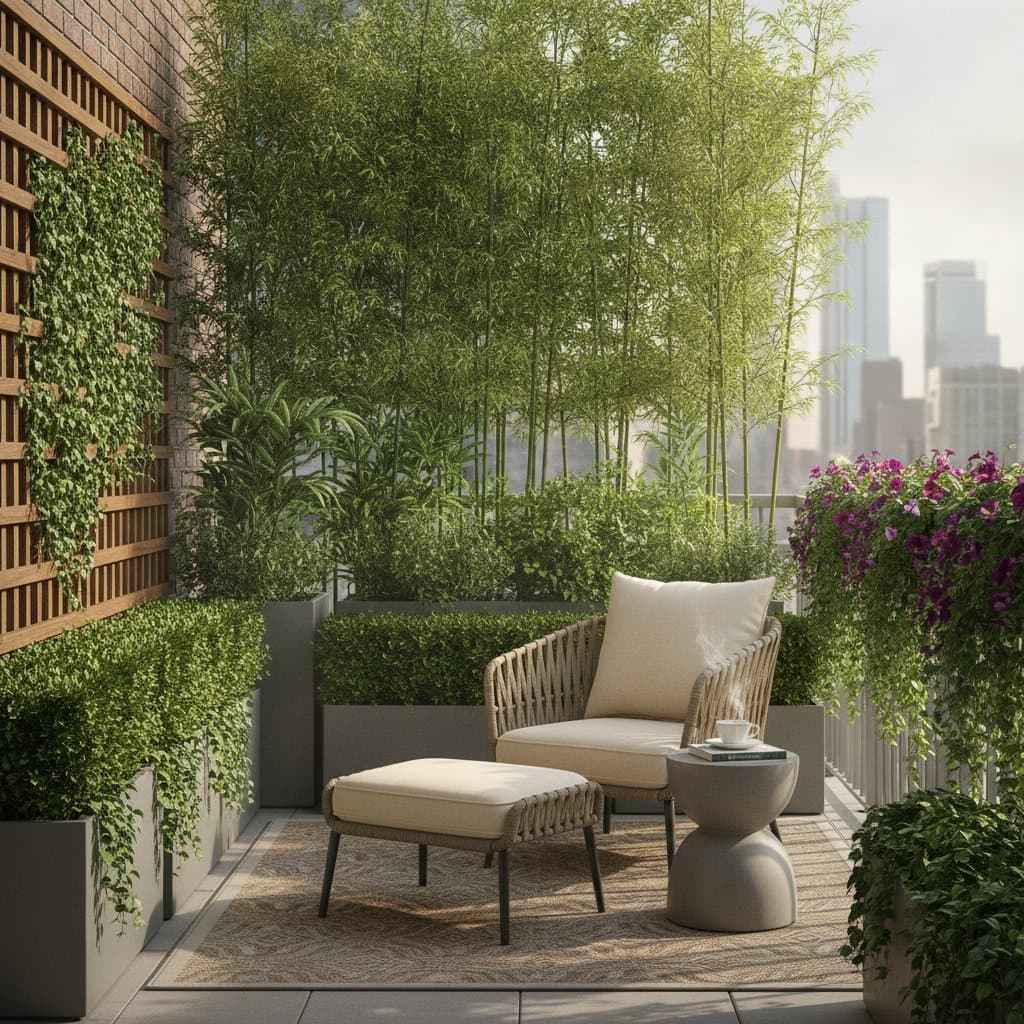
Quiet Your Urban Balcony with Sound-Absorbing Plants
City life moves at a constant pace. Traffic, sirens, and conversations often intrude on balcony time. Plants offer a natural way to absorb and deflect sound while creating a calmer outdoor area. This guide explains what makes certain plants effective, how to arrange them for maximum impact, and which varieties suit urban conditions.
How Plants Reduce Noise
Sound moves in waves that reflect off hard surfaces such as concrete and glass. Soft, textured plant surfaces scatter or absorb those waves. Dense leaves, flexible stems, and layered arrangements can lower noise levels by several decibels, which improves comfort noticeably.
The same plantings also filter air, moderate temperature, and increase privacy. Even a compact balcony supports a layered mix that functions as a living acoustic screen. Strategic placement produces results without a complete redesign.
Required Materials
Success depends on suitable containers, soil, and plant choices matched to balcony size and light exposure.
- Four to six large planters at least 12 inches deep
- Three medium planters for mid-level plants
- Two or three hanging baskets or wall planters
- Potting soil mixed with compost
- Mulch or coco coir for surface cover
- Drainage trays under each container
- Lightweight trellis or bamboo screen
- Gloves and pruning shears
Weighted containers or added gravel improve stability on windy balconies. Confirm that total weight remains within the structure load limit.
Placement Process
Identify Noise Direction
Observe the balcony at different hours to locate primary noise sources. Note whether sound arrives from the street, neighboring equipment, or an adjacent courtyard. This information guides precise plant positioning.
Select Effective Species
Choose varieties with thick foliage or pliable stems. Combine broad-leaved evergreens, tall grasses, and vines to trap and disperse sound.
Recommended plants include:
- Clumping bamboo for rapid vertical growth under 15 feet
- Boxwood for dense, trimable evergreen hedges
- Arborvitae for narrow upright coverage
- Ferns for shaded areas where fronds absorb vibration
- Lavender or rosemary for aromatic mid-level screening
- Trumpet vine or ivy trained on a trellis
- Elephant ear for broad leaves that move and scatter sound
Use at least three height categories: tall specimens from 5 to 8 feet, medium plants from 2 to 4 feet, and low ground covers under 2 feet.
Build Layers
Position the tallest plants nearest the noise source to form the primary barrier. Add medium-height plants behind or beside them to increase density. Finish with smaller trailing plants along the edge. Maintain a 6-inch gap between planters and reflective walls so air pockets trap sound. Stagger rows rather than align them straight for better diffusion.
Incorporate Vertical Elements
Mount a lattice or trellis on one side and train climbing plants across it. Select open materials such as bamboo or wood slats that permit airflow. Hang baskets at staggered heights to add texture and further break up sound waves.
Treat the Floor
Hard flooring reflects sound upward. Lay jute rugs or rubber-backed deck tiles. Position low boxes of moss, sedum, or dwarf grasses along edges to absorb both noise and heat.
Sustain Density
Water consistently without saturation. Apply compost or slow-release fertilizer several times each season. Prune lightly to maintain full canopies and rotate pots for even light. Healthy foliage absorbs sound more effectively than sparse growth.
Safety Considerations
Verify balcony load capacity before installing heavy planters. Secure tall containers against wind with ties or brackets. Wear gloves during pruning and keep water away from electrical fixtures.
Common Issues and Fixes
Thin foliage responds to adjusted light or watering schedules. Persistent sharp noise requires an additional fabric or slat screen behind the plants. Dusty leaves benefit from weekly gentle rinsing. Standing water is prevented by emptying saucers after rain and keeping drains clear.
Ongoing Care
Remove dead leaves monthly and refresh mulch twice a season. Cut back woody stems on vines or bamboo to preserve flexibility. Replace potting soil every two years. Clean supports with mild soap to maintain airflow.
Investment and Timeline
A functional installation costs between 150 and 400 dollars depending on plant size and container quality. Setup requires four to six hours. Weekly maintenance averages 30 minutes. Mature plants in larger pots deliver faster coverage, while smaller starters produce denser leaves over time.
Seasonal Adjustments
Inspect containers and add compost in spring. Water during cooler hours in summer and protect tall plants from wind. Light pruning and extra mulch occur in fall. Burlap wraps or wall placement shield pots in winter while evergreens continue to reduce sound.
Professional Support
Heavy traffic or structural vibration warrants consultation with a landscape designer. Specialists can assess decibel levels, recommend appropriate densities, and verify that drainage and weight meet building codes.
Layered Planting Benefits
Leaves, stems, and soil together disrupt sound vibrations. Greater variety and thickness improve results. A modest balcony planting softens harsh urban noise and creates a more inviting space without aiming for complete silence.
Starting the Project
Walk the balcony to locate the loudest entry points. Select plants in three height ranges. Prepare containers with quality soil and mulch. Install a trellis for vertical coverage. Maintain consistent watering and light pruning to keep foliage dense. These steps gradually convert an exposed overlook into a private, quieter retreat.