
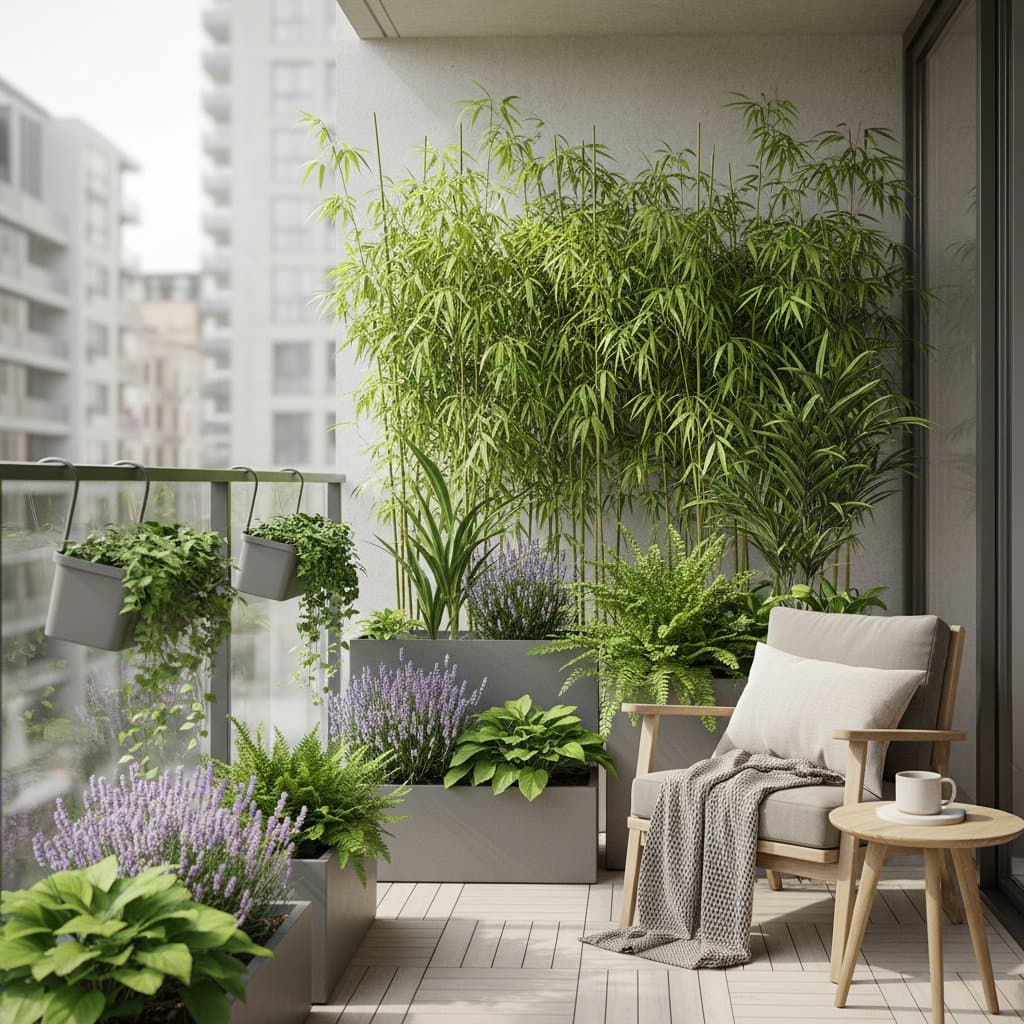
Choosing Sound-Blocking Plants
Evergreen shrubs provide reliable year-round sound control. Their dense leaves and upright structure deflect street noise effectively.
- Bamboo (clumping varieties): Fast-growing and tall, reaching 6 to 10 feet. Use clumping types like Bambusa multiplex to avoid invasive spread. Keep roots contained in deep planters about 18 inches wide.
- Boxwood: Compact and easily trimmed. Works well in rectangular troughs. Space plants 8 inches apart for a solid wall.
- Juniper: Narrow and upright, good for corners where vertical coverage matters.
Broadleaf foliage plants catch and muffle sound waves. They also add texture and shade.
- Ficus elastica (Rubber Plant): Glossy leaves help absorb sound and dust. Grows to 6 feet with regular pruning.
- Philodendron 'Xanadu': Bushy and tolerant of partial shade. Use it in the middle layer.
- Hosta: Great for low spots and visual balance. Choose larger types for better sound absorption.
Vines and climbers deliver maximum coverage when space is tight.
- English Ivy: Clings to trellises and forms a thick screen. Trim every few weeks to control spread.
- Jasmine: Offers both fragrance and greenery. It can climb 8 feet if supported.
- Trumpet Vine: Strong stems and dense leaves, ideal for balcony railings.
Tall grasses sway slightly, scattering sound and softening echoes.
- Miscanthus: Can reach 5 to 6 feet, good for back corners.
- Pampas Grass: Strong vertical growth, but handle the sharp blades carefully.
- Liriope: Shorter and perfect for filling gaps between taller plants.
Colorful perennials complete the barrier without losing function.
- Lavender: Pleasant scent and dense growth. Works well in sunny areas.
- Hydrangea: Large leaves and flowers that block light and reduce echo.
- Geranium: Compact, easy-care plants that grow thick enough for sound softening.
Plan Your Layout
Sketch your balcony. Mark areas where noise enters. This could be near the street side or a neighbor wall. Plan to build your densest plant line there. Leave at least 2 feet for walking and door access.
Set Up Containers
Place the largest planters first, usually along the outer edge. Use smaller pots in front to create a layered barrier. Fill each container with potting mix to about 2 inches below the rim.
Install Trellises or Supports
Attach trellises about 6 inches behind planters if you plan to grow vines. Use cable ties or hooks rated for outdoor use. Check that the structure can handle wind pressure.
Plant and Water
Position plants according to height. Tall evergreens go in the back, medium shrubs in the middle, and low fillers in front. Firm the soil gently around roots. Water thoroughly until moisture drains from the bottom holes.
Add Mulch and Top Dressing
Apply a 1-inch layer of bark chips or decorative stones. This helps retain moisture and reduce soil noise reflection. It also keeps pots tidy.
Check Sound Flow
After setup, sit quietly for a few minutes. Notice where noise still slips through. Add another planter or hanging pot in those gaps. Even one missing section can reduce overall performance.
Safety Tips
Check building guidelines before loading the balcony. A safe limit is often around 50 pounds per square foot, which includes planters and soil. Avoid water pooling that could leak onto neighbors below. Use trays under pots. Anchor tall planters with bricks or sandbags. Sudden gusts can topple them. Rotate containers every few weeks to spread light evenly. Keep pruning shears sharp but covered when not in use.
Troubleshooting
If noise reduction feels uneven after setup, check these points. Add filler plants or move pots closer together if foliage is sparse. Aim for less than 2 inches of open space between leaves when viewed from your sitting position. Reposition tall plants to break linear paths where sound travels. Water deeply once or twice per week depending on weather. Shift heavier pots to corners for better balance.
For pest issues like aphids or whiteflies, spray leaves with soapy water once per week until clear. Avoid harsh chemicals in small spaces.
Budget and Time
You can create a functional sound barrier on a modest budget. Average costs include 150 to 250 dollars for a small balcony setup with 8 to 10 plants, 300 to 500 dollars for a medium balcony with 15 to 20 plants, and 600 to 800 dollars for a large balcony with full coverage and trellises. Expect to spend about four to six hours total for planning, setup, and cleanup. Maintenance adds about one hour per week for watering and pruning.
Save money by starting with smaller plants and letting them grow into place. Mix evergreen shrubs with fast-growing vines. Use recycled containers or half-barrels for deep roots. Avoid cutting corners on pot quality or soil. Strong containers and nutrient-rich mix protect your investment.
Maintenance
Consistent care keeps the barrier thick and effective. Deep water twice per week during warm spells. Check soil moisture by inserting a finger one inch deep. If dry, water again. Trim overgrowth every two to three weeks. Keep heights even for a uniform sound wall. Apply slow-release granules every two months. Overfeeding leads to weak stems. Wipe leaves monthly to remove dust. A light film of natural dust can help reduce sharp echoes. Move sensitive plants indoors or wrap containers with burlap during winter. Evergreens tolerate cold but benefit from mulch for root insulation.
Seasonal Reminders
Refresh soil, repot crowded containers, and inspect for pests in spring. Focus on watering and trimming in summer. Replace any plants that did not survive winter. Cut back dead leaves and add mulch to retain warmth in fall. Check that pots stay upright during strong winds in winter. Water lightly every two weeks if temperatures stay above freezing.
Smart Storage Moves
Keep balcony space organized so your quiet zone feels open. Use a small bench with a hollow base for storing tools and fertilizer. Hang hooks for shears and gloves on a side wall. Stack extra pots or trays in a corner crate. Store soil bags in sealed bins to prevent moisture and pests. Label containers with plant names and watering needs. A quick glance saves time later.
When to Call a Pro
A contractor can confirm safe weight distribution if your building has structural limits or you plan to install heavy planters. Call a pro also if you notice cracks in balcony flooring, water drainage leaks to lower levels, or you want to anchor trellises into walls or railings. Ask the contractor about maximum load per section and best materials for long-term stability. A short consultation fee is worth preventing damage.
Pro Tips for Success
Combine sound and sight barriers. A mix of leafy shrubs and lattice screens doubles the quiet effect. Use water features sparingly. A small fountain can mask background noise, but only if it flows gently. Loud splashing defeats the goal. Keep plant diversity. Three or more species reduce pest risk and provide variety in texture. Check light exposure. Morning sun is ideal for most evergreens. Afternoon shade protects tender leaves. Add ground cover plants like creeping thyme under taller pots. They fill gaps and keep the setup cohesive.