
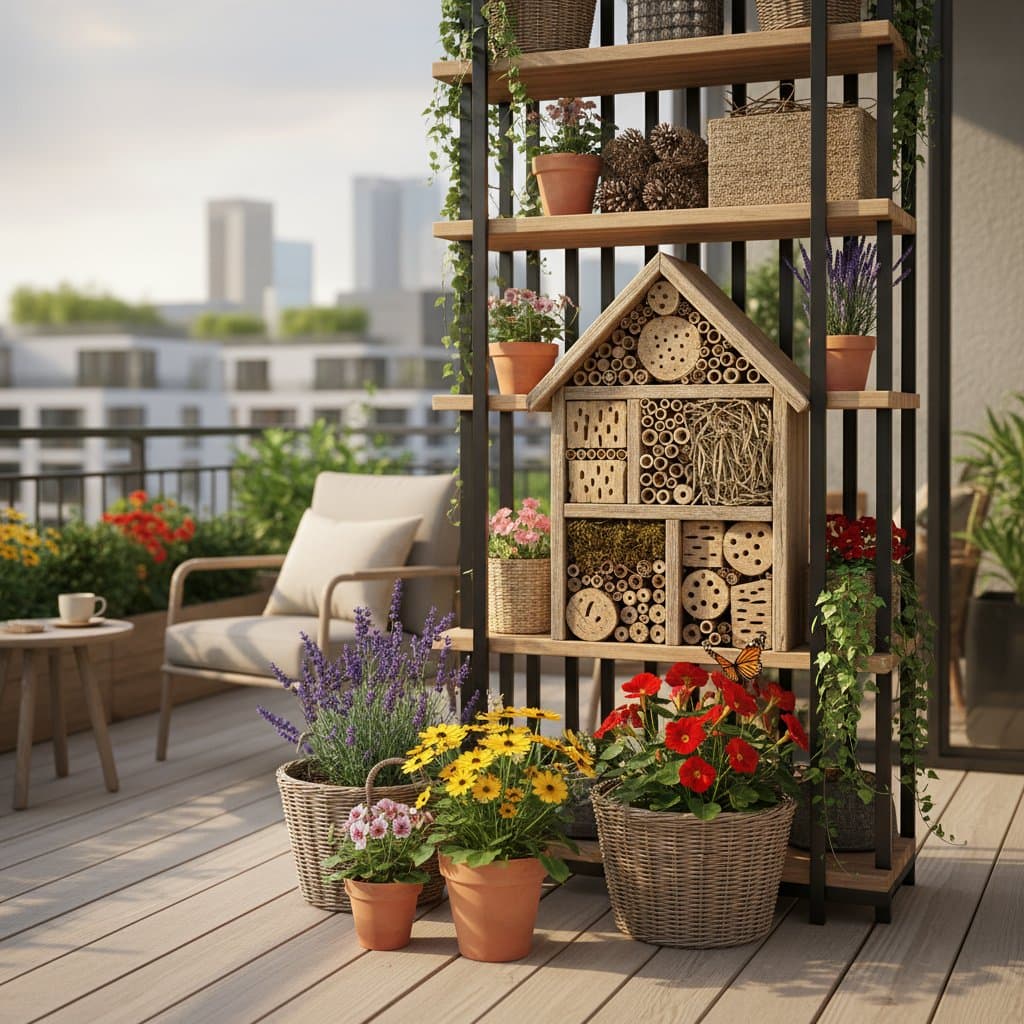
Mini Bug Hotels Turn Balconies into Wildlife Havens
A quiet balcony offers more than space for a chair and plants. It provides an opportunity to host diverse life forms. A mini bug hotel serves as a small, layered shelter constructed from natural materials. This structure offers urban insects places to rest, nest, or overwinter. Individuals can assemble one in a single afternoon using readily available scraps. The objective remains straightforward: establish a secure refuge for pollinators and beneficial insects directly outside the residence.
This guide details the nature of bug hotels, required tools, construction steps, and seasonal maintenance practices.
Overview
A bug hotel constitutes a compact structure that replicates the cracks, bark, and hollow stems typically utilized by insects for shelter. Urban environments lack such natural features. A balcony-mounted hotel addresses this deficiency. It accommodates bees, ladybugs, beetles, lacewings, and various pollinators essential for plant blooming and pest management.
Even a structure comparable to a shoebox size yields significant impact. A single small hotel may shelter dozens of insects simultaneously. Such installations enhance street-level biodiversity and bolster rooftop gardens, window boxes, and local trees. Residents gain direct observation of natural behaviors often concealed in city settings.
Tools and Materials
Most supplies derive from recycling bins or garden clippings. Maintain a modest scale, approximately 8 inches in width and depth, to suit typical balconies.
Basic frame materials
- One small wooden crate or untreated wooden box, measuring about 8 x 8 x 6 inches (20 x 20 x 15 cm)
- Reclaimed bricks, clay pots, or bamboo segments for structural support
- Natural twine or wire for fastening components
Filling materials
- Hollow stems such as bamboo or elder wood, sliced to 6 inches (15 cm) lengths
- Pinecones, dry leaves, straw, and bark fragments
- Corrugated cardboard or paper tubes
- Small stones or broken pottery shards for drainage purposes
Tools
- Hand saw or pruning shears
- Drill equipped with bits sized between 1/8 and 3/8 inch (3 to 10 mm)
- Gloves and safety goggles
- Sandpaper for smoothing irregular edges
Select only untreated wood. Materials like paint, varnish, or pressure-treated lumber release toxins harmful to insects.
Steps
1. Create the frame
Position the crate or box with the open side facing outward. Ensure the rear panel remains solid to shield against wind. Seal any existing gaps using scrap wood pieces. Sand all rough edges. Don gloves to guard against splinters during handling.
2. Add internal dividers
Insert thin wood slats or bricks to delineate small compartments. Each section measures roughly 2 inches (5 cm) in width. This arrangement facilitates grouping of materials tailored to specific insect types. Preserve adequate airflow while avoiding large openings that permit bird access.
3. Prepare nesting materials
Slice hollow stems into uniform lengths. Drill holes into small logs or blocks, varying depths from 2 to 4 inches (5 to 10 cm). Smooth all edges to safeguard delicate insect wings. Bind stems securely with twine to maintain vertical orientation.
4. Pack the layers
Fill each compartment densely. Incorporate a combination of stems, pinecones, and bark. Ensure materials fit snugly to resist wind displacement. Position denser items at the base. Arrange straw or leaves toward the upper sections to form gentle retreats.
5. Secure the hotel
Employ wire or brackets to affix the hotel to a balcony wall or railing. Elevate it at least 3 feet (1 meter) above ground level. Orient it toward morning sunlight for moderate warmth and illumination. Select locations free from intense rainfall or perpetual shade.
6. Add a small roof
For crates open at the top, affix a thin board or slate piece as a protective cover. Include a 1-inch (2.5 cm) overhang to deflect dripping water.
7. Observe quietly
After installation, refrain from disturbance. Insects require several weeks to discover and occupy the site. Residents may observe solitary bees applying mud seals to entrances or ladybugs seeking refuge within pinecones.
Safety Tips
Wear gloves at all times during wood cutting or drilling operations. Utilize safety goggles to shield eyes from flying debris. Supervise children closely throughout the process. Permit them to assist with filling compartments but prohibit tool handling. Steer clear of metal containers, which risk overheating under direct sunlight.
These precautions safeguard both builders and the intended insect occupants.
Troubleshooting
Problem: Insects fail to appear after several weeks.
Fix: Relocate the hotel to a position with increased sunlight or proximity to blooming plants. Insects require adjacent shelter and food resources.
Problem: Mold or excessive moisture accumulates internally.
Fix: Enhance ventilation by extracting portions of soft materials. Incorporate minor drainage holes at the base.
Problem: Birds or squirrels disrupt the structure.
Fix: Install mesh featuring half-inch (1.3 cm) openings across the front. This barrier excludes larger pests while allowing insect passage.
Problem: Materials loosen and fall out.
Fix: Compress contents more firmly and reinforce with twine or fine netting layers.
Budget and Time
Constructing a small balcony hotel incurs costs between five and twenty dollars when utilizing recycled materials. Purchasing items like bamboo tubes or wood blocks may increase expenses slightly. The assembly process requires approximately one hour, encompassing cutting and joining tasks. Seasonal maintenance demands mere minutes.
Consider these economical alternatives:
- Repurpose old wine boxes in place of purchased crates.
- Employ pruned branches rather than commercial logs.
- Substitute paper straws for bamboo in temporary applications.
Prioritize inclusion of a roof and stable mounting. These elements shield the hotel from elemental damage and ensure structural integrity.
Maintenance
Inspect the hotel biannually. During early spring, substitute any moldy or deteriorated materials. In late fall, neaten edges and clear spider webs obstructing access points. Avoid cleaning in warmer periods, as eggs or larvae may reside within. Permit natural life cycles to conclude undisturbed.
Enhancing Insect Attraction
Plant compact pots of herbs or native flowers adjacent to the hotel to provide nourishment for arriving species. Maintain a notebook to document insect visitors and their arrival times. Encourage neighbors to construct similar hotels, forming a block-wide network of pollinator refuges.