
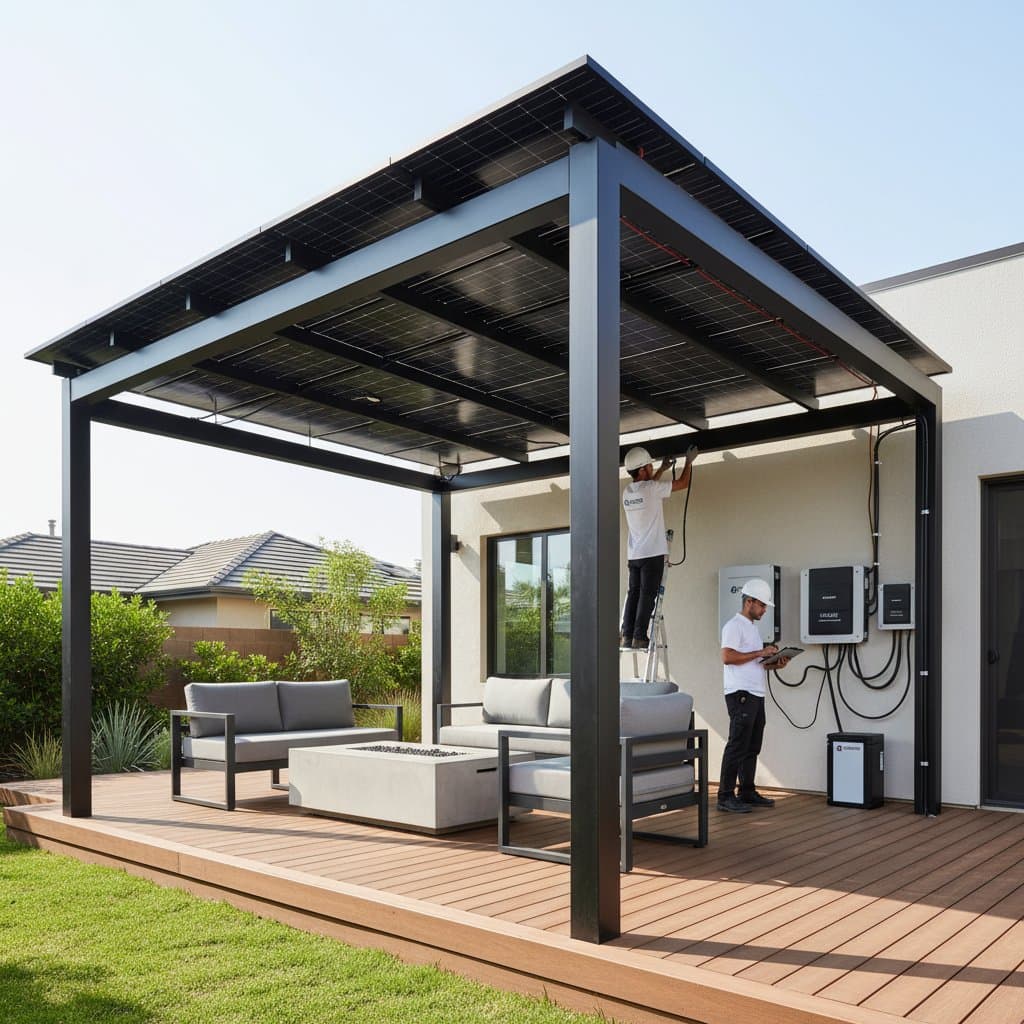
Solar Pergolas: Shade Meets Solar Power on Decks
Decks serve as vital extensions of living spaces, yet intense sunlight often limits their use. A solar pergola addresses this challenge by combining protective shade with the generation of clean electricity. This versatile addition enhances comfort while contributing to sustainable home energy practices.
The appeal lies in its dual functionality. Homeowners gain a shaded retreat for relaxation and gatherings, alongside a practical system that offsets electricity costs. This article examines the essentials of solar pergolas, including their design, installation, and long-term care, to help readers integrate this innovation effectively.
Understanding Solar Pergolas
A solar pergola consists of an open-roofed structure supported by posts, typically featuring integrated photovoltaic panels on the roof. Unlike traditional pergolas that rely on vines or fabric for shade, solar versions capture sunlight to produce usable power. These systems connect to home electrical setups, powering appliances or feeding excess energy back to the grid.
Design options range from simple wooden frames to modern aluminum constructions. Panels mount directly onto the roof slats or via specialized racks, ensuring stability and optimal sun exposure. Sizes adapt to various deck dimensions, from compact 10-by-10-foot setups to expansive covers spanning 20 feet or more.
Key components include the frame, solar modules, an inverter to convert direct current to alternating current, and wiring for safe energy transfer. Professional-grade systems often incorporate microinverters for each panel, improving efficiency in partially shaded conditions.
Benefits of Installing a Solar Pergola
Solar pergolas deliver multiple advantages beyond basic shade. They reduce reliance on fossil fuel-based electricity, lowering carbon footprints and utility expenses. A typical setup on a 200-square-foot deck might generate 2 to 4 kilowatts, enough to power lighting, fans, or even charge electric vehicles.
Financial returns accumulate over time. Initial investments recoup through energy bill reductions and potential incentives like tax credits. In sunny regions, payback periods range from five to eight years, followed by decades of free power.
Environmentally, these structures promote biodiversity by supporting shade-tolerant plants beneath. They extend usable outdoor time, fostering healthier lifestyles with fresh air and natural light. Durability ensures year-round performance, even in variable weather.
Planning Your Solar Pergola
Effective planning begins with site assessment. Measure the deck area and track daily sunlight patterns using tools like solar path finders or apps. Aim for south-facing orientations in the Northern Hemisphere to maximize exposure, ideally capturing at least four hours of direct sun daily.
Consider local regulations and permits. Zoning laws may dictate structure heights, setbacks from property lines, and electrical connections. Consult municipal building codes early to avoid costly revisions.
Budget for scalability. Start with a basic frame and add panels incrementally as funds allow. Factor in future expansions, such as integrating smart controls for automated shading or energy monitoring.
Engage stakeholders during planning. Discuss needs with family members to incorporate features like built-in lighting or USB outlets powered by the solar system.
Tools and Materials for Construction
Assembling a solar pergola demands precise tools and durable materials suited to outdoor conditions. Preparation prevents interruptions and ensures structural integrity.
Essential Tools
- Tape measure, level, and framing square for accurate alignments.
- Power drill equipped with driver bits for secure fastening.
- Circular saw or miter saw for clean cuts on lumber or metal.
- Sturdy ladder or scaffolding system rated for outdoor stability.
- Adjustable wrenches for tightening panel brackets and hardware.
Electrical tools include a multimeter for testing connections and insulated wire strippers to handle solar cabling safely.
Required Materials
- Frame components: Pressure-treated lumber or powder-coated steel beams rated for exterior exposure. Select sizes based on span, such as 4-by-4-inch posts for standard loads.
- Foundations: Concrete footings or adjustable deck mounts engineered for wind and snow resistance. Each post must support at least 60 pounds per square foot.
- Solar panels: Monocrystalline or polycrystalline modules, typically 65 by 39 inches, with efficiencies above 18 percent for optimal output.
- Mounting hardware: Aluminum rails and clamps designed for rooftop integration, ensuring tilt angles of 10 to 30 degrees for peak performance.
- Inverter system: String or microinverters matched to total wattage, with weatherproof enclosures.
- Electrical elements: UV-resistant wiring, PVC conduit, and NEMA-rated junction boxes for moisture protection.
- Sealing supplies: Silicone-based sealants and galvanized fasteners to safeguard against water infiltration.
Verify all components for interoperability through manufacturer specifications.
Step-by-Step Installation Guide
Installation proceeds in phases, starting with the foundation and concluding with electrical integration.
- Prepare the site. Clear the deck surface and mark post locations using stakes and string lines. Dig footings to depths specified by local frost lines, typically 36 to 48 inches.
- Erect the frame. Install posts in concrete, allowing 24 to 48 hours for curing. Attach crossbeams and rafters, checking levels at each joint.
- Mount the panels. Secure rails to the roof frame, then affix panels with torque-appropriate bolts. Maintain spacing for airflow and cleaning access.
- Wire the system. Route cables through conduit from panels to the inverter, grounding all metal parts. Connect the inverter to the home panel via a dedicated circuit.
- Test and activate. Use a multimeter to verify voltage outputs. Engage a certified inspector for compliance before full operation.
Professional oversight proves invaluable for complex setups.
Safety Considerations
Safety forms the cornerstone of any solar pergola project. Protective gear, including gloves and safety glasses, shields against hazards during cutting and assembly.
De-energize the main breaker prior to electrical tasks. Avoid stepping on panels, as their glass surfaces risk cracking under weight. Position wiring clear of edges and mechanisms to prevent abrasion.
Opt for non-slip footwear on elevated surfaces. In regions prone to severe weather, reinforce anchors to withstand gusts up to 90 miles per hour.
Seek expert advice on load calculations or code adherence if uncertainties arise.
Ongoing Maintenance Practices
Routine maintenance sustains efficiency and longevity. Clean panels quarterly with soft brushes and mild soap to remove debris without scratching coatings.
Conduct biannual inspections of fasteners and frames for signs of rust or loosening. Examine wiring for insulation wear or pest interference.
Refresh sealants on seams every three to five years. Track system performance via integrated apps or meters, addressing dips in output promptly.
These habits minimize downtime and extend the 25-year lifespan of quality panels.
Cost Analysis and Timeline
Expenses depend on scale and choices. Basic installations cost 25 to 45 dollars per square foot, encompassing materials and labor.
Complete projects for average decks range from 3,000 to 10,000 dollars, influenced by panel capacity and custom features. DIY efforts save on labor but require skill.
Timelines vary: DIY builds span three to five weekends, while pros complete in one to two weeks. Energy production yields immediate savings, accelerating return on investment.
Professional Assistance Indicators
Engage licensed electricians for grid-tied connections, unfamiliar inverter issues, or net metering setups.
Structural engineers evaluate elevated decks over 3 feet, heavy-duty materials, or high-risk climates with extreme winds or snow.
Steps to Launch Your Project
- Assess sunlight and space. Log exposure hours and identify obstructions.
- Design the layout. Plan post intervals, roof pitch, and functional areas.
- Solicit estimates. Review options from multiple providers for best value.
Implementing a solar pergola unlocks sustainable shade and energy independence. This investment enhances deck utility, cuts costs, and supports eco-friendly living for seasons to come.