
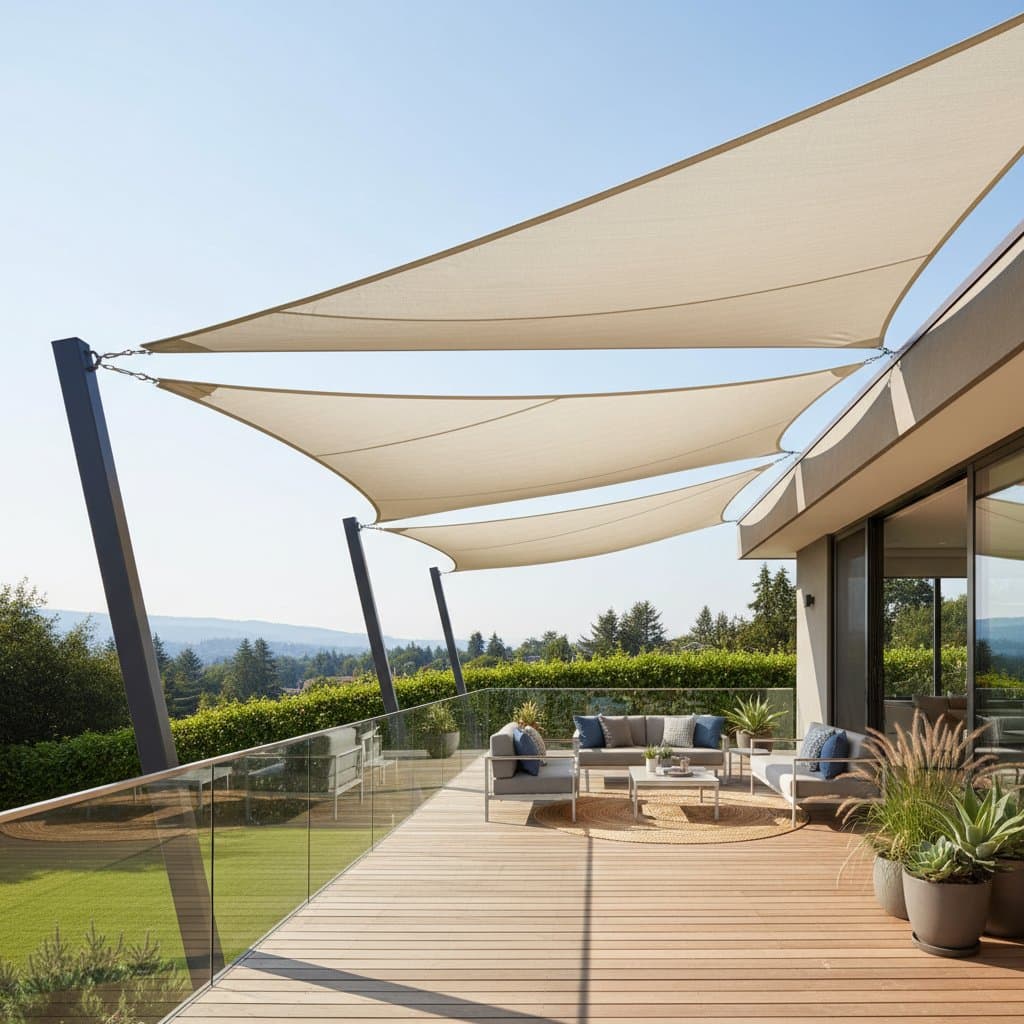
Introduction to Curved Shade Sails
Curved shade sails offer a versatile solution for outdoor spaces, particularly decks exposed to intense sunlight. Unlike traditional awnings or pergolas that fully enclose areas, these sails provide targeted shade through tensioned, curved fabric panels. They attach to posts or existing structures, creating a lightweight canopy that filters harmful UV rays while permitting air circulation.
Homeowners appreciate shade sails for their ability to transform underutilized decks into comfortable gathering spots. The curved design not only enhances visual appeal but also improves functionality by directing airflow and preventing water accumulation. Available in various sizes and colors, they suit urban balconies as well as expansive suburban patios.
Selecting the right shade sail involves considering deck dimensions, sun exposure patterns, and desired coverage. Measure the area carefully to ensure the sail spans adequately without overhanging edges excessively. Professional suppliers often recommend starting with a single panel to assess performance before adding more.
Benefits of Installing Curved Shade Sails
One primary advantage lies in heat management. Shade sails reflect up to 95 percent of solar radiation, significantly lowering surface temperatures on decks. This reduction can drop ambient heat by 10 to 20 degrees Fahrenheit, making spaces usable during peak summer hours.
The open design maintains ventilation, unlike solid roofs that trap heat. Breezes pass underneath and through the fabric weave, creating a naturally cooled environment. This feature proves ideal for urban settings like New York City, where humidity amplifies discomfort.
Aesthetically, curved sails add a modern, sculptural element to outdoor areas. They complement contemporary deck furnishings and landscaping, serving as focal points that elevate property value. Durability comes from high-quality materials such as UV-resistant polyester, which withstands fading and tearing over years of exposure.
Environmentally, shade sails reduce reliance on energy-intensive cooling methods. By shading decks, they minimize the need for portable fans or air conditioning extensions, promoting sustainable outdoor living. Their removable nature allows seasonal adjustments, further enhancing eco-friendliness.
Planning and Installation Steps
Begin by evaluating your deck's layout. Identify anchor points, such as corner posts or walls, that can support the sail's tension. For ground-mounted setups, choose locations that avoid walkways and provide even spacing for the fabric to curve naturally.
Gather essential materials: the shade sail, stainless steel hardware including turnbuckles and eye bolts, and mounting posts if needed. Opt for marine-grade components to resist corrosion in humid climates. Sketch a diagram showing attachment points to visualize coverage and ensure at least partial overlap with adjacent sails for broader shade.
Installation proceeds in phases. First, secure the posts or anchors firmly into the ground or structure. Use concrete footings for freestanding posts to prevent shifting. Next, attach the sail corners to the anchors, starting with the highest points to establish the curve.
Apply tension gradually using turnbuckles, pulling evenly from each corner. The fabric should form a gentle arc, typically 5 to 10 degrees, which aids drainage and wind resistance. Test the setup by observing shade patterns throughout the day, adjusting as necessary for optimal positioning.
For larger decks, consider professional assistance to achieve precise tensioning. Incorrect installation can lead to sagging or stress failures. Most DIY projects complete within a few hours, but complex configurations may require additional time for alignment.
Safety Considerations During Installation and Use
Prioritize structural integrity by selecting posts with a minimum diameter of 4 inches for ground installations. These provide sufficient stability against wind loads. Always anchor sails into load-bearing framing elements, avoiding superficial trim that cannot support weight.
Maintain a clearance of at least 7 feet from the deck surface to the lowest sail edge. This height accommodates standing and furniture placement without risk of contact. In regions prone to high winds, such as coastal areas, reinforce connections with additional cables.
Remove sails before severe weather events, including storms with gusts exceeding 30 miles per hour. Detach the fabric promptly to avoid tearing or anchor damage. Regular inspections help identify wear early, ensuring long-term safety.
Budgeting for Your Shade Sail Project
Costs vary based on scale and materials. A standard 12-foot curved shade sail, including basic hardware, ranges from $80 to $150. Premium fabrics with enhanced UV protection or custom shapes increase this to $200 or more.
Additional expenses include mounting posts at approximately $30 each, plus concrete and tools if starting from scratch. For a basic single-sail setup on an existing deck, total outlay typically falls between $150 and $300. Larger installations with multiple sails can reach $500 to $1,000.
Time investment remains manageable. A solo installer completes a simple project in 3 to 5 hours using common tools like wrenches and levels. Hiring a professional adds $200 to $500 in labor fees but ensures flawless execution, particularly for tension adjustments on expansive decks.
Factor in long-term savings. Shade sails extend the usability of outdoor spaces, reducing cooling costs and preventing deck surface degradation from sun exposure. Their longevity, often 5 to 10 years with proper care, justifies the initial investment.
Ongoing Maintenance and Troubleshooting
Regular upkeep preserves the sail's performance and appearance. Weekly, brush away leaves, pollen, or dust using a soft broom to prevent buildup. Every few months, rinse the fabric with a solution of mild soap and water, allowing it to air dry completely.
Inspect hardware biannually for signs of rust or loosening. Tighten turnbuckles as needed and replace corroded parts immediately with compatible stainless steel alternatives. In winter, remove and store the sail in a dry, ventilated area to avoid mildew growth.
Common issues arise from environmental factors. If the fabric sags over time, adjust turnbuckles evenly, turning each by two full rotations. This restores tension without distorting the shape.
Twisted corners often result from misaligned anchors. Verify that tension lines run straight from each corner to the attachment point, then realign as required. For water pooling after rain, lower one corner slightly by adjusting the anchor height, promoting natural runoff along the curve.
Efficient Storage Practices
Organize spare hardware in a labeled plastic bin stored near your outdoor tool collection. This setup facilitates quick access during adjustments or repairs. Coil any auxiliary ropes into neat 10-inch loops, securing them to avoid knots and simplify reuse.
When storing the sail seasonally, fold it loosely and place it in a breathable cotton or mesh bag. Avoid sealed plastic containers, which trap moisture and encourage mold. Position the storage area away from direct sunlight to prevent premature fabric degradation.
Maximizing Your Deck's Potential
Integrate shade sails into broader deck enhancements for greater impact. Pair them with weather-resistant furniture and potted plants to create defined lounging zones. Experiment with light-colored sails to maximize heat reflection, or select deeper shades for dramatic contrast against neutral decking.
Begin modestly with one sail to gauge shade effectiveness, then scale up for comprehensive coverage. Track usage patterns to refine placement, ensuring the setup aligns with your lifestyle. Ultimately, curved shade sails redefine outdoor comfort by mitigating heat while fostering an open, inviting atmosphere that encourages prolonged enjoyment.