
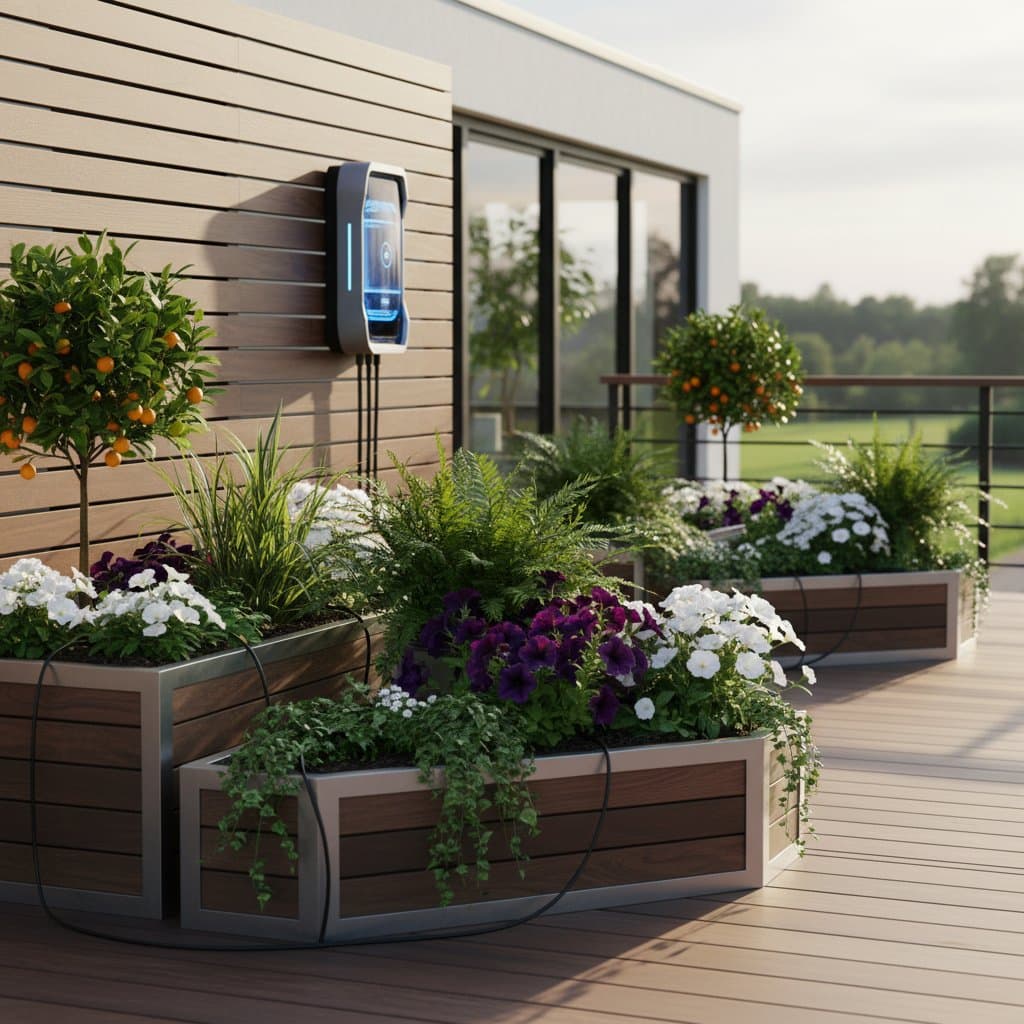
Automated Irrigation: Thriving Deck Gardens Made Easy
Deck plants often dry out quickly due to exposure to wind and sun, turning routine watering into a demanding task. Automated irrigation systems eliminate this hassle by delivering precise moisture on a set schedule. These setups ensure plants receive consistent care, allowing gardens to flourish without daily intervention. This guide covers selecting components, installation steps, and maintenance practices tailored for deck or balcony spaces.
Essential Tools and Materials
Assemble a basic automated irrigation system using durable, compatible parts to avoid leaks or inefficiencies. Begin by assessing your deck's layout, including the number of containers and their positions relative to the water source.
Core components include:
- A battery-operated or electric timer capable of programming at least two daily cycles, with options for duration and frequency adjustments.
- 25 to 50 feet of 1/4-inch drip tubing, flexible enough to route along railings and into planters without kinking.
- 10 to 20 adjustable drip emitters or micro-sprayers, each delivering 0.5 to 2 gallons per hour depending on plant needs.
- A backflow preventer to protect municipal water supplies from contamination.
- A pressure regulator designed for low-flow drip systems, typically set to 25 pounds per square inch.
- A hose-to-tubing adapter to connect the garden hose to the drip line.
- Stakes, clips, or weights to anchor tubing securely against wind.
- Sharp scissors or a dedicated tubing cutter for clean cuts.
Optional enhancements:
- A Wi-Fi-enabled smart controller for remote adjustments via smartphone app.
- A soil moisture sensor to automate watering based on actual conditions rather than fixed timers.
For setups with multiple pots, allocate one emitter per container for small plants like herbs, or two emitters spaced 6 inches apart in larger planters for even distribution. Purchase extra connectors and tees to branch lines as needed, ensuring the system scales with your garden's growth.
Installation Steps
Position the timer near an outdoor faucet for easy access. Attach the backflow preventer and pressure regulator directly to the faucet thread, followed by the hose adapter. Connect the drip tubing to the adapter and run it along the deck's perimeter, securing it with clips every 2 feet to prevent sagging.
Punch small holes in the tubing using an emitter insertion tool, then insert emitters at the base of each plant. For hanging baskets, use weighted stakes to direct lines downward. Test the system by running a short cycle: observe for even flow and adjust emitter rates to match soil absorption. Seal all connections with goof plugs to minimize drips.
Initial setup requires about two hours for a deck with 10 to 15 containers. Start with a simple loop configuration before adding branches, which allows for troubleshooting without disrupting the entire line.
Safety Considerations
Prevent common issues by monitoring system performance regularly. Overwatering leads to fungal growth and root rot, so insert a finger 1 inch into the soil weekly to check moisture levels; adjust timers if the soil feels soggy.
In regions with freezing temperatures, disconnect and drain all tubing before winter arrives, as expanding ice can burst lines. Store components in a dry indoor space and inspect for damage each spring. Position electrical timers in sheltered spots or enclose them in waterproof housings to guard against rain exposure.
Connect only to potable water sources, or install inline filters if using rainwater collection to avoid clogging from debris. Regularly flush lines with a vinegar solution to clear mineral deposits, extending the system's lifespan.
Cost Breakdown and Time Investment
Expect to spend 60 to 150 dollars on a starter kit, with timers accounting for 20 to 50 dollars and emitters adding 10 to 30 dollars based on quantity. Smart controllers range from 80 to 200 dollars but offer app-based monitoring that reduces waste by 20 to 30 percent over time.
Labor for DIY installation totals two to four hours, depending on deck size and tubing length. Save money by opting for mechanical timers over digital ones and reusing cleaned tubing from previous years. Invest in quality regulators and preventers, as cheap alternatives risk plumbing damage or uneven pressure.
For budget-conscious gardeners, source materials from local hardware stores or online suppliers specializing in irrigation; compare flow rates and warranties to ensure reliability.
Seasonal Maintenance Schedule
Adapt your system to changing weather for optimal plant health. In spring, reassemble components, flush lines with water to remove winter residue, and run a test cycle to verify flow before seeding or transplanting. Set initial schedules for 10 to 15 minutes twice daily in moderate temperatures.
During summer heat, extend cycles to 20 minutes or add a third watering if pots dry out midday; focus on shallow-rooted plants like petunias that require more frequent moisture. In autumn, taper frequencies to once daily as daylight shortens and evaporation decreases, fully draining lines ahead of frost.
Winter storage involves coiling tubing neatly and cleaning emitters by soaking in mild soap. Before reuse, check for cracks and replace any degraded parts to maintain efficiency.
Enhancing Efficiency with Smart Features
Organize spares like extra emitters and fittings in a divided plastic bin, labeling sections for quick access. Affix the timer's instruction manual to a nearby surface with clips for reference during adjustments. In tight spaces, hang coiled tubing on wall-mounted hooks to free up deck area.
Incorporate a rain sensor or soil probe for 30 dollars to halt watering during wet periods, potentially cutting usage by 25 percent. These tools integrate easily with existing timers, providing data on moisture levels to refine schedules further.
Professional Installation Options
For systems tying into main water lines or involving wall penetrations, consult a licensed plumber to handle permits and compliance. Professionals ensure balanced pressure and robust backflow safeguards, preventing costly repairs.
On expansive decks supporting over 30 containers, experts design multi-zone setups with valves that alternate flows, avoiding overload. Such installations run 200 to 400 dollars in labor, yielding leak-free operation and a streamlined layout that blends with deck aesthetics.
Implementing and Refining Your System
Survey your deck to identify high-evaporation zones, such as sunny corners or elevated pots, and prioritize those for initial emitters. Launch with a basic configuration: one timer, adapter, and five to ten emitters targeting problem areas.
Track performance in a notebook, noting run times alongside plant vitality. After two weeks, fine-tune durations by 1 to 2 minutes, aiming for soil that remains moist but not waterlogged. This iterative approach customizes the system to your specific sunlight, wind, and plant varieties.
With automation in place, reclaim time for enjoying your outdoor space. Reliable hydration means vibrant greenery year-round, supporting relaxed mornings and worry-free absences.