
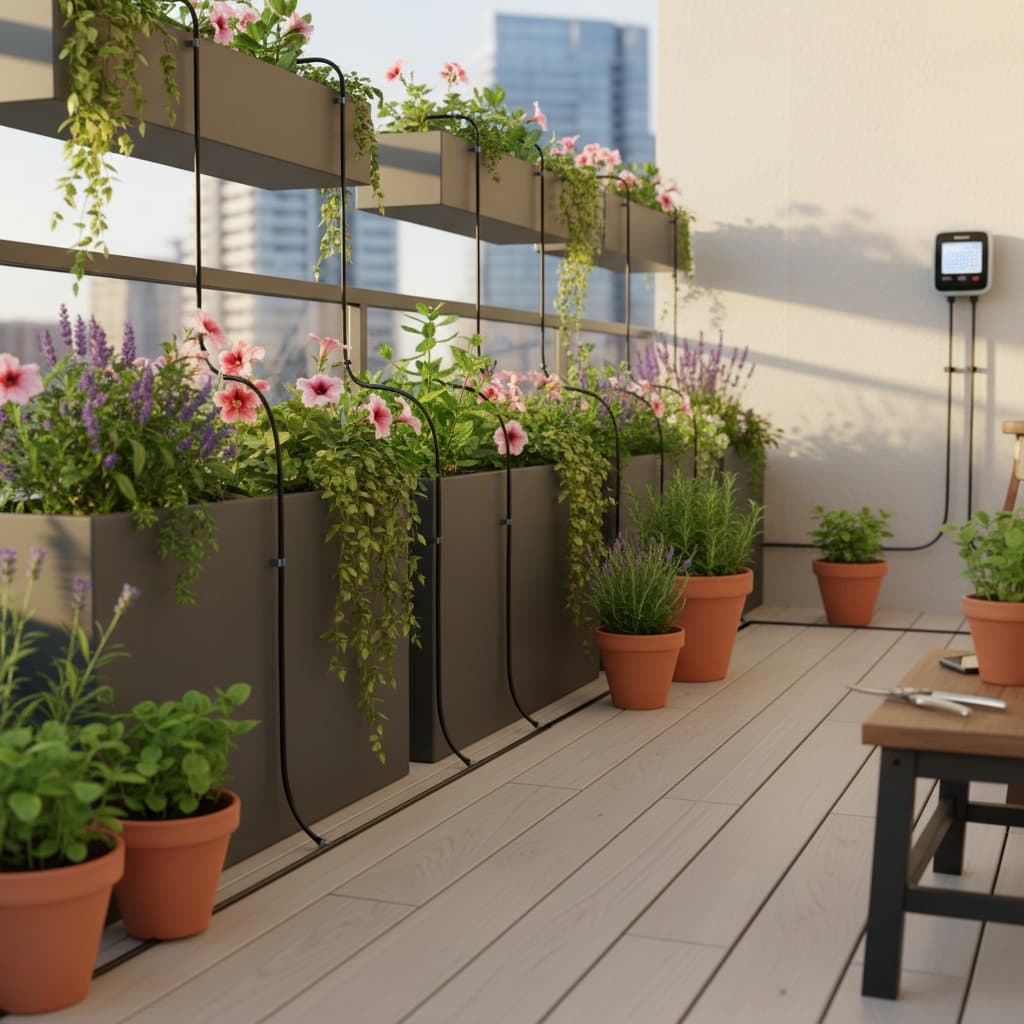
Introduction to Micro-Drip Irrigation for Balconies
Balcony gardens offer urban dwellers a touch of nature amid city life. However, travel often disrupts plant care routines, leading to wilted leaves and lost greenery. A micro-drip irrigation system addresses this challenge by delivering precise water amounts directly to plant roots, mimicking natural rainfall without excess runoff.
This method proves especially useful for small spaces like balconies, where traditional watering methods waste water and soil. By automating hydration, you protect your plants from drought stress and return to a thriving outdoor oasis. The following sections guide you through the process, from initial planning to long-term upkeep.
Benefits of Micro-Drip Systems for Urban Gardeners
Micro-drip tape distributes water slowly through tiny emitters, ensuring even moisture across pots and planters. This approach reduces evaporation, a common issue in exposed balcony environments. Plants receive consistent hydration, which promotes healthier growth and minimizes disease risk from overwatering.
Water conservation stands out as a key advantage, particularly in water-restricted urban areas. Systems like these use up to 70 percent less water than manual methods. Additionally, the setup prevents soil erosion on balconies, maintaining tidy appearances despite your absence.
Planning Your Balcony Drip System
Assess your balcony's layout before purchasing components. Measure the total length of tubing needed by mapping out pot positions and grouping plants with similar watering needs. Consider sun exposure and wind patterns, as these factors influence evaporation rates.
Determine plant requirements based on species. Succulents demand less frequent watering than ferns, so segment your system accordingly. Budget for a basic kit starting at around 20 dollars, which includes tape, connectors, and a timer.
Sketch a simple diagram to visualize the flow from a central water source, such as a nearby faucet. This planning step avoids common errors like insufficient pressure or mismatched emitter spacing.
Essential Tools and Materials
Gather these items for a successful installation:
- Micro-drip tape with built-in emitters spaced 6 to 12 inches apart.
- Pressure regulator to maintain 10 to 30 PSI for optimal flow.
- Timer or smart controller for automated scheduling.
- Hole punch tool for custom emitter placement.
- Connectors, tees, and end caps for secure assembly.
- Filter to prevent clogs from debris.
Select UV-resistant materials to withstand balcony sunlight. Test water pressure from your source to ensure compatibility. These tools enable a durable setup that lasts multiple seasons.
Step-by-Step Installation Guide
Step 1: Prepare the Water Source
Connect the pressure regulator and filter to your faucet. Attach the main supply line, typically 1/2-inch tubing, leading to the balcony area. Secure all fittings with clamps to prevent leaks.
Step 2: Lay Out the Drip Tape
Unroll the micro-drip tape along the base of pots or through hanging planters. Punch holes if needed for targeted watering at soil level. Use stakes or weights to anchor the tape against wind.
Step 3: Connect and Test the System
Join sections with tees and elbows for branched layouts. Cap the ends to build pressure. Turn on the water briefly to check for even distribution and fix any drips.
Step 4: Integrate Automation
Attach a battery-operated timer to the faucet, setting it for short daily cycles of 10 to 20 minutes. For advanced control, pair with a smart app that adjusts based on weather forecasts.
Installation typically takes one to two hours. Run a full test cycle before your trip to confirm reliability.
Maintenance and Troubleshooting
Inspect the system monthly for clogs or wear. Flush lines with a vinegar solution to dissolve mineral buildup. Adjust emitter flow rates seasonally to match changing plant needs.
Common issues include low pressure from kinks in the line; straighten tubing to resolve this. If plants show uneven wetting, reposition emitters closer to roots. Winterize by draining water to prevent freezing damage.
Regular upkeep extends system life beyond three years. Document adjustments in a log for consistent performance.
Safety Considerations for Balcony Setups
Secure all tubing to avoid tripping hazards on narrow balcony spaces. Use non-slip mats under pots if water accumulates. Ensure the system complies with building regulations regarding water usage.
Protect electrical timers from rain with weatherproof covers. Monitor for leaks that could damage balcony surfaces or neighboring units. These precautions maintain safety for you and your community.
Enhancing Efficiency with Advanced Features
Incorporate soil moisture sensors to trigger watering only when necessary. This addition further conserves water and prevents root rot. Solar-powered pumps suit balconies without easy faucet access.
Group plants by hydration zones for customized care. For example, dedicate one line to drought-tolerant herbs and another to thirsty annuals. Such refinements optimize resource use and plant health.
Returning to a Vibrant Balcony Garden
With a micro-drip system in place, your balcony awaits with lush foliage upon your return. This investment saves not only water but also the effort of last-minute arrangements. Experience the joy of effortless gardening that fits urban lifestyles.
Apply these strategies to cultivate a resilient green space year-round. Your plants will flourish, turning your balcony into a reliable retreat regardless of travel demands.