
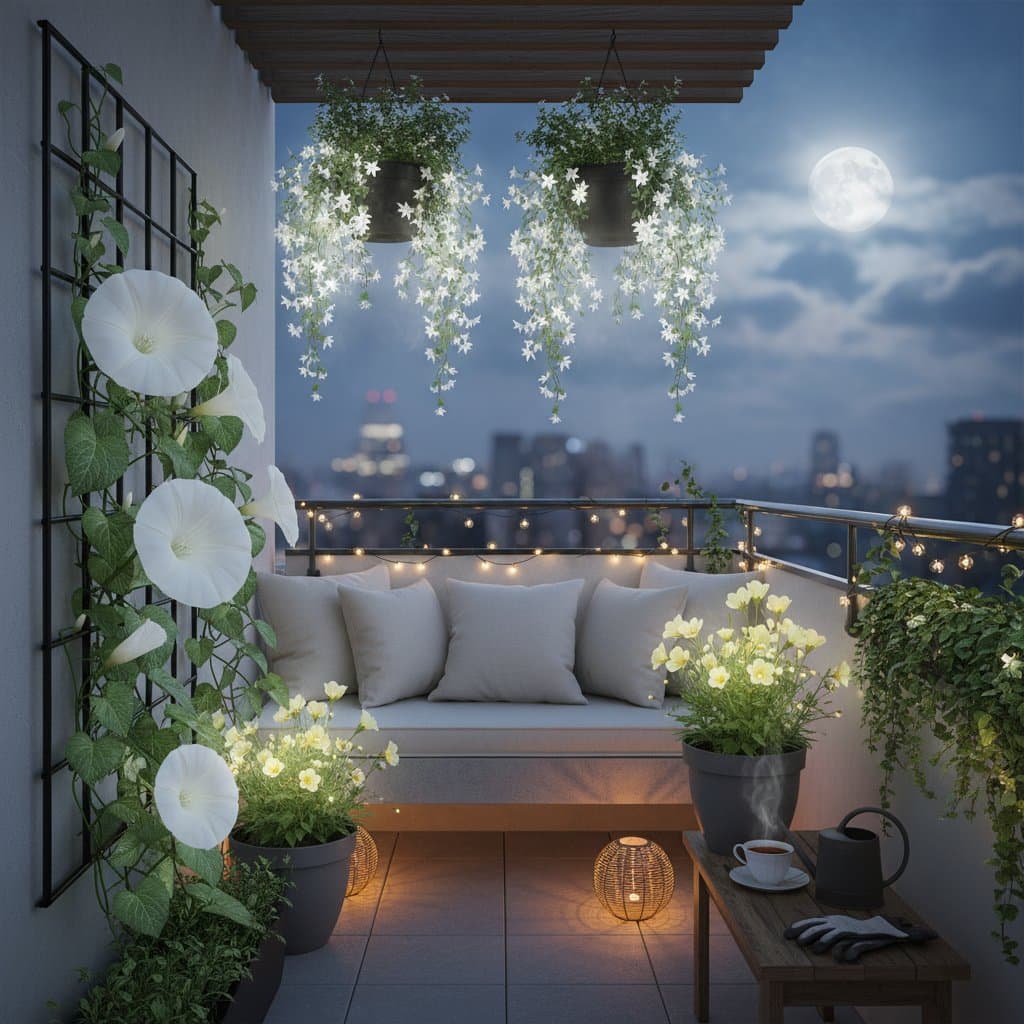
Night-Blooming Plants That Transform Balcony Nights
Balconies shift in character after sunset. Urban sounds diminish, temperatures drop, and distant lights create a subdued ambiance. This serene environment calls for plants that awaken in the evening. Night-blooming plants unfurl their petals as daylight fades and release fragrances that infuse the space with soothing aromas. Even compact balconies can become enchanting moonlit retreats through thoughtful plant selections and straightforward care routines.
Focus on varieties suited to container growth, requiring minimal upkeep, and delivering consistent evening displays. The following sections detail suitable options, arrangement techniques, and ongoing care to sustain vibrant nocturnal gardens.
Overview
Night-blooming plants remain budded during daylight hours and expand their flowers in dim conditions. Numerous species rely on nocturnal pollinators such as moths and bats, resulting in light-colored petals and potent scents. These features suit urban balconies, where ambient illumination amplifies their ethereal appearance.
Primary benefits include multisensory appeal through aroma, gentle movement, and reflected light amid the evening hush. Additionally, these plants tolerate cooler nights well and resist wilting better than diurnal counterparts, promoting longevity in container settings.
Top Night-Blooming Choices
Select three to five pots to achieve noticeable impact. Prioritize plants compatible with available sunlight and spatial constraints.
- Moonflower: Produces expansive white blooms that unfurl rapidly at twilight. A single vine supports a trellis up to six feet in height.
- Evening Primrose: Displays delicate yellow flowers opening at dusk, drawing evening insects for subtle activity.
- Night-Blooming Jasmine: Emits a potent perfume that permeates the area. Maintain height at three feet through regular pruning.
- Tuberose: Features upright stems bearing creamy white, waxy blooms. Ideal for slender spots and arrangements for cutting.
- Four O’Clocks: Forms compact bushes with pink, red, or white flowers emerging in late afternoon and persisting overnight.
This selection provides diversity in fragrance profiles, stature, and hues, all while remaining practical for potted cultivation.
Tools and Materials
Assemble essential items for establishing a night-blooming display.
- Four to six medium pots, each at least ten inches in depth
- Well-draining potting soil
- Slow-release granular fertilizer
- Portable trellis or support stakes
- Watering can equipped with a fine spout
- Optional solar-powered lanterns for ambient illumination
Store a hand trowel, gardening gloves, and pruning shears in a protected container to streamline routine tasks.
Steps
- Plan the layout. Position vertical growers like moonflower against railings or walls, with low-profile plants in foreground areas.
- Prepare the pots. Fill containers to three-quarters capacity with soil, reserving two inches of space at the rim.
- Plant with care. Loosen root balls gently and position plants so the crown aligns with the soil line. Firm the medium around roots for stability.
- Water thoroughly. Apply approximately one quart per pot until excess drains from base openings.
- Install supports. Place trellises or stakes immediately post-planting to minimize future root disturbance.
- Incorporate lighting. Arrange solar lanterns or low flames along perimeters to highlight petal sheen.
- Fertilize periodically. Apply balanced nutrients monthly, followed by irrigation to distribute evenly and avoid scorching.
Complete a five-pot installation within two hours.
Safety Tips
Wear gloves when handling soil to prevent irritation. Route any lighting cords away from pathways to reduce stumble risks. Prevent overwatering, as excess moisture creates hazardous slickness on surfaces.
Troubleshooting
- Absent blooms: Verify exposure to indirect sunlight for a minimum of three hours daily, as night-bloomers still require daytime light.
- Yellowing foliage: Cut back on irrigation and confirm adequate drainage.
- Diminished scent: Refresh soil annually and prune spent stems to stimulate new development.
For powdery mildew, excise impacted leaves and enhance circulation using a compact fan.
Budget and Time
Allocate thirty to fifty dollars for plants and soil. Budget an additional thirty dollars for new pots and lights if needed. Initial assembly requires one weekend afternoon. Routine care demands ten minutes every second day.
Maintenance
Prune climbing types monthly to promote ventilation. Deadhead spent flowers to spur reblooming. Layer mulch or pebbles atop soil to retain hydration. In autumn, relocate sensitive specimens indoors to a sunny sill.
Seasonal Reminders
Initiate seeds or seedlings indoors early spring for accelerated flowering. Through peak summer, fertilize consistently and shape plants via trimming. As temperatures cool, shorten vines and preserve bulbs such as tuberose in a moisture-free vessel.
Build Your Evening Oasis
Examine your balcony this evening, observing post-sunset light patterns. Identify a peaceful nook and begin with one pot of moonflower or jasmine. Expand the collection after assessing the nocturnal atmosphere. Track bloom schedules, aroma notes, and hydration needs in a dedicated journal.
In weeks, the space evolves. Petals catch moonlight, and breezes carry subtle perfumes, fostering restorative nights.