
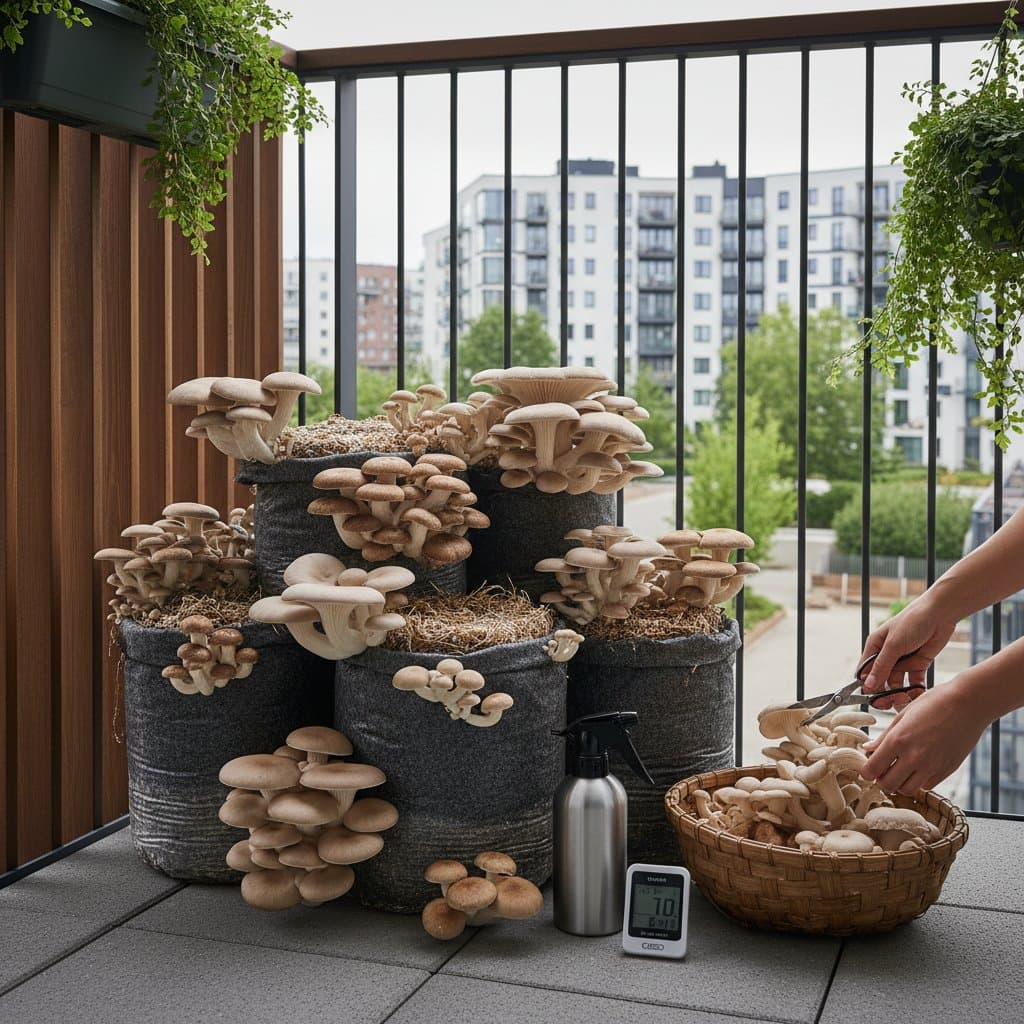
Grow Fresh Mushrooms in a Shaded Balcony Corner
Urban living often limits access to fresh produce, yet shaded balcony spaces offer untapped potential for homegrown mushrooms. These fungi thrive in low-light conditions, require minimal space, and deliver nutrient-rich harvests with little effort. This guide provides a step-by-step process to establish a productive mushroom setup, drawing on proven techniques for city dwellers.
Mushrooms suit balconies because they favor humidity and shade over sunlight. Beginners can expect yields from simple setups using everyday materials. Follow these steps to cultivate oyster or button varieties, which adapt well to container growing.
Gather Materials
Select a clear plastic storage bin with a lid, approximately 10 to 20 gallons in size, to serve as your growing chamber. Acquire mushroom spawn from a reputable supplier; oyster mushroom spawn works reliably for novices. Prepare substrate options such as spent coffee grounds, pasteurized straw, or hardwood sawdust, ensuring they remain free from contaminants.
You will also need a spray bottle for misting, gloves for handling, and boiling water for pasteurization. Position the bin in a stable, shaded balcony spot protected from rain and wind. Check local regulations if you reside in an apartment complex, as some buildings restrict outdoor cultivation.
Fill with Substrate
Place the substrate into the bin, filling it to about two-thirds capacity. If utilizing coffee grounds, confirm they are freshly spent and show no signs of mold. For straw or sawdust, pour boiling water over the material to pasteurize it, then allow it to drain until the texture feels damp without excess water.
Wear protective gloves when managing hot items to prevent burns. This preparation step eliminates harmful bacteria, creating a welcoming environment for fungal growth. Adjust the volume based on your bin size to avoid overcrowding.
Mix in the Spawn
Break apart the mushroom spawn into smaller pieces and incorporate it thoroughly into the substrate. Maintain a ratio of one part spawn to five parts substrate to promote even colonization and reduce contamination risks. Use clean hands or a sterilized tool for mixing to preserve sterility.
Distribute the spawn uniformly, pressing it gently into the damp material. This method ensures the mycelium, the fungal network, spreads efficiently. Allow the mixture to settle for a few minutes before proceeding.
Seal and Store
Cover the bin with its lid or a sheet of plastic wrap, securing it loosely to permit air exchange. Position the setup in a shaded, sheltered balcony area. Maintain temperatures between 60 and 75 degrees Fahrenheit (15 to 24 degrees Celsius), monitoring with a simple thermometer if needed.
Direct sunlight can evaporate moisture too quickly, so select a north-facing corner or use a breathable cover. In warmer climates, observe for overheating during peak summer days. This incubation phase lasts two to three weeks.
Mist Daily
Employ the spray bottle to apply a fine mist to the surface one or two times daily. Sustain high humidity levels without forming standing water, which invites mold. Inspect the top layer regularly; mist lightly if it appears dry to the touch.
Consistency in this routine supports mycelium development. In dry urban environments, consider placing a shallow tray of water nearby to boost ambient moisture. Track progress by noting subtle changes in texture.
Wait for Growth
Within two to three weeks, observe white, thread-like filaments emerging across the substrate. These structures represent mycelium, the essential root system of the mushrooms. Once the surface achieves full white coverage, relocate the bin to a position with gentle indirect light to initiate fruiting.
Patience proves key during this period; avoid disturbing the setup unnecessarily. Signs of healthy growth include a fresh, earthy scent. If progress stalls, review environmental conditions before intervening.
Harvest
As small caps form, continue gentle misting to encourage maturation. Pick the mushrooms once the caps unfurl and their edges start to flatten, typically within days of appearance. Twist each one at the base carefully to prevent damage to the remaining mycelium.
Harvest in the morning when humidity peaks for optimal freshness. A single batch often produces multiple flushes over weeks. Store picked mushrooms in the refrigerator for up to a week, using them in stir-fries or salads.
Clean and Restart
Following the final harvest, remove all spent substrate and rinse the bin thoroughly. Wipe interior surfaces with a solution of diluted vinegar to disinfect. Allow the container to air dry completely in a sunny spot before preparing the next cycle.
This cleaning ritual minimizes carryover of pathogens. Reuse the bin multiple times, inspecting for cracks or wear. Document your yields to refine future attempts.
Safety Tips
Wash hands thoroughly before and after interacting with mushrooms or substrate materials. Employ clean tools and containers at every stage to deter mold formation. Should a strong unpleasant odor or green discoloration emerge, dispose of the entire batch in a sealed bag outside.
Restrict access to growing areas for pets and children, as certain spores may cause skin irritation or allergic reactions. Source edible mushroom spawn exclusively from verified suppliers to ensure safety for consumption.
Troubleshooting
Mushrooms cease growth midway.
This issue often stems from insufficient humidity or excessive light exposure.
Increase misting frequency and shift the container to a more shaded location.
Green or black mold develops.
Contamination arises from unsterile substrate or tools.
Discard the affected batch immediately and sanitize all equipment with vinegar solution prior to reuse.
Mushrooms emerge thin or pale.
Inadequate oxygen flow or nutrient depletion contributes to weak development.
Punch additional ventilation holes in the bin and introduce fresh substrate for subsequent batches.
Most challenges resolve with minor adjustments, and success typically follows initial trials.
Budget and Time Considerations
Initial setup expenses range from 25 to 60 dollars, primarily covering spawn and substrate purchases. Each cycle produces one to two pounds (0.5 to 1 kilogram) of mushrooms, sufficient for multiple family meals. The inaugural round spans four to six weeks from preparation to harvest, with subsequent efforts accelerating due to familiar routines.
Reduce costs by sourcing spent coffee grounds from local cafes or repurposing chemical-free straw from pet supplies. Track expenditures to optimize for ongoing cultivation. Yields improve with experience, offsetting investments quickly.
Maintenance Practices
Maintain tidiness around the growing zone by wiping surfaces weekly and clearing debris promptly. Store surplus substrate in airtight bags indoors to repel pests. After completing a cycle, permit the balcony area a one-week respite to curb mold accumulation.
In cooler regions, relocate the bin indoors to a humid spot like a shaded windowsill or bathroom cabinet. Mushrooms tolerate such adaptations well, provided moisture levels remain consistent. Regular checks prevent common setbacks.
When to Seek Expert Guidance
For expansions beyond three bins or cultivation of specialty varieties such as shiitake or reishi, engage a local urban agriculture specialist. Professionals assess airflow, temperature stability, and hygiene protocols. Inquire about advanced sterilization methods, custom substrate formulas, and early detection of issues.
A single consultation averts expensive errors and elevates your setup. Community workshops often provide hands-on insights tailored to balcony constraints.
Start Your Balcony Harvest Today
Transform that overlooked shaded corner into a source of fresh mushrooms with these straightforward steps. Gain confidence through practice, enjoying sustainable yields that enhance urban meals. Experiment with recipes to fully appreciate your homegrown bounty, fostering a deeper connection to food production.