
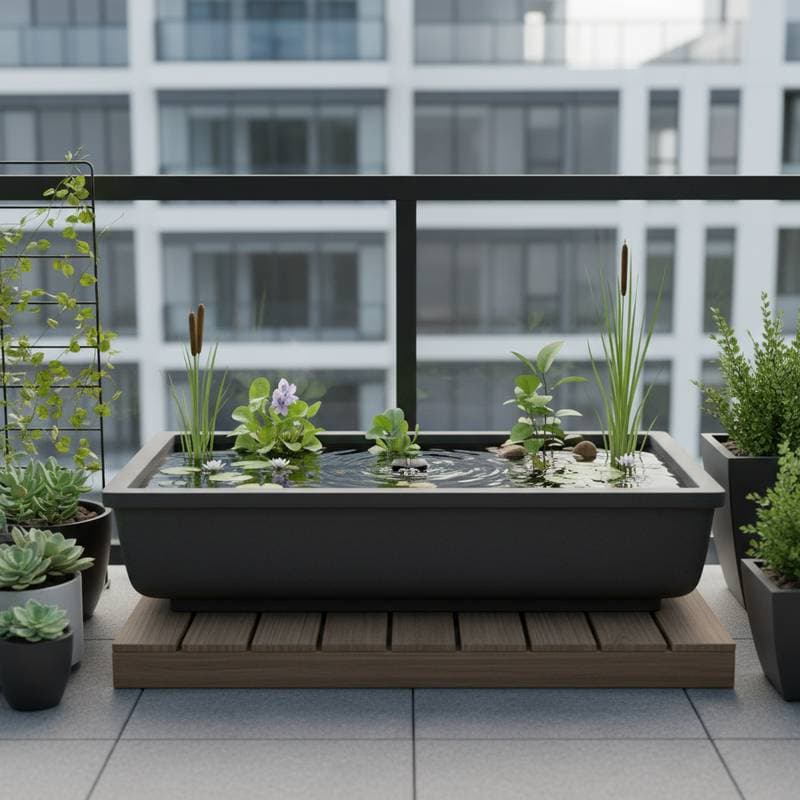
Balconies Transformed by Micro Water Gardens
Compact balconies often seem restrictive, yet a micro water garden introduces tranquility and vitality. Rather than adding more potted plants or rail attachments, this feature delivers gentle motion, reflective surfaces, and a self-sustaining ecosystem within one or two vessels. The objective remains straightforward: establish a small-scale water element that lowers ambient temperature, fosters lush growth, and captivates attention while avoiding spills or excessive clutter.
Understanding Micro Water Gardens
A micro water garden functions as a self-contained miniature pond accommodating aquatic plants and, optionally, small aquatic life such as snails or fish. Suitable vessels include ceramic bowls, galvanized tubs, or durable plastic containers, all without drainage holes or complex plumbing. Success depends on achieving equilibrium among water volume, plant selection, light exposure, and routine upkeep.
In urban balcony settings, these gardens provide ambient sounds, biodiversity, and a subtle cooling influence on warm days. Assembly requires just one afternoon, with ongoing maintenance limited to a few minutes weekly. They thrive in partial sunlight and confined areas alike.
Essential Tools and Materials
Assembly demands few items, many of which prove affordable or readily available.
Container (One Required)
- Select a holder measuring 12 to 24 inches in diameter and at least 8 inches in depth. Options encompass ceramic pots, glazed clay basins, or reinforced plastic tubs. Ensure the absence of drainage openings.
Base Layers (Three Components)
- Layer small gravel or smooth river pebbles to a depth of 1 to 2 inches.
- Incorporate several larger stones for plant stabilization.
- Optionally, position an upturned brick or inverted pot to elevate certain plants nearer the water surface.
Plants (Four to Six Varieties)
- Include floating species like water lettuce or duckweed for surface coverage.
- Add marginal plants such as dwarf papyrus or sweet flag along the edges.
- Integrate submerged oxygenators including anacharis or hornwort to purify the water.
Water and Additives
- Employ tap water aged for 24 hours to dissipate chlorine, or apply a dechlorinator tablet.
- Consider a compact pump or aerator for water circulation if desired.
Optional Aquatic Inhabitants
- Introduce a handful of snails or a single small fish, such as a white cloud minnow, to control algae. Limit additions to shaded environments where water temperatures remain stable.
Basic Tools
- Prepare a bucket or watering can for handling liquids.
- Gather clean scissors for pruning.
- Use a non-toxic brush or sponge to address algae buildup.
Step-by-Step Assembly
1. Prepare the Container
Rinse the chosen vessel thoroughly with plain water, steering clear of soaps that might leave harmful residues. Inspect for fractures that could cause leaks. Position it on a stable, flat surface capable of bearing at least 30 pounds. For uneven balcony floors, employ a slender wooden shim beneath one side to achieve level placement.
2. Layer the Base
Distribute gravel across the bottom to form a 1-inch layer. Integrate a selection of larger stones to create visual interest. To introduce height variations, insert an inverted pot or brick as a platform for select plantings.
3. Introduce Water
Pour water gradually over a stone to prevent disturbing the substrate. Fill until the vessel reaches approximately 3 inches below capacity. Allow several hours for sediment to settle.
4. Position the Plants
Arrange taller marginal species toward the rear, with floating plants concentrated centrally. Maintain visible open water areas. Secure submerged plants beneath lightweight rocks. Prune any compromised foliage prior to placement.
5. Incorporate Optional Life
For fish or snails, acclimate by floating their transport bag in the water for 15 minutes to match temperatures. Release contents carefully. Restrict to one or two specimens in containers under 20 gallons.
6. Final Placement
Relocate the assembly to a spot receiving at least four hours of indirect sunlight daily. Excessive direct rays promote algae proliferation, while insufficient light hampers plant vigor. Activate a pump for subtle aeration if included.
Key Safety Considerations
Verify balcony load capacity, as a filled 20-inch container may weigh up to 40 pounds. Route pump cords away from damp areas and connect to ground fault circuit interrupter outlets. Refresh partial water volumes monthly to deter mosquito development; dense floating plants further inhibit breeding by shading the surface. Elevate the setup beyond reach of children or pets to prevent tipping.
Common Issues and Solutions
Green Water Discoloration: Diminish direct sunlight or increase floating plant density. Brush container interiors biweekly with a soft tool.
Wilting or Decaying Plants: Assess for inadequate light or contaminated water. Promptly excise perished matter and refresh one-third of the volume with treated water.
Mosquito Larvae Presence: Incorporate two tablespoons of apple cider vinegar per gallon, or employ a bubbler to agitate the surface.
Pump Malfunctions: Disconnect power before maintenance. Flush intake screens under flowing water.
Cost and Time Investment
Initial outlay ranges from 40 to 80 dollars, dominated by container expenses. Durable glazed ceramics outlast plastic alternatives, though both suffice. Individual plants cost 3 to 10 dollars apiece, with pumps around 15 dollars.
Construction spans about two hours, encompassing preparation and planting. Routine weekly tasks require ten minutes for replenishment and tidying.
Ongoing Maintenance Practices
Weekly Routine:
- Replenish evaporated water using dechlorinated sources.
- Remove surface debris and faded foliage.
Monthly Tasks:
- Exchange one-third of the water supply.
- Gently cleanse pump components and stones.
- Flush gravel if sediment accumulates.
Seasonal Adjustments:
- Relocate sensitive plants indoors during winter, maintaining them in jars by sunny windows.
- In freezing climates, drain partially or shelter the vessel against a wall.
Spring and summer optimize growth; divide overcrowded plants and renew substrate then. Limit fish nutrition in cooler periods and prune declining leaves promptly. Inspect electrical elements post-rainfall. Persistent algae may warrant shade cloth or additional floating ferns, which can cut light penetration by 30 percent without chemical interventions.
Practical Storage Solutions
House surplus gravel, plant holders, and implements in a compact crate beneath seating or a sealed bin. Maintain a pre-treated water jug for swift refills. Secure cords and tubes with clips along railings for neatness.
Professional Assistance Indicators
Consult building maintenance experts if balcony drainage proves problematic or existing waterproofing fails. They can validate weight tolerances and recommend sealed resin or fiberglass options.
Expert Strategies for Optimal Results
Select at least three plant categories for ecological harmony: one floating, one marginal, one submerged. Sustain water depths of 4 to 6 inches above roots for most species. Substitute washed gravel for potting soil to avert turbidity. Refrain from excess fish feeding, which fosters odors and overgrowth. Keep a fine-mesh net handy for efficient debris removal.
Bringing Your Balcony Garden to Life
Commence modestly with a 16-inch bowl to alter the balcony's ambiance profoundly. Cooler breezes and water's murmur emerge within a day. Identify a stable morning-light corner, procure supplies efficiently, and proceed through base preparation, filling, and planting. Document progress with periodic photographs to observe development.