
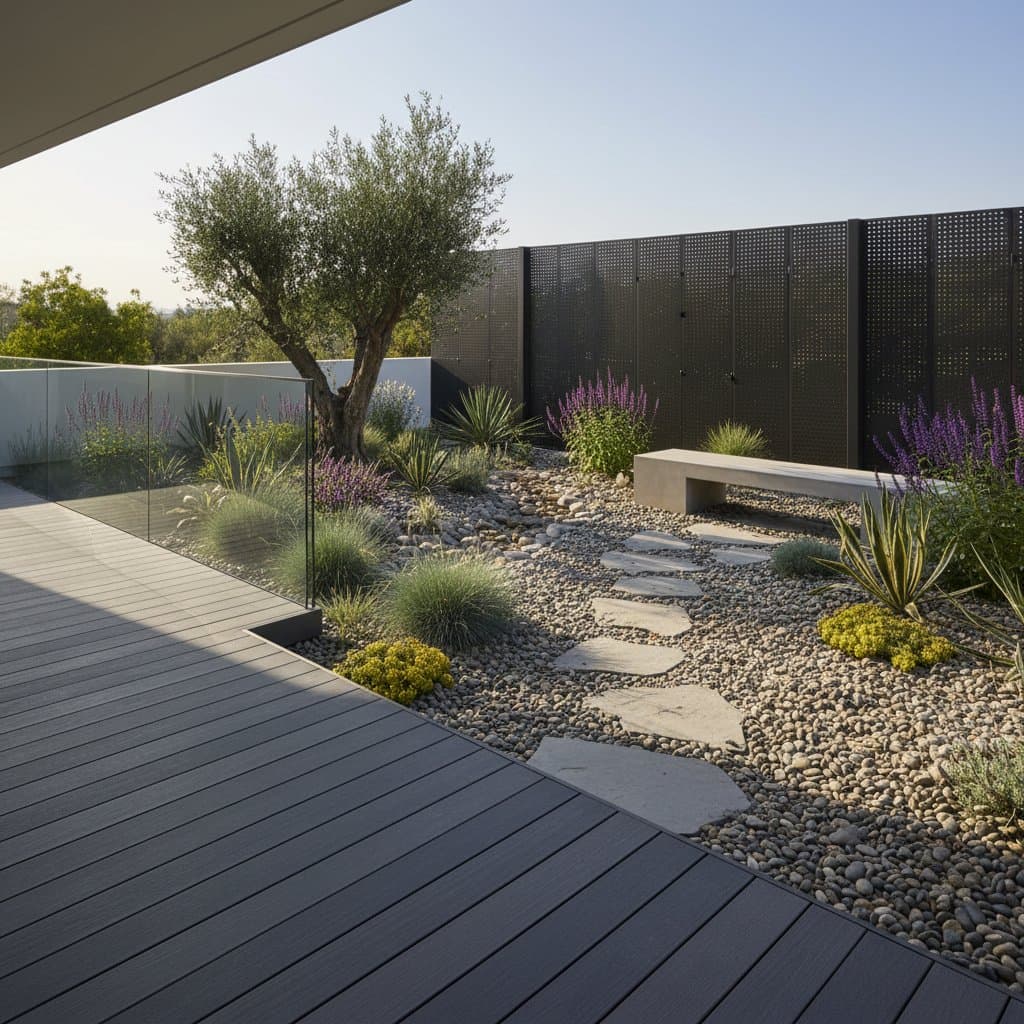
5. Plant the Beds
Position selected plants into the prepared soil pockets. Maintain spacing of 8 to 12 inches, or 20 to 30 centimeters, based on the expected mature dimensions of each species. Firmly pack the surrounding soil around every root ball to eliminate air pockets. Apply a light watering to settle the soil evenly before proceeding to the gravel layer.
6. Cover with Gravel
Distribute gravel uniformly over the entire bed surface, aiming for a consistent depth of 2 inches, or 5 centimeters. Use a rake to smooth and level the material without creating uneven patches. Ensure the gravel level remains just below the crowns of the plants to avoid smothering them. Position the bed so that rainwater naturally drains from the deck boards into the garden area.
7. Edge the Borders
Secure edging materials along the garden perimeter to contain the gravel effectively. Opt for sleek steel strips to complement contemporary deck designs. Consider brick or timber options for a more organic aesthetic. Fasten the edging firmly into the ground to withstand erosion from heavy downpours.
8. Water and Monitor
Provide a thorough initial watering immediately after completing the installation. Allow the top inch, or 2.5 centimeters, of soil to dry out completely between subsequent applications. During the establishment phase in the first few weeks, inspect soil moisture levels twice weekly. As roots develop, adjust to watering every two to three weeks, factoring in local rainfall patterns.
Safety Considerations
- Bend at the knees rather than the waist when lifting heavy gravel bags to safeguard your back from strain.
- Verify the deck's drainage system prior to soil addition, ensuring water directs away from the underlying structure.
- Don eye protection during tasks involving tamping or gravel distribution to shield against flying debris.
- Clear any loose gravel from deck surfaces promptly to prevent slips and falls.
Common Issues and Solutions
Water Pooling at Deck Edges
- Likely Reason: Insufficient slope or overly compacted soil impeding drainage.
- Resolution: Excavate the gravel from the problematic area, aerate the soil beneath, and recontour the grade to facilitate proper runoff.
Weeds Emerging Through Gravel
- Likely Reason: Damage or openings in the underlying landscape fabric.
- Resolution: Extract weeds manually at the base, repair the fabric with a matching patch, and replenish the gravel layer for added suppression.
Plants Failing to Flourish
- Likely Reason: Overly compacted soil or excessive moisture retention.
- Resolution: Incorporate coarse sand into the root zones for better aeration and scale back watering to match plant tolerances.
Gravel Shifting onto Deck Surfaces
- Likely Reason: Inadequate edging height or foot traffic displacing stones.
- Resolution: Install higher edging profiles or introduce a slim border of pavers to create a stable transition zone.
Cost and Timeline Estimates
For a 100-square-foot gravel garden, anticipate expenses of $250 to $400 when completing the project independently. Professional landscaping services typically range from $800 to $1,000, covering materials and labor.
Dedicate one full day to site preparation and assembly. Post-installation, allocate time for periodic weeding and pruning. Established gardens require under 15 minutes weekly for upkeep. Many homeowners recoup initial investments through water bill reductions and time savings within the first growing season.
Budget-friendly alternatives encompass:
- Sourcing gravel from nearby quarries to minimize transportation costs.
- Repurposing existing deck borders instead of purchasing replacements.
- Starting plants from cuttings shared by neighbors rather than buying established specimens.
Prioritize investments in high-quality soil and effective drainage, as these elements determine the garden's longevity and performance.
Ongoing Care Routines
Gravel gardens thrive with straightforward, infrequent maintenance focused on preservation.
Monthly Tasks
- Rake the surface to redistribute gravel evenly and eliminate depressions.
- Clear accumulated leaves or debris that could retain excess moisture.
Seasonal Tasks
- Prune away spent plant material to promote vigorous regrowth.
- Top up gravel in areas where depth falls below 1 inch, or 2.5 centimeters.
- Examine edging for displacement and reposition as necessary to contain stones.
Annual Tasks
- Incorporate fresh compost into narrow zones around plant bases to replenish essential nutrients.
- Survey adjacent deck boards for moisture-related deterioration and address promptly.
In climates prone to severe winter freezes, apply a thin layer of protective mulch over sensitive plants before frost sets in. Remove the covering in spring as temperatures moderate.
Efficient Tool Organization
Store essential gravel garden implements conveniently close to the deck for effortless access during upkeep. Utilize a compact outdoor storage unit or bench to house:
- Reserve gravel for spot repairs.
- A compact hand rake for smoothing.
- Sharp pruning shears for tidying.
- A dedicated watering can for precise applications.
- Spare landscape fabric pieces for quick fixes.
Apply labels to storage compartments for rapid retrieval. Place gloves and minor tools in breathable mesh containers to facilitate drying after wet conditions.
Indicators for Professional Assistance
Engage a certified landscaper under these circumstances:
- When the deck adjoins a pronounced slope or natural drainage feature.
- If integrating the garden with an pre-existing automated irrigation setup.
- Should persistent water accumulation occur despite grading adjustments.
Request a detailed proposal outlining soil analysis, terrain modifications, and suitable plant recommendations. Reputable experts will also assess deck foundation integrity following soil disturbances. Budget $50 to $100 hourly for advisory and execution services.
Essential Insights
- Gravel gardens conserve water through decreased evaporation and controlled runoff.
- Enhanced drainage from these setups safeguards deck integrity by reducing ambient humidity.
- Meticulous soil setup and border installation ensure a neat, undemanding landscape.
- Mature gardens demand sparse irrigation and eliminate the need for routine mowing.
Envision a deck framed by gravel and resilient foliage, evoking serenity and polish. The interplay of stone and timber textures infuses even compact urban plots with inviting character.
Implementation Steps
Begin modestly by targeting a single deck side or a runoff-prone corner. Experiment with a 4-by-8-foot, or 1.2-by-2.4-meter, plot to gauge gravel interaction with your local soil conditions. With successful adaptation, replicate the design across additional deck perimeters for cohesive enhancement.