
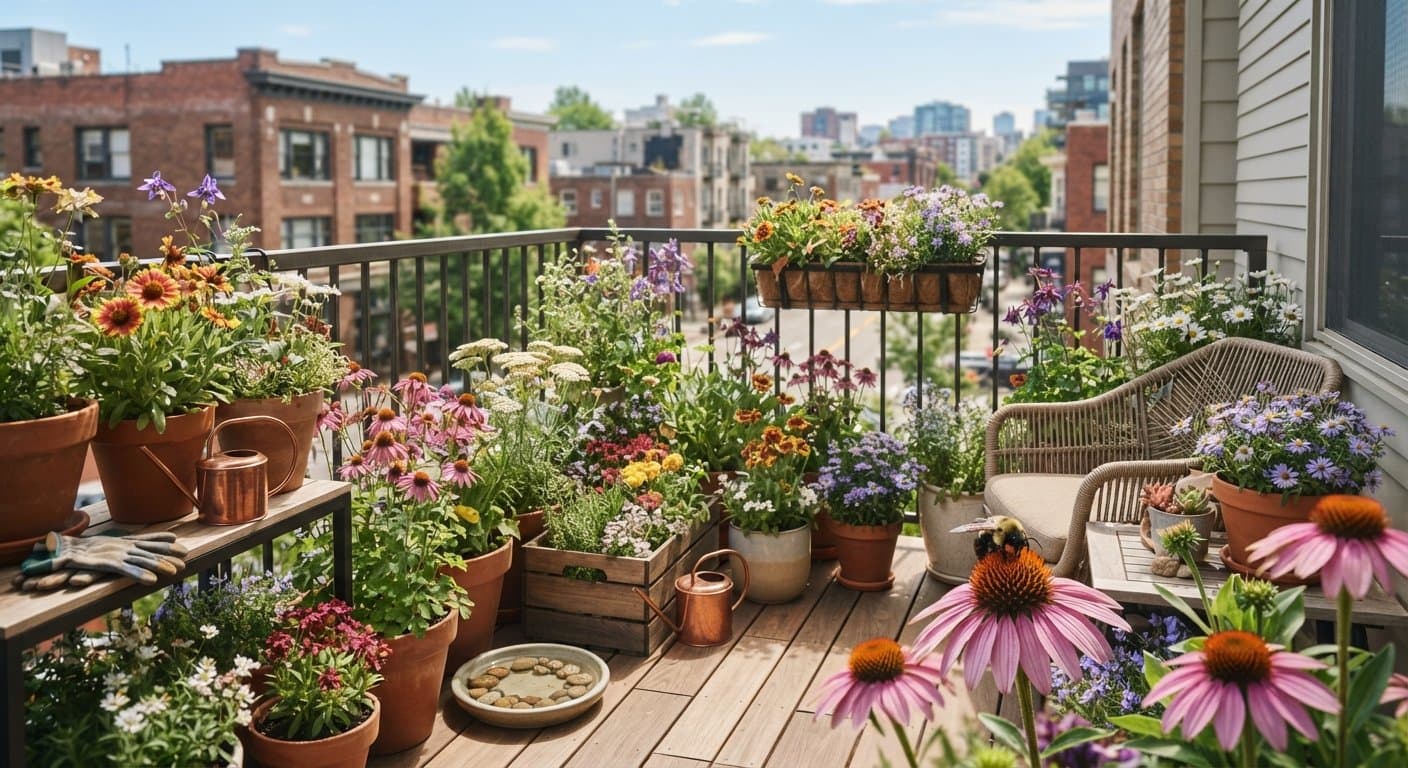
Pocket Gardens That Welcome Bees to City Balconies
A city balcony can feel too small for a garden, especially when every pot must earn its place. A pocket garden is a compact planting area built from containers, chosen plants, and simple care routines. With the right mix of native flowers, you can offer bees food and a resting place without taking over your outdoor space.
The goal is to make a small, safe garden that suits your balcony and local pollinators. You will learn how to check your conditions, choose plants, set up containers, and keep the garden healthy with manageable effort.
Overview
Bees need flowers that provide nectar and pollen, along with places where they can forage without disturbance. A balcony garden can help by offering a steady sequence of blooms in pots, window boxes, or railing planters. Even a few well-chosen containers can create useful habitat when they receive enough light and are kept free of pesticides.
Native plants are species that occur naturally in your region. They often support local bees and other pollinators, and many are adapted to local weather and soil conditions. Native does not automatically mean low maintenance, though. Choose plants that fit your light, container size, and ability to water.
Start with three practical questions. How many hours of direct sun does the balcony receive? How much weight can the balcony safely support? Is there a nearby source of water, and can you water plants easily?
Record sun exposure across a typical day before buying plants. Full sun often means six or more hours of direct light, while part sun usually means about three to six. A shaded balcony can still support a garden, but its plant options will differ.
Benefits of a Small Bee Garden
A pocket garden adds flowers and seasonal interest without requiring a yard. Plants can also soften hard surfaces and create a more pleasant place to sit. For bees, a cluster of suitable flowers reduces the distance between feeding stops.
A range of flower shapes and bloom periods can serve different pollinators. Some bees visit shallow flowers, while others can reach nectar in deeper blooms. Planting several individuals of the same kind can make flowers easier for bees to find.
Keep expectations realistic. A balcony garden cannot replace larger habitat, and a few pots may not attract every kind of bee. It can still provide a useful food stop, especially when neighbors also grow pollinator-friendly plants.
Tools and Materials
Gather supplies before planting so you can complete the setup in one session.
- Three to five containers, each with drainage holes and saucers or risers
- Potting mix labeled for outdoor containers, not garden soil
- Two to four native plant species suited to your light and region
- A small watering can or hose attachment
- Hand trowel and gardening gloves
- Plant labels and a soft tie or clip for tall stems, if needed
- A shallow dish, a few stones, and clean water for a simple bee drinking spot
Container depth matters. Many compact perennials grow well in pots about 10 to 14 inches deep (25 to 36 centimeters), but check the plant label for root space. Larger pots hold moisture longer and are less likely to tip, though they are heavier when filled.
Balcony weight limits vary by building. Ask your property manager or building owner about load limits before placing several large, wet containers together. Use lightweight plastic or resin pots if weight is a concern.
Steps
1. Check light, wind, and space
Measure the usable floor or railing area, and note where doors need to swing. Watch how wind moves through the space. High balconies can dry out quickly, and strong gusts can damage tall plants or overturn light pots.
Confirm that railing planters attach securely and do not block drainage or walkways. Follow building rules for exterior attachments and watering.
2. Choose regionally appropriate plants
Ask a local native plant nursery, garden center, or cooperative extension service for species native to your area. In the New York City region, examples to ask about include wild bergamot, purple coneflower, blue wood aster, and mountain mint. Confirm each plant's light and mature size before buying, since conditions vary by balcony.
Choose at least two kinds with different bloom periods. A simple mix might include one compact early bloomer, two summer flowering plants, and one late bloomer. Favor single flowers, which usually leave pollen and nectar easier to reach than dense, double flower forms.
3. Set up containers
Cover the bottom of each pot with potting mix, then position the plant so its crown sits near the soil surface. Fill around the roots, press gently, and leave about 1 inch (2.5 centimeters) of space below the rim for watering.
Do not add gravel to the bottom of a pot. It does not improve drainage and can keep water from moving out as intended. Use a pot with open drainage holes instead.
4. Arrange plants for access and stability
Place taller pots toward the wall and shorter plants where they receive light. Group containers so bees can move between blooms, but leave enough room for you to water and reach each plant. Set heavy pots on the balcony floor rather than on narrow ledges.
5. Water and add a bee drinking spot
Water slowly until excess water drains from the bottom. Check the soil with a finger before watering again. If the top inch (2.5 centimeters) feels dry, water the root zone rather than spraying flowers.
For a drinking spot, fill a shallow dish with water and add clean stones that rise above the surface. Bees can land on the stones without falling into the water. Refresh the dish regularly so the water stays clean.
Safety Tips
Do not use insecticides on flowering plants, including products labeled organic, unless a qualified professional confirms they are safe for pollinators and the specific pest. Avoid spraying during bloom, and remove diseased leaves by hand when practical.
Wear gloves when handling potting mix, and avoid breathing dust. Keep containers stable, secure railing planters as directed, and prevent water from dripping onto neighbors or public areas. Do not place pots where they narrow an exit route.
Bees visiting flowers are usually focused on foraging. Give them space, avoid swatting, and keep food and sweet drinks covered outdoors. If someone in your household has a serious sting allergy, plan the garden with their clinician's advice.
Troubleshooting
Leaves wilt or soil dries quickly
Wind and small pots can dry roots fast. Move plants to a sheltered spot, use a larger container if the plant needs more root space, and check moisture daily during hot or windy stretches. A thin layer of untreated leaf mulch can help slow evaporation.
Soil stays soggy
Check that drainage holes are open and that saucers are not holding standing water. Water less often, and confirm that the plant is suited to the pot's light and moisture conditions. Roots that stay wet may rot.
Flowers are sparse
Insufficient light, excess fertilizer, or recent planting can limit blooms. Check the plant label and compare its light needs with your balcony. Use fertilizer only when the label recommends it, since heavy feeding can encourage leaves at the expense of flowers.
Bees are not visiting
Bees may take time to find a new planting, and visits vary with weather, season, and nearby flowers. Check that blooms are open and pesticide-free. Add another plant type suited to your conditions instead of buying a large number of pots at once.
Maintenance and Storage
Remove dead flowers only when doing so helps the plant keep blooming or prevents unwanted seed spread. Leave healthy stems and seed heads through colder weather when possible. They can provide shelter or food for insects and birds, and many native plants benefit from being cut back only when new growth appears.
Check containers for loose fasteners, cracks, and blocked drainage. Clean the bee dish and replace the water regularly. Keep a short plant list with each species' light and watering needs, so care stays simple when you are busy.
At the end of the growing season, follow local guidance for native plant cutbacks. Empty and clean pots that could crack in freezing weather, then store them in a protected area. Keep potting mix covered and dry, and do not reuse mix from plants with serious disease.
Budget and Time
A small starter garden can begin with three containers and a few plants, then grow as you learn what works. Costs depend on pot size, plant type, and whether you reuse containers. Save money by starting with smaller nursery plants, sharing divisions with neighbors, or reusing clean pots with good drainage.
Plan for about one to two hours for measuring, planting, and watering. Routine care often takes a few minutes at a time, though hot or windy conditions may require more frequent checks. A larger pot usually costs more upfront but can reduce how often you need to water.
When to Call a Pro
Most balcony gardens stay within the skills of a careful homeowner. Contact a professional if you notice structural concerns with the balcony itself, persistent plant disease that does not respond to basic care, or if local regulations require permits for exterior modifications.
Your Next Steps
Measure your usable space and note direct sun. Ask a local nursery for two or three native container plants. Set out one stable pot, water it well, and observe what thrives before expanding.