
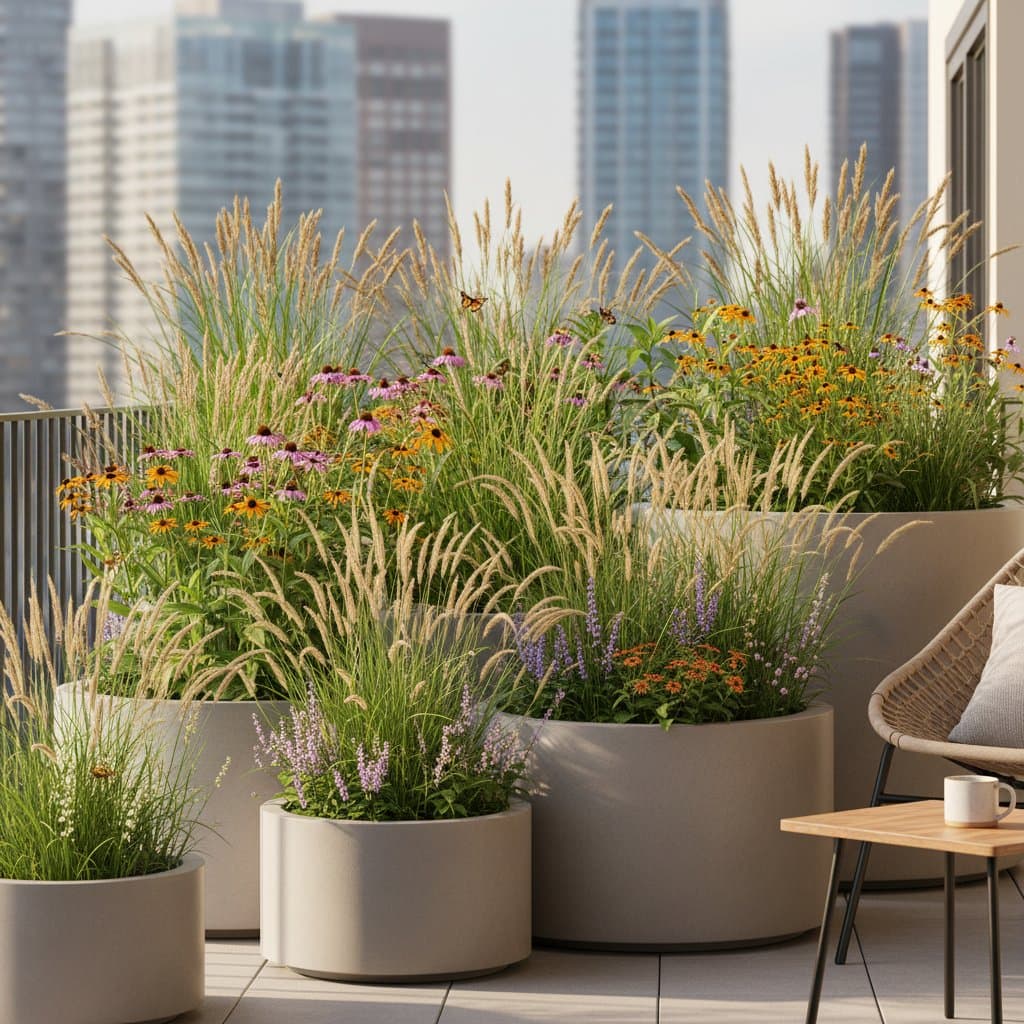
Creating Pollinator Havens on Urban Balconies with Native Grasses
City dwellers often view balconies as underutilized spaces amid towering buildings. These areas hold potential for introducing nature into dense urban environments. Native grasses provide an effective solution, as they thrive in containers, require minimal care, and attract essential pollinators such as bees, butterflies, and birds. The result is a compact meadow that enhances biodiversity right at your doorstep.
This guide details the characteristics of native grasses, their importance to pollinators, and a step-by-step process to establish your balcony habitat. By following these instructions, you contribute to urban ecology while enjoying a serene, green retreat.
Understanding Native Grasses and Their Role
Native grasses consist of plant species that originate from your specific region. These plants adapt naturally to local weather conditions, including temperature fluctuations, precipitation levels, and soil types. Over time, they have co-evolved with indigenous pollinators, providing nectar, pollen, and protective cover that non-native species frequently lack.
Incorporating native grasses into a balcony garden creates vital refueling stations for pollinators navigating concrete landscapes. These grasses possess deep root systems that retain soil moisture efficiently and contribute to air purification by trapping particulates. Their gentle sway in breezes offers a soothing auditory and visual contrast to urban clamor. Pairing grasses with select native perennials introduces seasonal blooms, fostering a balanced micro-ecosystem that supports wildlife year after year.
Beyond ecological advantages, native grasses demand less intervention. They resist common urban stressors like drought and pollution, reducing reliance on supplemental watering or chemical inputs. This approach aligns with sustainable gardening principles, promoting long-term environmental health in limited spaces.
Essential Tools and Materials
Assembling a balcony pollinator garden requires basic, accessible items. Focus on durable components that withstand outdoor exposure. The following list ensures proper setup without excess expenditure.
Required items include:
- Three to five containers, each measuring at least 12 inches (30 cm) in depth and width to accommodate root growth
- Lightweight potting mix enriched with compost for nutrient retention
- One-inch (2.5 cm) layer of gravel or pebbles per container base to facilitate drainage
- Watering can or hose attachment for precise irrigation
- Plant labels to track species and planting dates
- Hand trowel and protective gloves for soil handling
Recommended native grasses for container use:
- Little bluestem (Schizachyrium scoparium): This variety reaches approximately 24 inches (60 cm) in height and shifts to warm copper tones in autumn, adding seasonal interest.
- Purple lovegrass (Eragrostis spectabilis): Compact at under 18 inches (45 cm), it suits narrow rail planters and displays airy purple seed heads.
- Switchgrass (Panicum virgatum): Growing 36 to 48 inches (90 to 120 cm) tall, it provides upright structure and tolerates partial shade.
Complement these with one or two native flowering plants, such as black-eyed Susan (Rudbeckia hirta) or purple coneflower (Echinacea purpurea), to supply nectar sources for bees and butterflies. Source plants from regional nurseries to ensure genetic suitability.
Step-by-Step Installation Guide
Step 1: Design the Layout
Begin by measuring your balcony's available area, accounting for safety clearances around walkways and railings. Select containers that distribute weight evenly to prevent instability. Position taller grasses, like switchgrass, toward the rear or in corners for wind protection. Reserve front edges for low-growing options, such as purple lovegrass, to maintain visibility and access.
Consider sunlight patterns; most native grasses prefer full sun but adapt to six hours of direct light daily. Sketch a simple diagram to visualize spacing, ensuring each container has room for air circulation to deter fungal issues.
Step 2: Prepare Containers
Line the bottom of each container with a one-inch (2.5 cm) layer of gravel to promote excess water runoff and prevent root rot. Fill to within two inches (5 cm) of the rim with the potting mix, leaving headspace for watering without spillage. Moisten the soil lightly before planting to settle it evenly.
If your balcony faces heavy rain, elevate containers on pot feet to enhance drainage. Secure pots against high winds using brackets if necessary.
Step 3: Plant the Grasses
Gently tease apart the roots of each grass plug or starter plant to encourage outward spread. Position the plant so the crown sits level with the soil surface, avoiding burial that could lead to rot. Backfill with soil, firming it around the base to eliminate pockets of air, then water thoroughly until liquid emerges from drainage holes.
Space plants according to mature size; for instance, allow 12 inches (30 cm) between little bluestem specimens. This arrangement supports healthy development and aesthetic balance.
Step 4: Incorporate Companion Flowers
Select spots between grass clumps for flowering plants, maintaining at least six inches (15 cm) separation to avoid root competition. Plant perennials at the same depth as in their nursery pots, ensuring crowns remain exposed. These additions not only boost pollinator appeal but also fill visual gaps with color during peak bloom periods.
Step 5: Initial Watering and Establishment
Irrigate deeply every two to three days during the first two weeks, allowing soil to dry slightly between sessions to promote root establishment. Monitor for wilting as an indicator of thirst. Once established, water only when the top inch (2.5 cm) of soil feels dry to the touch, typically every four to seven days depending on weather.
Step 6: Monitor Pollinator Activity
Observe for early visitors like solitary bees or hoverflies as flowers emerge, often within one to two weeks. Place a shallow saucer of water with pebbles nearby to offer safe drinking spots. Document sightings to gauge the habitat's success and adjust as needed.
Safety Considerations
Anchor containers firmly on stable surfaces to resist tipping from gusts or accidental bumps. Steer clear of synthetic fertilizers and pesticides, as these substances can poison pollinators and disrupt the ecosystem. Always don protective gloves during soil work to shield against irritants or embedded debris.
If your balcony exceeds certain weight limits, consult building guidelines before adding multiple pots. Opt for lightweight materials like fiberglass to minimize load.
Common Issues and Solutions
Yellowing or browning foliage: Inspect for waterlogging; enhance drainage by adding more gravel or repotting in fresh mix. Overwatering often stems from poor airflow in humid conditions.
Limited growth or legginess: Relocate to a sunnier position providing at least six hours of light. Thin overcrowded plants to improve resource access.
Low pollinator presence: Introduce additional nectar-rich flowers or install a bird feeder with native seeds. Patience is key, as it may take a season for word to spread among local wildlife.
Ongoing Care and Seasonal Adjustments
Perform annual trimming in early spring, cutting grasses back to four inches (10 cm) to stimulate fresh growth and maintain neatness. Retain seed heads through winter, as they serve as food for birds and add texture. Clear away debris only after new growth emerges to protect emerging shoots.
Store spare soil in airtight containers to preserve moisture and prevent contamination. Replace weathered pots with durable alternatives, such as resin or galvanized metal, which endure freeze-thaw cycles.
During summer heat, verify soil dampness every three days and mulch surfaces with organic matter to conserve water. In winter, reduce watering frequency and insulate pots with burlap if temperatures drop below freezing. Native grasses prove resilient, but container roots remain vulnerable to extremes.
Cost and Time Investment
Initial setup for a modest balcony meadow ranges from 60 to 120 dollars, covering containers, soil, and plants. Dedicate two to three hours for planting. Subsequent maintenance involves under 15 minutes weekly for checks and watering, making it feasible for busy urbanites.
Building Your Balcony Ecosystem
Start by sourcing grasses from a nearby native plant supplier, inquiring about compact varieties ideal for containers. Experiment with a single corner installation to master routines before expanding. Maintain a visual record of pollinator interactions to celebrate progress and inspire further enhancements.
Even a modest planting of native grasses bridges gaps in the urban green network, amplifying local biodiversity one balcony at a time.