
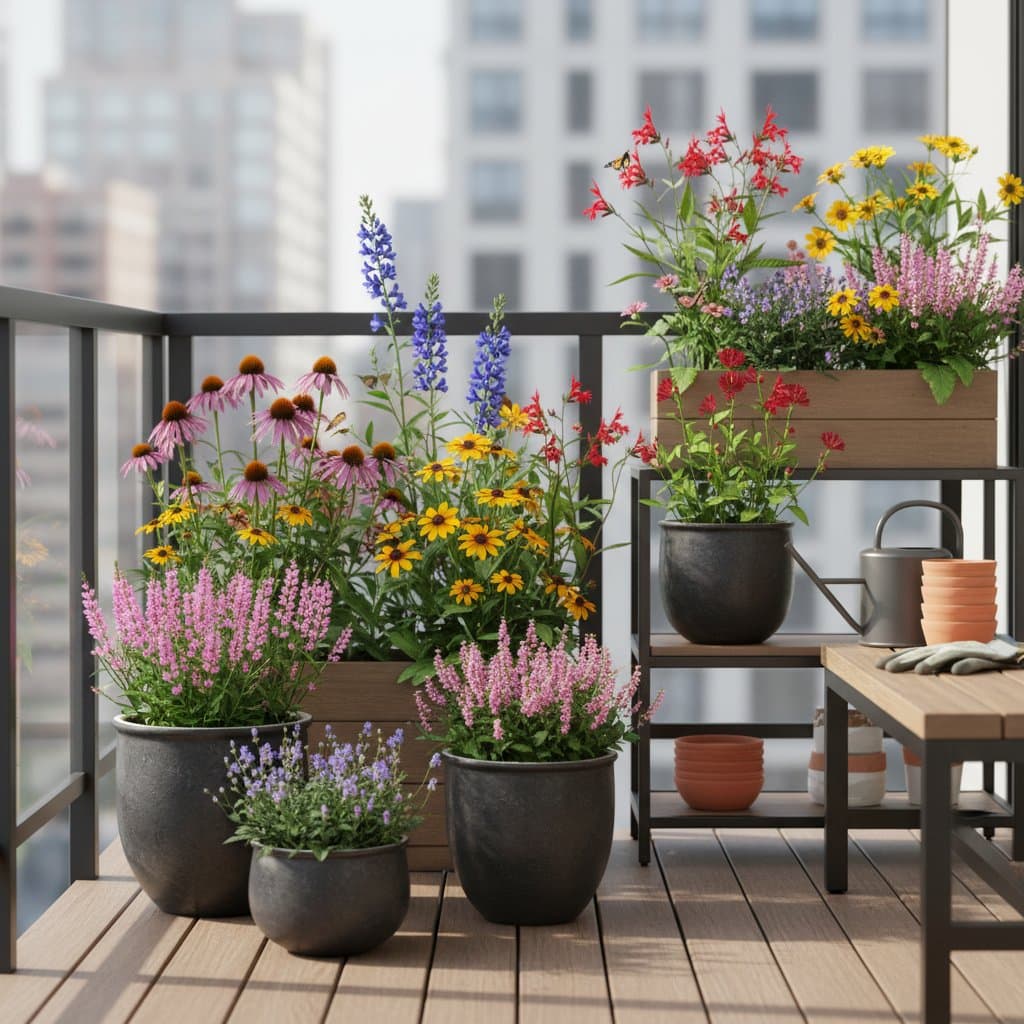
Native Wildflowers Transform Balconies into Pollinator Sanctuaries
Urban balconies offer limited space, yet they hold potential to sustain essential pollinators like bees, butterflies, and hummingbirds. These creatures face challenges in cities where natural foraging grounds diminish. Native wildflowers provide a straightforward solution, delivering nectar and habitat with minimal effort. Even a modest ten-square-foot area can become a bustling ecosystem through thoughtful plant selection and arrangement.
Understanding Native Wildflowers
Native wildflowers originate in a specific region and evolve alongside local ecosystems. They adapt seamlessly to regional soils, precipitation, and climates, requiring little intervention once established. Planting these species supports indigenous pollinators that rely on them for survival, unlike ornamental non-natives that often provide scant nutritional value.
Aim for diversity in your garden design. Include plants with varied heights for structural interest, staggered bloom periods from spring through fall, and a palette of colors to appeal to different pollinators. This strategy ensures a consistent food supply, fostering a resilient urban habitat.
Essential Tools and Materials
Starting a pollinator garden demands few items. Assemble the following:
- Containers: Three or more pots measuring at least 12 inches in diameter to accommodate root growth
- Potting mix: A 20-quart bag of sustainable, peat-free soil blend
- Watering can or compact hose for precise irrigation
- Hand trowel and protective gloves
- Native wildflower seeds or nursery-started plants
- Plant labels to monitor species and blooming schedules
For balconies with partial shade under six hours of daily sun, prioritize tolerant options such as wild ginger or woodland phlox. These selections thrive in varied light conditions common to city environments.
Step-by-Step Planting Guide
Follow these steps to establish your garden efficiently.
- Assess sunlight exposure. Observe and note sun patterns across your balcony over a full day. Optimal native wildflowers require a minimum of six hours of direct light.
- Select appropriate species. Choose three to five varieties suited to your conditions. In the Northeast, consider black-eyed Susan for sunny spots, butterfly weed for vibrant orange blooms, and purple coneflower for sturdy purple flowers.
- Prepare the containers. Fill each pot to two-thirds capacity with potting mix. If using seeds, aerate the soil lightly to promote germination.
- Plant with care. Scatter seeds at a rate of one pinch per square inch, then cover with a quarter-inch layer of soil and moisten gently. For transplants, space them at least six inches apart to allow for expansion.
- Irrigate thoughtfully. Maintain even moisture without waterlogging; apply approximately one quart per pot every two days in warm weather.
- Apply labels. Mark each plant to record its type and expected pollinator attractions, aiding future observations.
- Monitor and reposition. Adjust pot locations as needed to optimize light reception and prevent overcrowding.
Safety Considerations
Stability remains crucial on elevated spaces. Anchor containers using drip trays or secure brackets to withstand gusty winds. Always don gloves during soil handling to prevent irritation. Position plant setups away from pathways and emergency access points to maintain clear routes.
Common Issues and Solutions
Address potential setbacks promptly to ensure success.
- Watering imbalances: Excess moisture leads to yellowing foliage; reduce frequency to every three days and allow surface soil to dry slightly.
- Insufficient light: Leggy or sparse growth signals the need for relocation to sunnier areas.
- Low pollinator visits: Enhance appeal with a shallow water feature containing pebbles for safe landing, or introduce additional nectar sources like wild bergamot.
Pests such as aphids or spider mites may target weakened plants. Dislodge them using a strong water stream, or prepare a gentle solution of one teaspoon mild soap per quart of water for application. Steer clear of chemical pesticides, as they endanger the very pollinators you aim to support.
Cost and Time Investment
Launch your project for thirty to fifty dollars total. Containers represent the primary expense; repurpose household items like buckets or crates by adding drainage holes to economize. Seeds typically germinate in two weeks, with blooms emerging in two to three months. Established gardens demand only ten minutes of daily attention during peak summer months.
Ongoing Care Practices
Promote prolonged flowering by removing faded blooms weekly. In late fall, prune dead stems while retaining seed heads to benefit overwintering birds. Annually, replace the top two inches of potting mix with fresh material to replenish nutrients. When plants become root-bound, divide clumps and replant into additional containers to propagate your garden.
Seasonal Care Schedule
- Spring: Incorporate compost to enrich soil and inspect for cold-weather damage. Initiate indoor seed starting for timely outdoor transplanting.
- Summer: Deliver water in the early morning to minimize loss from evaporation. Tolerate caterpillar presence, as they develop into vital pollinators.
- Fall: Permit select seed heads to mature for natural reseeding. Clean and store unused pots indoors ahead of freezing temperatures.
Efficient Storage Solutions
Organize tools in a compact, weatherproof container tucked beneath furniture. Preserve seeds in airtight jars, labeled with species names and bloom timelines, to shield against humidity. Nest empty pots by size for compact stacking, utilizing a slim rack or wall-mounted shelf to maximize balcony space.
Professional Consultation
Evaluate balcony integrity before adding weight. For suspended or heavy planters, seek advice from your building manager or a structural expert regarding weight capacities in pounds per square foot.
Building Your Garden Forward
Begin by planting three native wildflowers immediately. Document visiting pollinators to refine selections over time. Gradually incorporate new varieties each season, achieving a balcony alive with blooms and activity from spring's first thaw to autumn's end.