
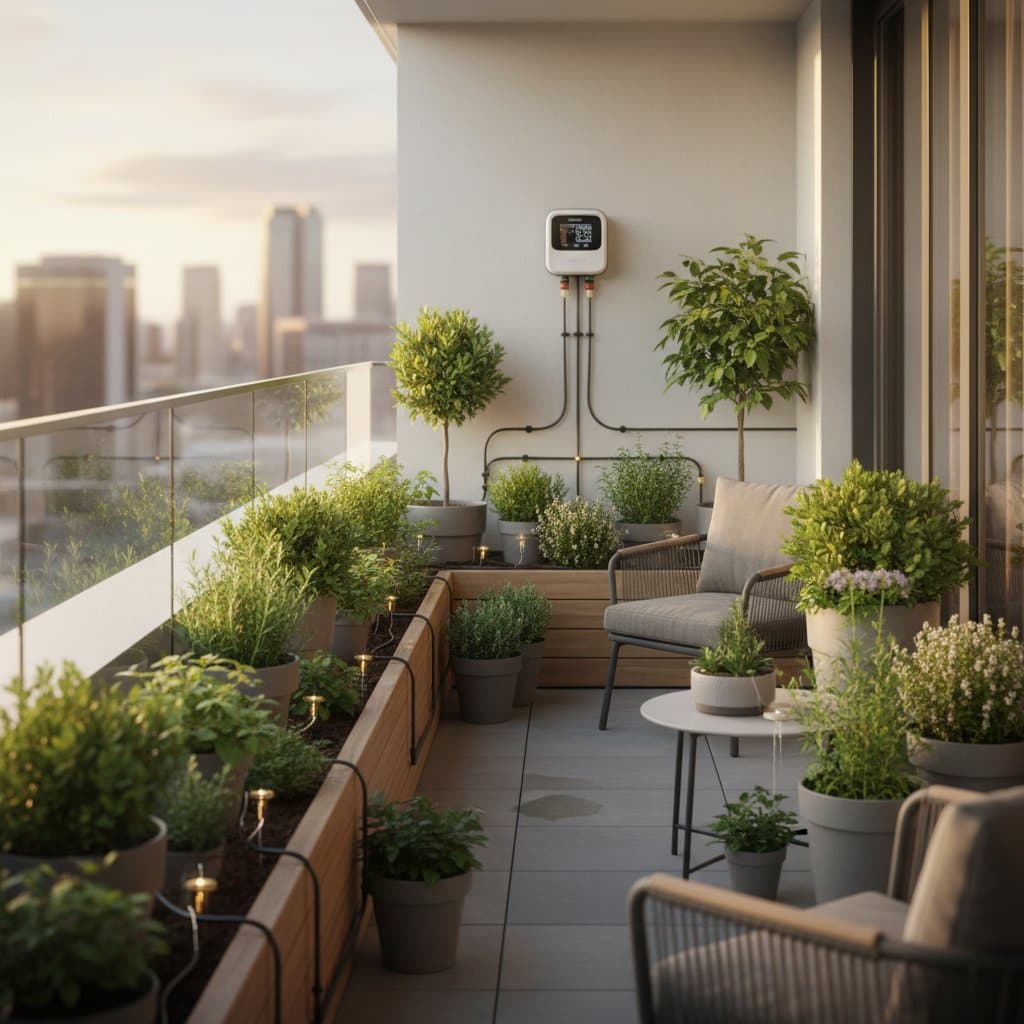
Step 3: Lay the Main Tubing
Secure the 1/2-inch tubing along the railing or floor edge of the balcony. Position clips or ties at intervals of two to three feet to maintain stability. Allow slight slack at corners to prevent tension. Seal the end with an end plug or a figure-eight clamp to ensure no leaks occur.
Step 4: Add Branch Lines
Use a drip punch tool to create small holes in the main line, then insert barbed connectors into these openings. Connect 1/4-inch tubing to each connector and extend it toward the respective pot. Trim the tubing to position it just above the soil surface, avoiding any kinks that could restrict flow. Anchor the tubing in place with stakes for added security.
Tip: Limit each branch line to under 6 feet, or approximately 2 meters, to promote consistent water pressure throughout the system.
Step 5: Install Emitters
Insert one emitter at the terminus of each branch line. Select emitters with varying flow rates based on plant requirements; for instance, opt for 1 gallon per hour emitters in large tomato pots and 0.5 gallon per hour emitters for herb containers.
Step 6: Test the System
Activate the valve and observe the flow from each emitter. Emitters should produce a steady drip rather than a spray. Set the timer for an initial run of 10 to 15 minutes, then assess soil moisture levels across all pots. Modify emitter placements or types as necessary if certain areas remain insufficiently watered.
Step 7: Fine-Tune and Label
Apply labels to zones or groups using tape or tags, particularly for areas with adjustable emitter flows. Such organization facilitates quick identification and adjustments during seasonal shifts.
Safety Tips
- Always employ a timer or shutoff valve to prevent leaving the faucet open unattended.
- Select tubing specifically rated for outdoor exposure to resist cracking from ultraviolet sunlight.
- Position electrical timers away from any standing water, or equip them with waterproof covers.
- Flush the entire system prior to initial operation to remove any debris from the lines.
Troubleshooting
Uneven flow: Inspect emitters for clogs and tubing for kinks. Resolve by flushing the line: remove end plugs and allow water to run through for several minutes.
Low pressure: Verify that the pressure regulator matches the setup, typically 25 to 30 psi for balcony configurations.
Leaking connectors: Ensure clean cuts on tubing ends before reconnection. Soften tubing by immersing it in warm water to ease insertion.
Dry pots at far ends: Introduce a secondary branch line or incrementally increase the flow rate of emitters in those locations.
Maintenance
Dedicate a few minutes monthly to sustain system efficiency.
- Examine emitters for mineral deposits; if buildup occurs, soak them in vinegar for ten minutes to dissolve obstructions.
- Flush all lines at the onset of each season to clear residues.
- Clean the filter regularly by rinsing it under running water.
- Organize spare parts, such as emitters and connectors, in a labeled container for convenient access during repairs.
In colder months, drain water from all lines completely and relocate the main tubing indoors if frost threatens. Exposure to freezing temperatures can cause the thin plastic to fracture.
Storage
Coil the tubing loosely to avoid creases or sharp bends that might damage it. Package emitters and connectors in transparent bags within a compact storage bin. Mark the bin clearly by tubing size and emitter flow rates. Place the timer and valve in a dry location to safeguard electronics and seals from moisture.
Budget and Time
Assembling a complete system for 50 pots generally requires under 150 dollars. Standard kits provide essential components including tubing, connectors, and emitters. Timers cost between 20 and 60 dollars, varying by advanced features. First-time installation demands two to three hours of effort.
After setup, the system conserves both time and water resources. Users often reduce water consumption by up to 50 percent relative to manual watering methods.
Seasonal Reminders
- Spring: Reassemble and flush the system before new plantings. Verify operation of every emitter.
- Summer: Monitor soil moisture on a weekly basis and modify timer durations to account for elevated heat or wind conditions.
- Fall: Reduce watering intervals as ambient temperatures decline.
- Winter: Drain lines thoroughly and store components if freezing weather looms.
These routine seasonal evaluations help avert clogs and leaks, ensuring the system remains operational throughout the year.
Preparing for Professional Assistance
Consider consulting a professional if persistent issues arise, such as chronic low pressure despite regulator checks or complex balcony layouts requiring custom pressure adjustments. Local irrigation specialists can assess and optimize setups beyond standard troubleshooting.
Implementing Your System
With these steps, balcony gardeners can establish a reliable automated watering solution. The result offers consistent plant care with minimal ongoing intervention, fostering healthier greenery and more leisure time.