
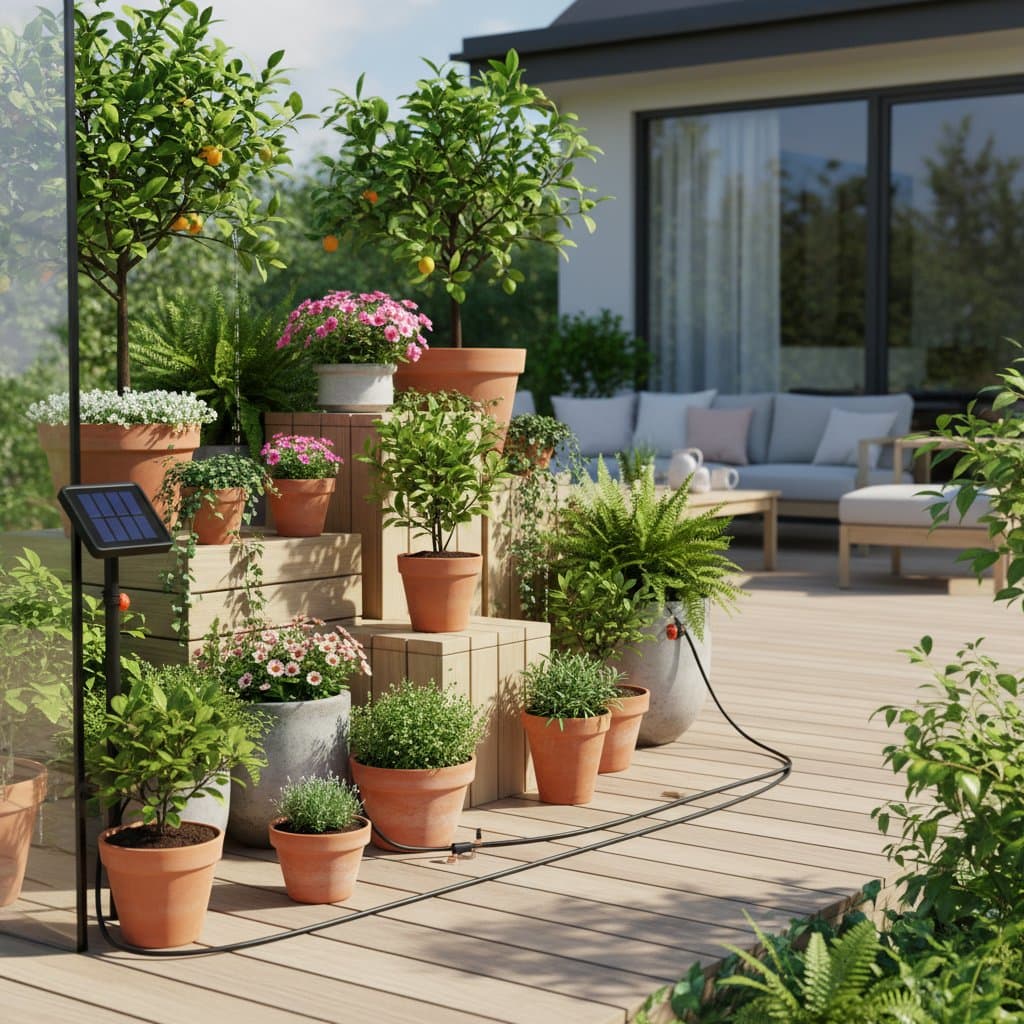
Solar Drip Kits: Effortless Watering for Deck Gardens
Deck plants require consistent moisture, yet manual watering demands time that busy schedules often lack. A solar drip kit addresses this challenge by automating the process. Powered by sunlight, the kit employs a compact pump to distribute targeted water droplets to each container, conserving resources and ensuring plant vitality during heat waves or absences.
This guide details the functionality of solar drip irrigation, installation procedures, and maintenance strategies to sustain optimal performance.
System Overview
A solar drip irrigation kit constitutes a compact, self-contained watering apparatus energized by a solar panel. The system draws water from a reservoir, such as a bucket or rain barrel, and channels it through narrow tubing to emitters positioned at the base of plants. Requiring only natural light for operation, the kit eliminates the need for electrical outlets or wiring.
Key advantages include:
- Automated hydration independent of timers or power sources.
- Uniform soil moisture that mitigates plant stress from over- or under-watering.
- Efficient water use, as emitters release moisture solely at root zones.
Urban dwellers frequently deploy these kits for potted herbs, railing-mounted planters, and compact raised beds. A standard unit, featuring a solar pump and 10 to 15 emitters, suffices for typical deck configurations spanning up to 30 feet of tubing.
Required Tools and Materials
Assemble the following essentials prior to installation:
- A complete solar drip irrigation kit, comprising pump, solar panel, main tubing, and drip emitters.
- A reliable water reservoir, ideally a 5-gallon bucket or comparable vessel.
- Scissors or a dedicated tubing cutter for precise sections.
- Clips or anchors to secure tubing against railings and planters.
- An optional inline filter for rainwater or stored sources prone to particulates.
- A measuring tape to ensure equitable emitter spacing.
Standard kits provide approximately 30 feet (9 meters) of tubing, adequate for 10 medium-sized pots. Procure additional tubing for expansive setups to maintain coverage.
Installation Steps
Step 1: Select Optimal Placement
Position the solar panel in a location receiving at least six hours of direct sunlight daily. Site the water reservoir proximate to the plants yet positioned below the panel to facilitate efficient pumping. This arrangement minimizes energy loss and supports reliable flow.
Step 2: Secure the Solar Panel
Mount the panel to a railing or vertical surface using the provided bracket. Orient it southward or toward peak sun exposure for maximum efficiency. Protect wire connections from moisture and position the assembly away from high-traffic areas to prevent damage.
Step 3: Install the Pump
Submerge the pump fully within the reservoir, ensuring it rests stably on the base. Connect the inlet hose to the pump outlet and fasten it securely with the included clamp. Verify that the setup allows unobstructed water intake.
Step 4: Route the Tubing
Extend the primary tubing along the planters, following their contours. Segment secondary lines to approximately 12 inches (30 centimeters) per pot. Affix drip emitters to the termini and embed them 1 inch (2.5 centimeters) into the soil adjacent to plant roots, targeting the drip line for optimal absorption.
Step 5: Prime and Verify Operation
Fill the reservoir with clean, room-temperature water. Activate the system via the power switch or allow sunlight to initiate the pump. Observe for steady drips emerging within two to three minutes; regulate the flow control valve to achieve a slow, consistent rate of one to two drops per minute per emitter.
Step 6: Fasten the Assembly
Employ clips or ties to immobilize the tubing, accommodating minor expansions from water pressure or thermal changes. This prevents dislodgement from wind or foot traffic while preserving flexibility.
Essential Safety Considerations
Maintain all electrical components in dry conditions to avert short circuits. Refrain from operating the pump in water contaminated by debris, algae, or chemicals. Service the filter biweekly to forestall blockages. Introduce fertilizers only into systems explicitly designed for such applications, diluting them per manufacturer guidelines to avoid corrosion.
Common Troubleshooting Procedures
Should flow diminish or cease:
- Verify solar exposure; relocate the panel if shading occurs or cleanse it of accumulated dust and pollen.
- Examine tubing for bends, crimps, or obstructions; realign as necessary to restore patency.
- Disassemble and rinse the pump intake screen to eliminate sediment, a frequent issue after prolonged use.
- Assess any integrated battery for degradation; replace units exhibiting reduced performance after multiple seasons.
For isolated dry pots, dislodge and flush emitters under lukewarm tap water for 10 seconds, then reinstall. Persistent issues may necessitate full system flushing with a diluted vinegar solution to dissolve mineral deposits.
Cost and Installation Timeline
Entry-level solar drip kits range from 40 to 80 dollars, varying by pump capacity and durability. Setup for a 10-pot arrangement requires one to two hours, including testing. Expansions for larger decks, such as additional pumps or tubing, incur an extra 20 dollars.
Prioritize kits with robust filters and reinforced tubing over low-cost alternatives, which succumb to clogs and premature wear. Models with modular, replaceable components offer longevity and ease of repair, justifying the modest premium.
Ongoing Maintenance Practices
Monitor reservoir levels every three to four days in peak heat, replenishing to prevent pump dry-running, which risks motor burnout. Employ a marked reservoir or automated level indicator for precision.
Conduct monthly inspections:
- Soak emitters in a vinegar-water mixture (1:10 ratio) for 15 minutes to dissolve scale, followed by thorough rinsing.
- Gently clean the solar panel surface with a microfiber cloth and mild soap solution to restore efficiency.
- Scrutinize tubing for fissures or seepages; excise and replace compromised segments promptly.
During winter, disassemble and store components in a frost-free environment to safeguard against freeze damage.
Seasonal Adjustment Strategies
In spring, reconstruct the system and perform a dry run to confirm functionality before introducing plants. Midseason rearrangements warrant tubing reconfiguration to optimize paths. As autumn approaches, evacuate all lines of water, coil tubing loosely, and shelter the unit indoors. These proactive measures avert seasonal malfunctions and prolong equipment life.
Efficient Storage and Enhancements
Organize spare tubing, emitters, and fittings in a dedicated, labeled container within easy reach of garden supplies. Select a cool, arid storage site like a utility shelf to inhibit degradation.
For enhanced sustainability, integrate a rain barrel by linking its spigot to the reservoir via a 2-foot hose fitted with a mesh strainer. This setup harnesses natural precipitation, reducing refill frequency and municipal water dependence while minimizing maintenance through proactive debris filtration.
Implementing Your Solar Drip Solution
Adopting a solar drip kit transforms deck gardening from a chore into a seamless routine. With minimal upfront effort, gardeners gain reliable, eco-conscious automation that nurtures vibrant containers year-round. Select a quality kit, follow these steps diligently, and enjoy the rewards of a flourishing outdoor oasis.