
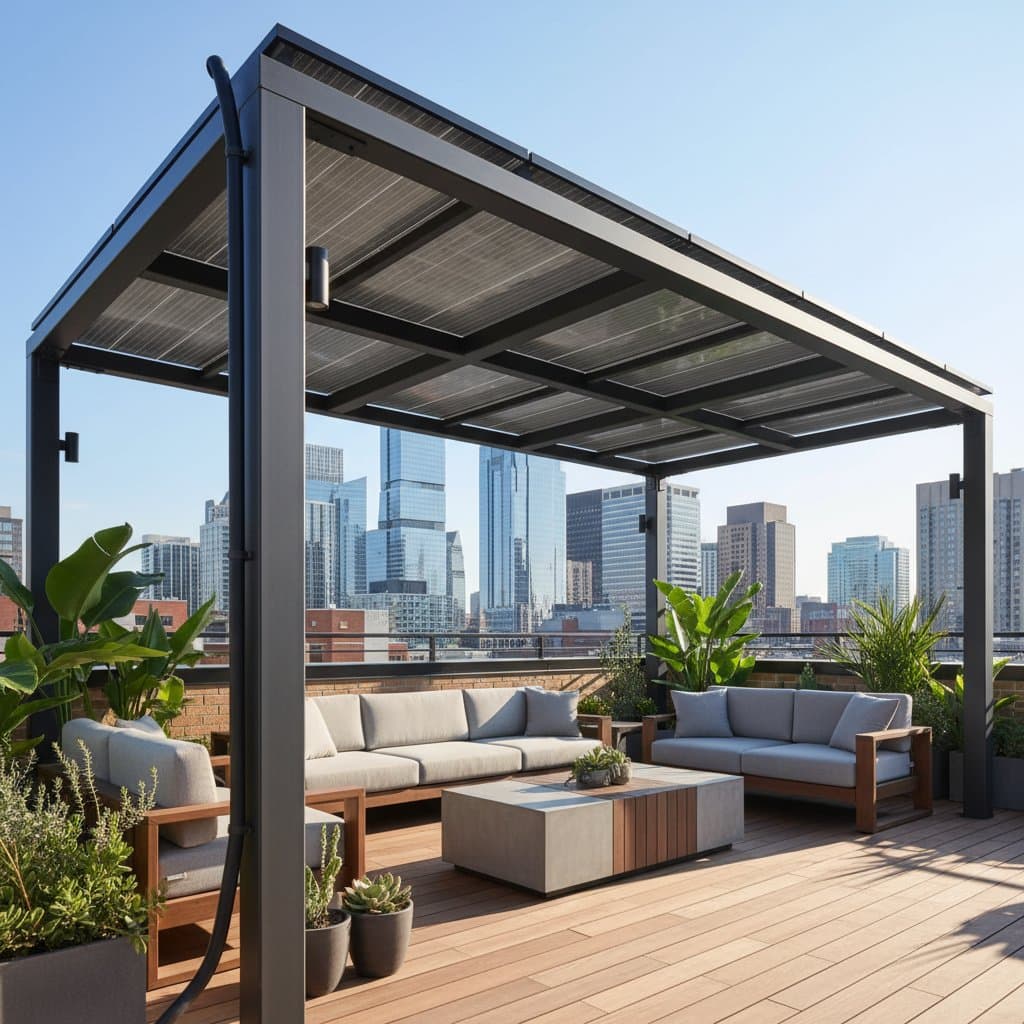
Power Up Your Deck with Solar Shade Pergolas
A sunny deck invites relaxation until intense heat drives everyone indoors. A solar shade pergola addresses this challenge effectively. It provides essential shade to lower temperatures while harnessing solar energy to produce electricity. This setup creates a comfortable outdoor area for gatherings and powers features such as lighting, ceiling fans, or a compact refrigerator.
This comprehensive guide covers the essentials of solar shade pergolas. It details their design, operational principles, and implementation strategies for decks or rooftops. Readers gain practical knowledge to integrate this innovative structure into their outdoor spaces.
Understanding Solar Shade Pergolas
A solar shade pergola consists of a sturdy outdoor framework, either freestanding or attached to a building, topped with solar panels integrated into the roof slats. These panels serve dual roles: they block direct sunlight to create shaded areas and absorb photons to generate electricity through photovoltaic cells. The produced direct current converts to alternating current via an inverter, integrating seamlessly with home electrical systems or dedicated battery storage.
Urban environments benefit greatly from this design due to constrained outdoor areas. Decks and rooftops often face excessive heat buildup, which solar shade pergolas mitigate by reflecting and absorbing solar radiation. Homeowners achieve reduced cooling demands alongside lower utility bills, combining aesthetic appeal with environmental responsibility.
Consider the energy output: a standard 10-foot by 10-foot pergola with six 300-watt panels can generate up to 1,800 watts under optimal conditions. This capacity suffices for offsetting the power needs of outdoor appliances or contributing to household energy independence.
Selecting Tools and Materials
Homeowners have options between prefabricated solar pergola kits, which simplify assembly, and custom builds using individual components for tailored designs. Both approaches require careful selection of durable, weather-resistant materials to ensure longevity.
Key materials include:
- Pergola frame: Opt for powder-coated aluminum for corrosion resistance or pressure-treated cedar wood for a natural look. Size the frame to 8 feet by 10 feet for most standard decks, ensuring it supports at least 50 pounds per square foot.
- Solar panels: Choose monocrystalline panels, 3 feet by 5 feet each, with efficiencies above 20 percent. Acquire 4 to 6 units based on desired shade coverage and energy yield.
- Mounting hardware and wiring: Use stainless steel brackets and UV-resistant cables rated for outdoor exposure. Include junction boxes to protect connections from elements.
- Inverter system: Select a string inverter for centralized conversion or microinverters attached to each panel for optimized performance in partial shade.
- Battery storage (optional): Lithium-ion batteries with 5 to 10 kilowatt-hour capacity store excess energy for evening use, enhancing system versatility.
- Essential tools: A cordless power drill with bits for various materials, a digital level for precise alignment, an extension ladder for elevated work, adjustable wrenches, and personal protective equipment such as gloves, safety glasses, and hard hats.
Before proceeding, consult structural engineers or building codes to verify deck load capacity. Integration with home electrical grids necessitates professional installation by a certified electrician to comply with safety standards and avoid voiding warranties.
Installation Process
Successful installation demands meticulous planning and execution. Follow these steps to construct a reliable solar shade pergola.
-
Measure the installation site. Assess your deck or rooftop dimensions, accounting for at least 1 foot of clearance from edges, railings, and HVAC vents. Factor in sun exposure patterns to maximize panel efficiency, ideally facing south in the Northern Hemisphere with a 20- to 30-degree tilt.
-
Mark and prepare post locations. Identify four corner points using stakes and string lines. Secure posts with 12-inch concrete footings for freestanding units or lag bolts into existing structures, ensuring depth meets local frost line requirements.
-
Assemble the main frame. Erect vertical posts first, using a level to maintain plumb alignment within 1/4 inch over 10 feet. Attach horizontal beams and rafters with galvanized bolts, torquing connections to manufacturer specifications for stability.
-
Mount the solar panels. Position panels according to the layout diagram, spacing slats 6 to 12 inches apart for optimal airflow and shade diffusion. Secure with adjustable brackets that allow for thermal expansion, always wearing protective gear to handle sharp edges.
-
Wire the electrical components. Run photovoltaic cables through waterproof conduit from panels to the inverter location, typically mounted on a nearby wall. Seal all junctions with silicone to prevent water ingress, and label wires for future maintenance.
-
Test and activate the system. Energize the setup gradually, using a multimeter to verify output voltage matches panel ratings. Inspect shade effectiveness by observing temperature drops of 10 to 20 degrees Fahrenheit under the structure during peak sun.
Professional oversight proves invaluable for complex electrical integrations, ensuring code compliance and system reliability.
Essential Safety Considerations
Safety forms the foundation of any outdoor construction project. Adhere to these guidelines to minimize risks.
- Schedule work during dry weather to avoid slippery surfaces and electrical hazards.
- Disconnect main power sources before handling wiring to prevent shocks.
- Wear sturdy, non-slip footwear and secure loose clothing when working at heights.
- Employ a spotter for ladder stability and panel handling to distribute weight evenly.
Additionally, obtain necessary permits from local authorities, especially for rooftop installations, to address wind load and seismic considerations.
Cost Estimates and Timeline
Budgeting accurately supports informed decision-making. A mid-sized solar shade pergola typically costs between $4,000 and $10,000. This range accounts for frame materials ($1,000 to $3,000), solar panels and electronics ($2,000 to $5,000), and professional labor ($1,000 to $2,000). Higher-end options incorporate premium panels with 25-year warranties and smart monitoring apps for real-time performance tracking.
Timeline varies by scope: DIY frame assembly spans a weekend, roughly 10 to 15 hours. Electrical connections add another full day with licensed help. For renters or those seeking simplicity, modular solar canopies offer a budget-friendly alternative at $1,500 to $3,000. These clip onto existing pergolas and connect to portable power stations, requiring minimal tools and under four hours for setup.
Incentives such as federal tax credits can offset 26 percent of costs, making the investment more accessible.
Ongoing Maintenance Practices
Regular upkeep preserves performance and extends lifespan. Clean solar panels quarterly using a soft-bristle brush and diluted mild soap solution, rinsing with a hose to remove dust and pollen that reduce efficiency by up to 20 percent.
Inspect structural elements seasonally: tighten loose bolts, examine wiring for frays or corrosion, and clear debris from gutters. Prune overhanging branches to prevent shading panels or causing physical damage during storms.
With diligent care, these structures endure 20 to 25 years. Panels retain 80 percent efficiency over that period, delivering consistent shade and energy benefits with minimal intervention.
Advancing Your Outdoor Energy Project
Begin by measuring your deck and evaluating sun exposure with a solar pathfinder tool. Weigh full custom builds against retrofit kits, prioritizing high-wattage panels and robust frames for long-term value. For rooftops, engage solar professionals to assess structural loads and secure permits.
These enhancements foster sustainable living. A solar shade pergola not only cools your space but also empowers it, blending comfort with clean energy production for enduring outdoor enjoyment.