
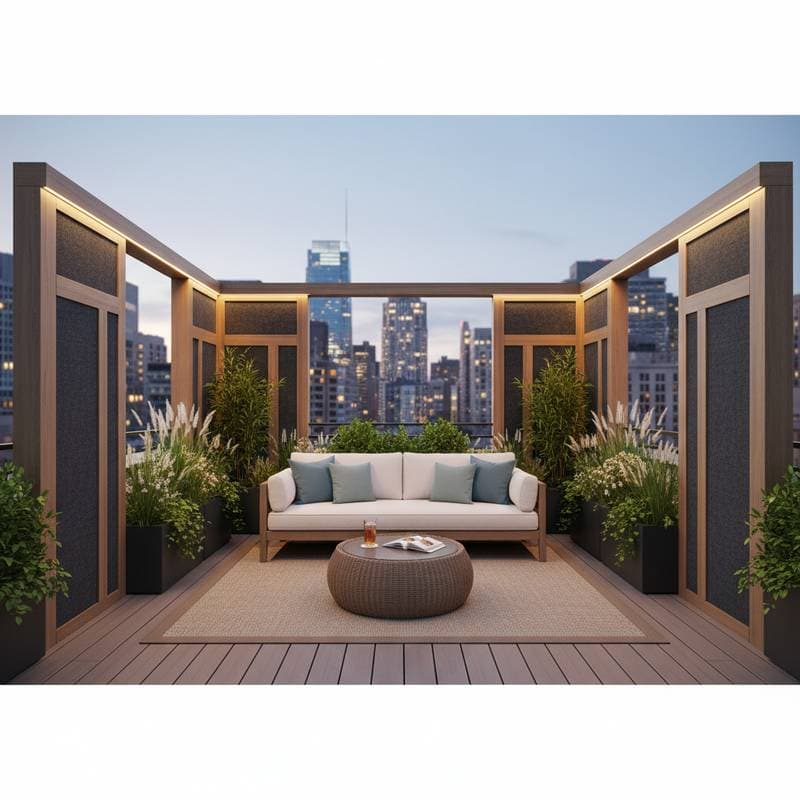
5. Test and Adjust
After installation, sit on the deck and evaluate the noise levels. Identify any areas where sound leaks through from below the deck or from overhead sources. If persistent noise enters, install a low perimeter barrier along the edges or add an overhead canopy to contain reflections.
Hard surfaces like wood or concrete often amplify echoes. Position several large potted plants or lay down weather-resistant outdoor rugs to absorb and diffuse these reflections, enhancing the overall sound-dampening performance.
Safety Considerations
Verify that the deck's structural integrity supports the weight of the panels and their mounting frames before proceeding. Select non-flammable materials, especially in proximity to grills or outdoor heating elements.
Store power tools in a dry location and unplug them immediately after use. Ensure that installations do not obstruct emergency exits, pathways, or windows.
Beyond personal safety, secure all components to prevent panels from detaching during high winds or storms. Regular inspections help maintain stability and avoid potential hazards.
Common Issues and Solutions
Issue: Panels absorb moisture and develop sags.
Solution: Select fabrics certified for outdoor durability with water-repellent coatings. Apply a fresh layer of sealant or protective paint annually to preserve integrity.
Issue: Traffic vibrations transmit through the structure.
Solution: Integrate panels with natural sound barriers such as a dense hedge or multiple rows of tall potted evergreens. These elements effectively dampen low-frequency vibrations that panels alone may not fully block.
Issue: Gaps form between panels due to temperature fluctuations.
Solution: Secure brackets firmly and insert flexible rubber or foam spacers during assembly. Account for material expansion by leaving slight allowances in the design.
Issue: Metal panels produce rattling in windy conditions.
Solution: Install rubber washers beneath all screws and bolts. These provide cushioning that minimizes metal-on-metal contact and vibration transmission.
Cost and Timeline Estimates
A fundamental sound-blocking system for a standard deck enclosure typically costs between $200 and $600, varying by material quality and coverage area. Custom acoustic panels range from $50 to $100 each, whereas DIY options with wooden frames and heavy-duty fabric often fall under $25 per unit.
Plan for one to two full days to complete the project on a medium-sized deck. The majority of time involves precise measurements, thorough sealing, and ensuring level alignment.
Budget-friendly alternatives include:
- Substituting metal frames with pressure-treated lumber for supports.
- Opting for panels made from recycled outdoor fabrics over premium acoustic composites.
- Repurposing sturdy existing fence posts as mounting points.
Invest in high-quality sealants and hardware, as these essentials ensure long-term stability and resistance to weather damage.
Ongoing Maintenance
Wipe down the panels every two to three months using a solution of mild soap and lukewarm water. Rinse thoroughly and allow complete air-drying to prevent mold growth. Inspect frames seasonally for signs of rust or wood rot, then tighten screws and repair any fabric tears promptly.
For lightweight fabric panels, remove them before winter and store indoors to avoid freeze-thaw damage. Durable composite or metal panels can remain in place year-round, provided they receive proper sealing.
Position stored panels vertically in a sheltered, dry space. Prevent frame warping by avoiding flat stacking directly on the ground or damp surfaces.
Practical Storage Strategies
For decks used for dining or recreation, choose modular panels with hinges or casters for easy reconfiguration. These allow sections to fold away or roll aside, freeing up space when sound blocking is not required.
Organize storage by labeling all hardware packets clearly. Seal screws, brackets, and tools in airtight containers to protect against moisture and simplify future setups.
Professional Assistance Indicators
Engage a contractor for complex scenarios, such as decks on high-rise structures where wind loads are significant. Professional help is also advisable for mounting to masonry walls or concrete foundations.
If integrating features like embedded lighting or electrical wiring, experts ensure compliance with building codes. Request details on sound transmission class (STC) ratings for materials; ratings above 40 indicate superior noise isolation.
Implementation Guide
Begin with a targeted approach: select the deck side exposed to the primary noise source and install initial panels there. Assess the reduction in sound levels, then refine positioning or height before expanding to other areas.
Assemble a compact maintenance kit with essential tools for routine adjustments. Perform brief checks and resealing every few months to prolong panel effectiveness.
Enhance usability by incorporating plush seating cushions, ambient lighting strands, and a compact side table. These additions elevate the space, fostering restorative outdoor moments through incremental enhancements.