
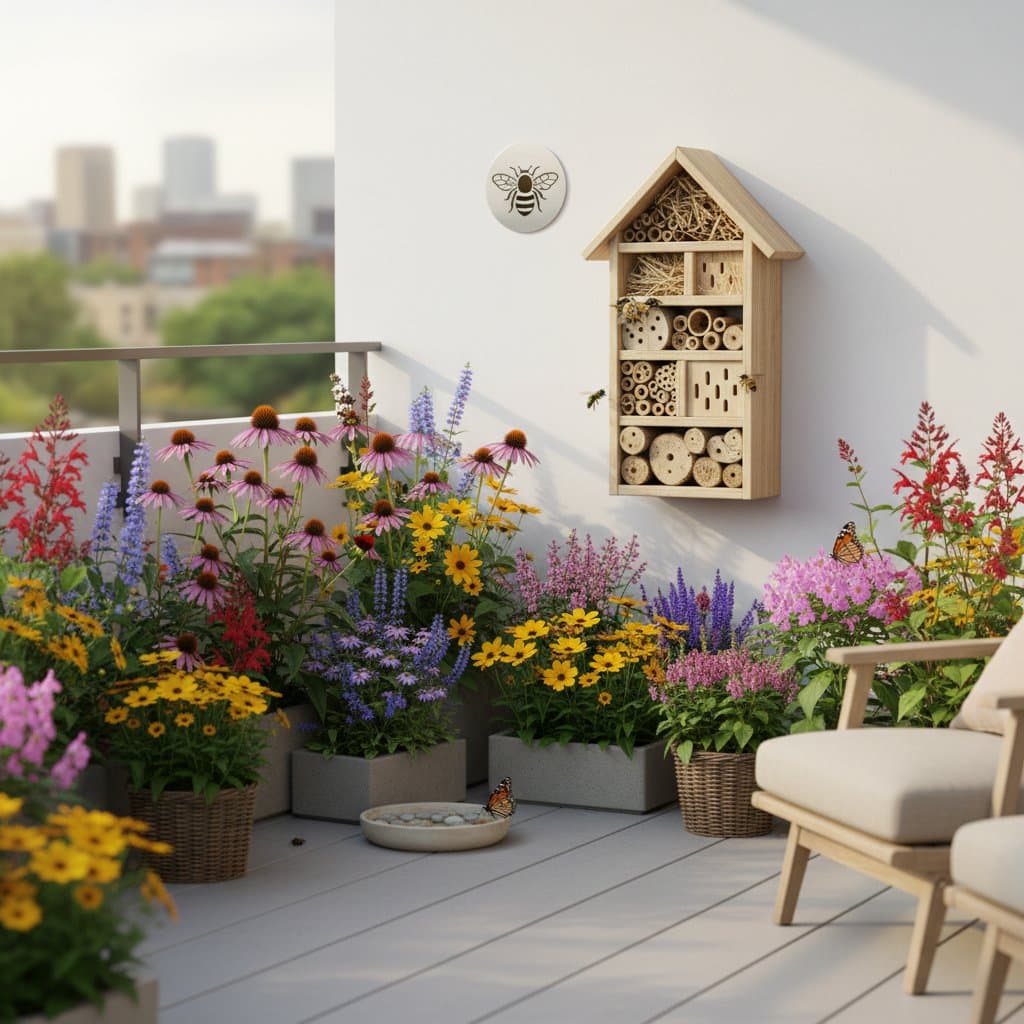
Introduction to Creating a Solitary Bee Sanctuary
Urban balconies offer limited space, yet they hold potential as vital habitats for solitary bees, which pollinate plants without forming hives. These gentle insects thrive in small, tailored environments and contribute to city ecosystems by supporting food production and plant diversity. By following structured steps, you can establish a sanctuary that requires minimal effort while delivering ecological and aesthetic benefits.
Preparing Your Balcony Space
Begin by evaluating your balcony's conditions. Measure available area to determine pot sizes and hotel placement. Ensure the space receives at least six hours of sunlight daily, as solitary bees prefer warm, sheltered spots. Clear debris and secure loose items to create a stable foundation for your project.
Step 1: Construct or Acquire a Bee Hotel
A bee hotel provides nesting sites for solitary bees, mimicking natural hollows in wood or stems. Select untreated materials to avoid chemical exposure.
- Select a sturdy box with a solid back and open front to shield against rain and wind.
- Prepare nesting materials by drilling holes into hardwood blocks or bundling hollow reeds and bamboo canes. Aim for diameters from 3/32 inch for mason bees to 3/8 inch for leafcutter bees, accommodating various species.
- Trim canes or blocks to a uniform depth of 6 inches, then sand edges smooth to prevent injury to emerging bees.
- Pack materials snugly inside the box, securing them with twine if necessary. Install a fine wire mesh over the front to deter birds from extracting nests.
- Mount the hotel on a south- or east-facing wall or railing at 4 to 6 feet high, ensuring it receives morning sun for optimal warmth without afternoon scorch.
Position the hotel away from foot traffic to minimize disturbances.
Step 2: Select and Plan Native Blooms
Native plants provide essential nectar and pollen, attracting solitary bees year-round. Focus on species adapted to urban conditions, such as drought tolerance and compact growth.
Group selections by bloom season to ensure continuous forage:
- Early season (spring): Wild columbine for its nodding flowers, golden alexanders for bright clusters, or native violets for ground cover.
- Mid-season (summer): Purple coneflower with its daisy-like heads, bee balm for aromatic leaves, or black-eyed Susan for resilient stems.
- Late season (fall): Asters in various colors, goldenrod for late nectar, or sedum for succulent foliage.
Incorporate bloom shapes to broaden appeal: open-faced flowers like coneflowers suit short-tongued bees, while tubular bee balm attracts longer-tongued varieties. Include host plants such as milkweed for butterflies, enhancing overall pollinator diversity. Source plants from local nurseries to match your region's climate.
Step 3: Arrange Planters and Prepare Soil
Efficient layout maximizes sunlight and airflow on a balcony.
- Position larger pots in rear corners or along the railing base to create vertical layers without overcrowding.
- Fill pots with high-quality potting mix, leaving 2 inches at the top to accommodate watering and mulch.
- Incorporate aged compost into the upper soil layer to supply nutrients slowly and improve drainage.
- Arrange so taller plants, like bee balm, stand behind shorter ones, such as sedum, preventing shading.
Choose pots with drainage holes to avoid root rot, and elevate them on saucers if the balcony surface is sensitive.
Step 4: Plant and Establish the Garden
Planting secures the foundation of your sanctuary.
- Tease apart root balls gently to encourage outward growth.
- Set plants at the same depth as in their nursery pots, firming soil around roots to eliminate air pockets without compacting.
- Water thoroughly from the base until excess drains out, promoting deep root development.
- Apply a 1-inch layer of organic mulch or gravel to retain moisture, suppress weeds, and regulate soil temperature.
Monitor initial growth for the first week, adjusting water based on weather.
Step 5: Provide Water and Shelter Elements
Solitary bees require safe hydration and protection from extremes.
Create a water station by filling a shallow dish with pebbles or corks, then adding water to just below the tops. Place it near flowers but in partial shade to prevent evaporation. For hot afternoons, drape lightweight breathable fabric over vulnerable plants or use a retractable umbrella to diffuse intense sun. These additions ensure bees remain active and comfortable.
Essential Safety Considerations
Prioritize human and insect safety to sustain your sanctuary.
Avoid all pesticides and chemical fertilizers, which disrupt bee navigation and health; opt for organic alternatives if needed. Verify that all mounts and pots attach firmly to railings, using brackets rated for outdoor use to prevent falls. Maintain a dry walking surface by wiping spills promptly. Individuals with sting allergies should maintain distance during peak activity and wear protective footwear.
Solitary bees rarely sting, acting defensively only when handled, so gentle observation fosters coexistence.
Addressing Common Challenges
Monitor your setup and adjust as issues arise.
If bees avoid the hotel after a month, relocate it to a brighter, less windy position. Ensure tubes stay dry by angling the hotel downward slightly. Clear any mold by disassembling and airing out annually, replacing infested materials. Diversify flowers to provide steady resources, as inconsistent blooms deter visitors.
For intrusive wasps or ants, evict them by cleaning thoroughly and elevating the hotel by 2 feet, altering access patterns. Persistent problems may indicate nearby colonies; observe without interfering.
Budgeting and Time Investment
This project remains accessible for urban dwellers.
Materials total $40 to $80, varying by scale: a basic bee hotel kit runs $25, while native plant starts cost $3 to $10 each. Initial assembly and planting require 3 hours for a standard 10-by-5-foot balcony. Ongoing care involves 15 minutes weekly for essentials like watering.
Cost-saving options include repurposing wooden crates as planters, sourcing free bamboo from community gardens, or starting plants from seeds and cuttings. Invest in quality soil with perlite for drainage, as it prevents costly replacements from poor health.
Ongoing Maintenance Practices
Consistent care sustains the habitat through seasons.
Weekly tasks: Irrigate in the morning to minimize evaporation; deadhead spent flowers to stimulate reblooming; inspect hotel tubes for dampness and ventilate if required.
Monthly tasks: Top-dress with compost for nutrient refresh; gently dust foliage to aid light absorption; secure all fixtures against loosening.
Seasonal tasks: Overwinter the hotel indoors or in a sheltered spot to safeguard pupae; refresh nesting materials pre-spring; harvest and store seeds from mature plants for future use.
These routines demand little time but yield a resilient ecosystem.
Efficient Storage Solutions
Organize tools to streamline upkeep.
Consolidate items like gloves, pruners, a trowel, and a soft brush into a single waterproof container, labeled clearly for easy access. Hang the watering can on a wall hook or magnetic strip to save floor space. For larger balconies, employ stackable bins separating tools from soil amendments, promoting tidiness and motivation for regular tending.
Professional Assistance When Needed
Most maintenance falls within homeowner capabilities.
Seek experts from local beekeeping societies or eco-pest services if you detect wall nests, aggressive wasps, or structural decay around mounts. Inquire about non-toxic relocation methods to preserve pollinators. Early intervention prevents escalation while upholding environmental integrity.
Seasonal Adjustments for Success
Adapt to weather shifts for year-round viability.
During summer heat, replenish water sources daily and introduce successive plantings every few weeks to sustain blooms. In autumn, prune dead growth but retain hollow stems as winter refuges for insects. For windy exposures, install a transparent windbreak or climbing trellis to calm airflow, aiding safe foraging.
Benefits of Your Bee Sanctuary
Establishing this balcony haven not only bolsters urban biodiversity but also enriches your daily life with the subtle hum of pollinators and bursts of color. Over time, observe increased plant vitality and personal well-being from connecting with nature. This small-scale effort amplifies city resilience, proving that meaningful change starts in personal spaces.