
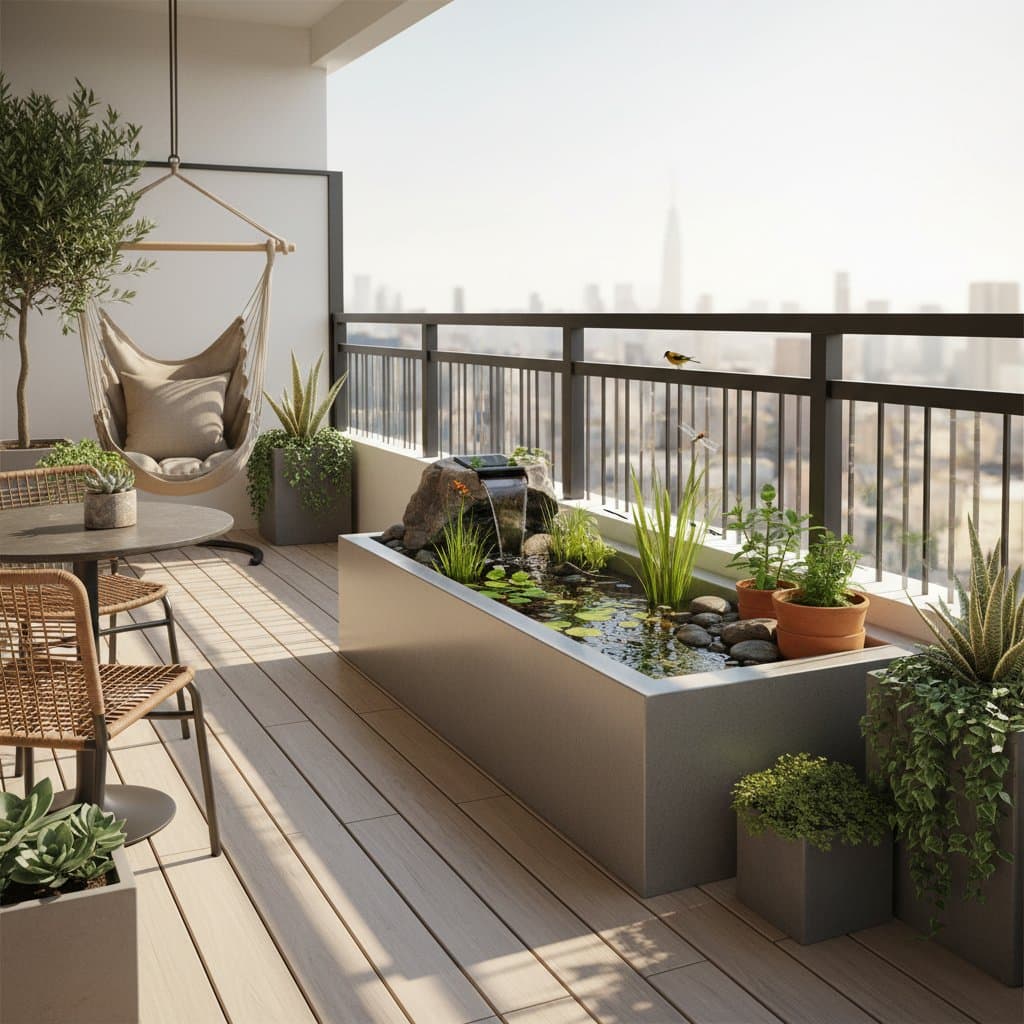
Balcony Ponds That Create Mini Wildlife Ecosystems
A small pond on a balcony transforms a modest outdoor space into a vibrant living ecosystem. An 18-inch-wide container suffices to support aquatic plants, beneficial insects, and visiting birds. This feature introduces gentle movement, soothing sounds, and tranquility that counter the hustle of urban environments. The design emphasizes low-maintenance construction to foster local wildlife while ensuring the setup remains neat and secure for residential use.
Overview
A balcony pond consists of a contained water garden housed in a watertight vessel such as a pot, tub, or trough. It sustains aquatic plants and small organisms that establish a self-regulating balance. Plant roots naturally filter the water, moderate temperature fluctuations, and attract pollinators like bees and butterflies. This compact arrangement requires minimal footprint, comparable to a side table, yet delivers ecological benefits akin to a traditional garden pond.
Tools and Materials
Assemble a basic balcony pond using these essential items:
- A waterproof container with 15 to 30 gallons capacity
- Pond liner or sealant for porous containers
- Compact solar-powered or electric fountain pump
- Aquatic soil, fine gravel, and decorative stones
- Two to four suitable plants, including water lettuce, dwarf papyrus, or miniature water lilies
- Fine mesh netting to exclude debris and deter pests
- Optional additions: Hardy snails or mosquito fish, subject to local regulations
Steps
-
Select a stable location. Position the pond where the balcony structure supports added weight; a 20-gallon filled container weighs approximately 160 pounds. Anchor it against a wall or railing to enhance stability.
-
Prepare the container. Apply pond-safe sealant to non-watertight vessels or install a flexible liner. Allow 24 to 48 hours for complete curing before introducing water.
-
Layer the substrate. Spread two inches of gravel at the base, followed by a one-inch layer of specialized aquatic soil. These materials secure plant roots and provide niches for microorganisms and insects.
-
Introduce water gradually. Fill with dechlorinated tap water; allow it to stand for 24 hours to evaporate chlorine. Use rainwater if available to mimic natural conditions.
-
Arrange the plants. Position upright species like dwarf papyrus at the rear for height variation, and place floating options such as water lettuce centrally. Maintain at least six inches of clear water surface to facilitate oxygen circulation.
-
Set up circulation. Install a submersible fountain pump to agitate the surface gently. This action inhibits mosquito larvae development and promotes even oxygenation.
-
Observe initial performance. Inspect daily for the first week, adjusting water levels and plant positions as settling occurs. Introduce snails or fish only after the ecosystem stabilizes.
Safety Considerations
Employ outdoor-rated electrical components and connect to a grounded outlet. Route cords along fixed surfaces to avoid hazards in traffic areas. Prevent algae accumulation on edges through weekly gentle scrubbing with a soft brush. For households with children or pets, opt for a mesh enclosure or limit depth to under 12 inches.
Ongoing Maintenance
An established balcony pond demands roughly 15 minutes of attention weekly. Skim surface debris like fallen leaves promptly, and clean the pump filter every four weeks. Prune overgrown foliage to sustain balance, and replace one-third of the water volume every two to three weeks using aged tap water to preserve nutrient levels without stressing inhabitants.
Efficient Storage Solutions
House maintenance tools and fertilizers in a weatherproof bin positioned beneath a bench or shelf. Fold spare liner material and store gravel in labeled airtight containers. Suspend a compact net and cleaning brush from a railing hook for quick access.
Cost and Timeline Estimates
Budget 60 to 120 dollars for initial setup, varying by container quality and pump features. Complete assembly, including substrate preparation and planting, typically spans two to three hours. Prioritize durable sealant and healthy plants over ornamental elements to ensure long-term viability.
Fostering Lasting Connections
Monitor your pond each day for signs of vitality, such as dragonflies hovering or birds perching nearby. These observations confirm the ecosystem's success in supporting urban biodiversity. Refresh plants seasonally to prevent overcrowding, maintain filtration components diligently, and appreciate the serene interplay of water, flora, and fauna that enhances your daily routine.