
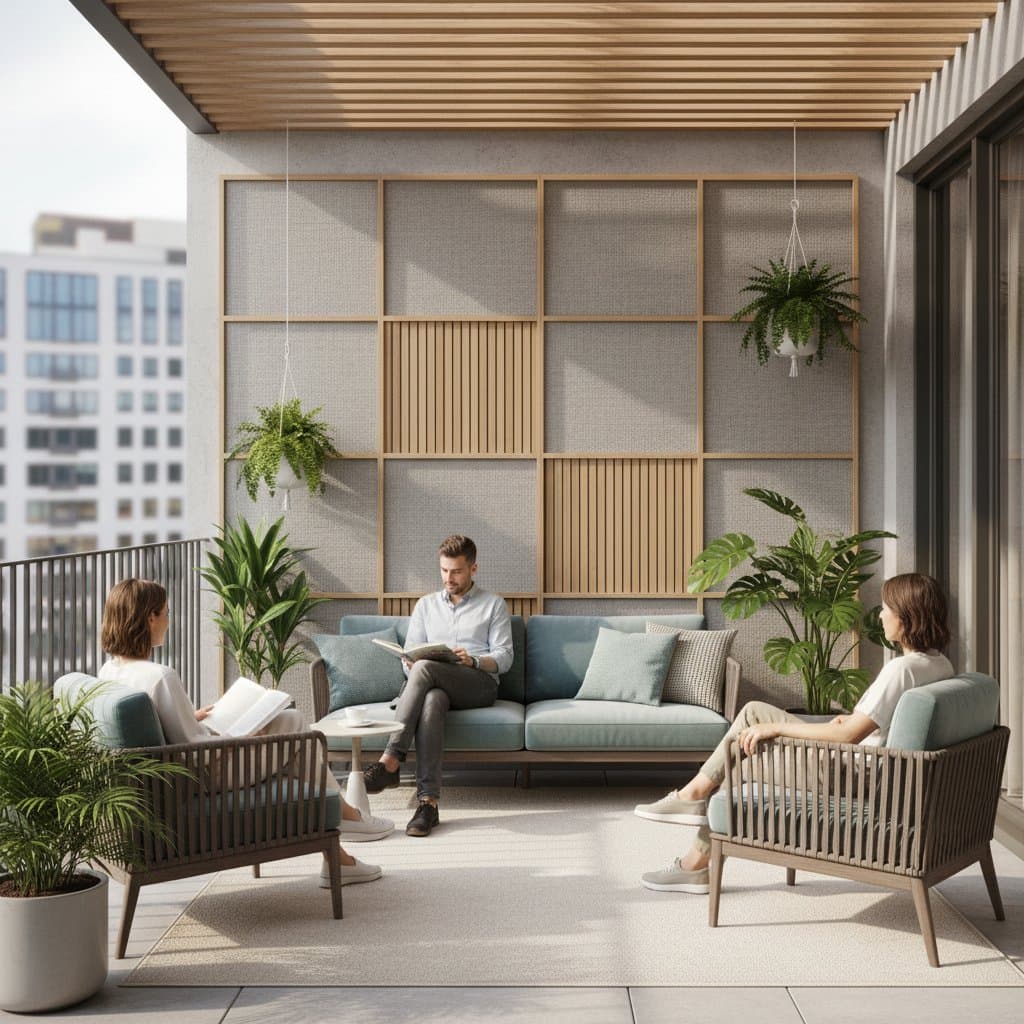
Selecting Suitable Materials
Choose panels made from fiberglass or mineral wool wrapped in weather resistant fabric. These options resist moisture and maintain sound absorption over time. Foam panels cost less but degrade quickly when exposed to sun and rain.
Measure your balcony walls and railings before purchase. Panels measuring two by four feet cover most standard spaces efficiently. Verify that materials carry a Class A fire rating to meet building requirements.
Installation Process
Begin by cleaning all surfaces thoroughly. Remove dirt and loose paint so adhesives or screws hold firmly.
Overlap seams slightly to reduce gaps where sound could leak. If panels meet at a corner, seal the joint with silicone.
Adding Weather Protection
Stretch breathable fabric or mesh over the panels if they are not fully weatherproof. Fasten with staples or clips. This layer stops rain from soaking the material and keeps dust out.
Do not use plastic sheeting. It traps moisture and limits airflow, which can cause mold.
Testing the Results
Sit on your balcony and listen. You should notice a softer echo and less sharp sound from outside. If one section still feels loud, add another panel or hang a heavy outdoor curtain for extra coverage.
Safety Considerations
Always secure ladders or stools on flat ground. Wear gloves when cutting insulation or fiberglass. Avoid blocking drainage holes or vents on the balcony. Keep flammable materials away from grills or heaters. Confirm that your panel materials meet Class A fire rating if required by local code.
Common Issues and Solutions
Panels peel off the wall after rain. Switch to stainless screws or use a stronger outdoor adhesive. Seal top edges with silicone.
Sound still leaks through railing gaps. Attach panels to a lightweight wood frame that sits inside the railing. Add dense outdoor fabric behind it.
Mold spots form on panels. Remove affected panels, scrub with a mild detergent, and let dry fully. Add breathable fabric covers to prevent future buildup.
Echo remains even with panels installed. Add soft furnishings such as an outdoor rug or cushioned chairs. Textiles absorb midrange frequencies that panels sometimes miss.
Cost and Time Expectations
Expect to spend between 150 and 400 dollars depending on panel quality and size. Foam faced boards are cheaper but wear faster outdoors. Fiberglass or composite panels wrapped in polyester fabric last longer and maintain color.
Installation usually takes two to three hours for a small balcony. Adhesive systems are faster, but screws provide longer stability. Weatherproof fabric adds another hour.
If you rent, consider removable frames made from wood strips. They cost about 50 dollars extra but avoid drilling holes. You can take them when you move.
Ongoing Care
Inspect panels every few months. Look for loose corners, water stains, or fading. Tighten screws and reseal edges as needed.
Clean panels with a soft brush or vacuum nozzle. Avoid soaking them. Surface dirt can dull their color but does not harm performance. Replace any panel that has soaked foam or flaking fabric.
In windy conditions, check that panels remain anchored. Loose pieces can rattle, creating the very noise you wanted to stop.
Integrating Storage and Sound Control
If your balcony doubles as a storage area, integrate sound control with organization. Place tall planters or storage benches along the loudest wall. They create extra barriers that break up sound waves.
You can also mount panels behind shelving or hanging gardens. As long as air can flow around them, they will still absorb sound. Keep at least one inch of space between a panel and any solid surface for best results.
For renters who cannot mount panels, stand alone acoustic screens are an option. They fold up when not in use and can cover open railings. Prices start around 75 dollars per screen.
When Professional Help Is Needed
If your balcony faces constant construction or large traffic routes, basic panels may not be enough. A sound engineer or contractor can measure decibel levels and recommend barrier grade materials. These might include soundproof curtains, dense PVC boards, or partial enclosures.
Ask about weight limits of your balcony, fire and ventilation codes, drainage clearance under added barriers, and long term UV resistance of materials. Professional help costs more, often between 500 and 1000 dollars, but ensures a safer and more permanent setup.
Creating Your Calm Outdoor Space
You do not need total silence to enjoy your balcony. You just need less echo and fewer sharp sounds. Acoustic panels give you a practical path. Each one softens the city edge, creating space for conversation, reading, or a quiet cup of coffee.
Start small. Cover one wall and test the difference. Add fabric covers or planters as you go. Keep panels clean and secure. Over time, your balcony will feel less like the street below and more like a calm room with open air.