
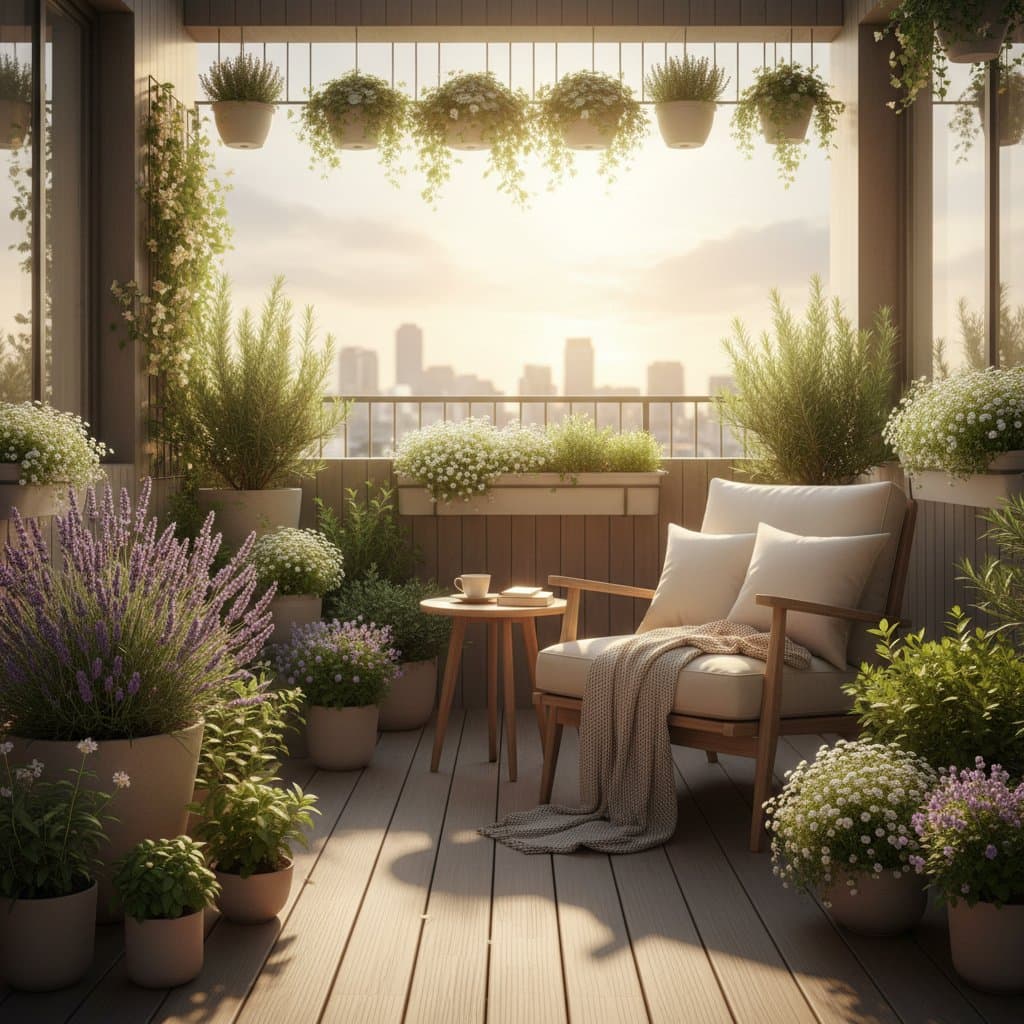
Step 4: Arrange for Optimal Airflow and Accessibility
Position pots with a minimum of six inches of space between them to promote air circulation and minimize the risk of mildew. If balcony railings obstruct sunlight for lower pots, elevate them using sturdy plant stands. For added privacy, position taller planters along the perimeter, ensuring they remain below railing height to uphold safety standards.
Incorporate a lightweight chair or stool into the arrangement, allowing you to sit immersed in the aromas. Regular interaction in this manner enables you to observe plant performance closely and perform necessary adjustments, such as trimming overgrown sections.
Step 5: Establish a Consistent Watering and Feeding Routine
Containers on balconies lose moisture more rapidly than in-ground plantings. Assess soil dampness each day by inserting a finger one inch deep into the medium; water gradually if it feels dry until a small amount of excess liquid appears at the base. During periods of high heat, most aromatic herbs require hydration every one to two days.
Apply a balanced, slow-release fertilizer at intervals of several weeks to support vigorous growth and preserve essential oils responsible for fragrance. Refrain from excessive applications, as they may dilute the potency of scentsplants.
Essential Safety Considerations
- Secure all planters using brackets or added weights, particularly on balconies exposed to prevailing winds.
- Select pots made of materials other than glass for placements in direct sunlight, as glass can cause roots to overheat.
- Maintain unobstructed pathways by positioning low containers away from high-traffic areas to avoid accidents.
- Review and adhere to your building's regulations prior to installing any hanging planters beyond the railing.
Common Issues and Solutions
Fading or dull leaves: This condition often stems from insufficient light or depleted nutrients. Relocate the affected plants to a brighter location or administer a targeted nutrient supplement.
Persistently soggy soil with foul root odor: Poor drainage is the likely culprit. Discard the existing soil, introduce a layer of gravel at the pot base, and repot using fresh, well-draining medium.
Diminished fragrance intensity: Perform gentle pruning to stimulate fresh growth, where aromatic oils concentrate most in new leaves and buds.
Infestations of aphids or whiteflies: Gently rinse foliage with a strong stream of water or prepare a solution of mild soap and water for application. Maintain consistent airflow to deter pest accumulation.
Ongoing Maintenance Practices
Consistent attention ensures the persistence of robust scents. Deadhead spent blooms on a weekly basis to encourage continuous flowering. Harvest herbs frequently for culinary use, as this practice promotes denser new foliage.
Address urban dust accumulation by wiping leaves with a soft, damp cloth. Rotate pots by a quarter turn every few weeks to foster uniform development. As temperatures drop in cooler seasons, cluster plants against a protective wall for insulation or relocate sensitive varieties indoors.
Practical storage advice: Store surplus soil and gardening tools in a sealed plastic container to protect them from moisture and unwanted pests.
Cost and Time Investment
Initiating a modest balcony scent garden typically requires an investment of $60 to $120, influenced by the dimensions of containers and the types of plants selected. Opt for economical herbs to keep expenses low, reserving higher budgets for flowering shrubs that offer extended visual appeal.
The initial setup, from initial planning through to the first watering, demands approximately three to five hours of effort. Daily maintenance involves just 10 to 15 minutes dedicated to watering, pruning, and general upkeep.
When purchasing larger containers, prioritize lightweight options such as plastic or resin to manage both costs and overall weight effectively.
Seasonal Care Guidelines
- Spring preparations: Rejuvenate the soil, separate overcrowded herb clumps, and initiate the fertilization regimen.
- Summer management: Provide daily watering, remove wilted flowers promptly, and savor the peak of aromatic intensity.
- Fall adjustments: Scale back watering frequency, conduct light pruning, and position fragile pots adjacent to sheltered walls.
- Winter protections: Insulate roots with burlap coverings or transport pots to indoor areas with adequate natural light.
Situations Requiring Professional Assistance
Address balcony-specific challenges like inadequate drainage, unstable railings, or nearby electrical fixtures before introducing plants. Engage a building maintenance expert for these evaluations to prevent hazards.
For installations involving climbing plants that necessitate hooks or trellises, seek input from a qualified contractor regarding structural integrity. Request confirmation on the following points:
- The permissible weight limit for planters per square foot of balcony surface.
- Methods to anchor pots securely against wind forces without compromising railing integrity.
- Protocols for safeguarding electrical outlets when incorporating elements like string lights or compact heaters.
Core Benefits Summarized
Establishing a scent garden demands neither expansive grounds nor substantial funds; suitable containers, adequate sunlight, and diligent care suffice.
A single pot of lavender or mint alters the ambiance of your balcony profoundly. With time, this compact area evolves into a dedicated space for momentary respite, deep breathing, and mental rejuvenation.
Immediate Actions to Take
- Assess your balcony dimensions. Document prevailing light conditions, available space, and wind patterns.
- Select three aromatic plants. Begin with straightforward choices like lavender, rosemary, and mint for reliable results.
- Prepare containers this week. Employ soil that drains efficiently and position them securely.
Within the coming month, your balcony will emanate the vitality of a flourishing garden. Every inhalation serves as a gentle cue that tranquility resides just beyond your threshold.