
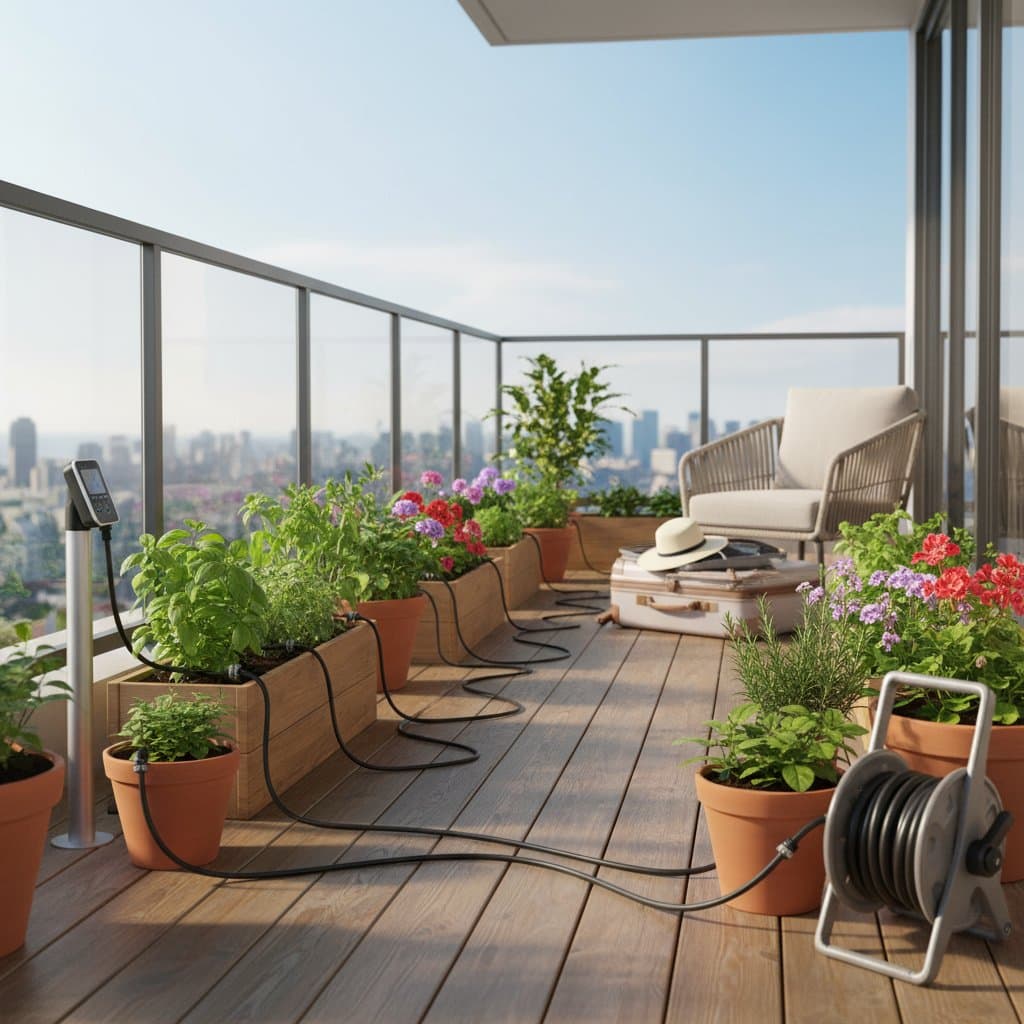
Understanding Drip Tape for Balcony Gardens During Absences
Balcony gardens offer urban dwellers a connection to nature, yet travel often introduces concerns about plant care. Returning to wilted foliage or parched earth disrupts enjoyment. Drip tape irrigation addresses this challenge effectively. This system provides precise, automated watering that sustains plants without constant oversight.
Installation requires minimal time, typically one hour for basic setups. Testing follows shortly after, confirming functionality within a day. The result allows returns to vibrant, healthy greenery. This guide covers the essentials of drip tape, its suitability for compact urban areas, secure installation procedures, and long-term maintenance strategies. It also includes routines to avoid common issues such as leaks or blockages.
Required Tools and Materials
Assemble necessary items prior to beginning the project. Most components are available at local hardware or gardening suppliers.
Essential Tools
- Scissors or utility knife for precise cuts
- Measuring tape to determine lengths accurately
- Small screwdriver or hole punch for adjustments
- Bucket or basin to detect leaks during trials
Key Materials
- Roll of drip tape, 50 feet (15 meters) or longer based on the number of pots
- Mainline connector compatible with faucet or reservoir outlet
- Inline filter to remove debris
- Pressure regulator set to 10-15 psi for optimal flow
- Battery-operated or solar timer for scheduling
- 10-20 barbed fittings or elbows for connections
- Pack of end plugs to seal lines
- Optional: Stake clips or zip ties for securing the tape
A complete balcony system generally costs $30 to $60, varying with scale and component durability.
Installation Steps
Step 1: Plan the Layout
Position pots in their permanent locations. Measure the path the tape will follow, adding two feet (60 cm) for flexibility in curves. For balconies with railings, route the tape along the rail or behind pots to maintain a tidy appearance.
Step 2: Attach to Water Source
Secure the filter to the faucet outlet first, followed by the pressure regulator and timer. Connect components by hand-tightening to prevent damage to threads. For gravity-fed systems using a reservoir, elevate the tank at least three feet (one meter) above the tape to ensure adequate flow.
Step 3: Position the Main Line
Unroll the drip tape along the designated path, ensuring emitter holes face upward. Anchor the tape at intervals of three feet using clips or ties. This setup minimizes movement during operation or cleaning.
Step 4: Section and Connect
For multiple pot rows, divide the tape into segments of equal length. Insert barbed fittings at each end and attach to the main line securely. Ensure connections seat fully to avoid pressure loss or drips at distant points.
Step 5: Seal End Points
Install end plugs or double-fold and clamp the tape extremities. These measures contain water within the system. Subsequent testing will verify seal integrity.
Step 6: Initial Run and Inspection
Activate the water supply for five minutes. Observe emitters for consistent output, approximately one drop per second. Address irregularities by gently pressing the tape to release air pockets. If flow fails entirely, inspect the regulator and filter for obstructions.
Step 7: Configure the Timer
Program the timer for one to two daily activations, each lasting 10-15 minutes for typical balcony plants. Monitor soil moisture after one week by inserting a finger one inch deep; adjust durations to maintain damp but not saturated conditions.
Essential Safety Measures
Separate water elements from electrical sources to prevent hazards. Position timers and junctions distant from outlets or cords, ideally mounting them above potential splash zones on walls or railings.
Wear gloves during cutting and assembly to protect against sharp edges. Shut off the water supply before any disassembly to avoid sudden pressure releases that could dislodge parts.
For balconies overlooking shared areas, position drip trays beneath pots to manage excess water. Place a non-slip mat near the faucet to enhance stability.
Common Issues and Solutions
Inconsistent Distribution
Plants closer to the source may receive excess moisture if pressure exceeds specifications. Verify regulator compatibility with your water output. Consider dividing the line with a T-connector for balanced shorter segments.
Joint Leakage
Ensure clean cuts on tape ends before reinserting into fittings. For ongoing problems, apply a single layer of Teflon tape to the connection prior to assembly.
Blocked Emitters
Remove end plugs and flush the line for one minute. For persistent clogs, submerge the tape in a vinegar-water solution, then rinse thoroughly.
Complete Flow Absence
Verify timer activation, filter cleanliness, and water source status. In reservoir setups, increase elevation to boost gravitational force.
Cost and Time Considerations
Assemble a modest system in approximately one hour, with testing adding 30 minutes. Total expenses range from $30 to $60, primarily influenced by the timer's price ($15-30).
Select half-inch standard fittings to ensure future adaptability. Invest in quality filters and regulators, as inferior models fail prematurely due to clogs or fractures.
Ongoing Maintenance Practices
Inspect and rinse the filter biweekly in active seasons by removing, cleaning the mesh, and reinstalling. Flush the tape monthly by opening ends and running water for one minute to dislodge buildup.
Organize spare parts in labeled containers for swift replacements. Test timer batteries biannually. Protect the assembly from winter exposure with covers to avert material degradation.
When storing, coil the tape loosely and place in a sealed bin to shield from contaminants.
Adapting to Seasons
Prior to spring, examine connections for wear and replace aged tape. Conduct a 10-minute trial run before placing plants outdoors.
In intense summer heat, extend cycle times to 15-20 minutes. Reduce durations by half during cooler or wet periods.
Following strong winds, confirm anchors remain intact to prevent line disruptions.
For prolonged dry absences, integrate a 5-gallon (19-liter) reserve tank into the line, supplying roughly three days of irrigation for 10 medium pots.
Efficient Storage Strategies
Consolidate components in a dedicated crate, with segregated bags for fittings, regulators, and plugs. Note battery replacement dates on the timer for reference. This organization streamlines seasonal preparations and prevents loss.
In rental properties, opt for quick-disconnect fittings for easy removal. Employ adhesive hooks for railing attachments to preserve surfaces.
Professional Assistance Indicators
Seek expert help if persistent leaks suggest underlying plumbing issues or if balcony constraints require custom engineering. Complex electrical integrations or large-scale expansions also warrant professional input to ensure compliance and safety.