
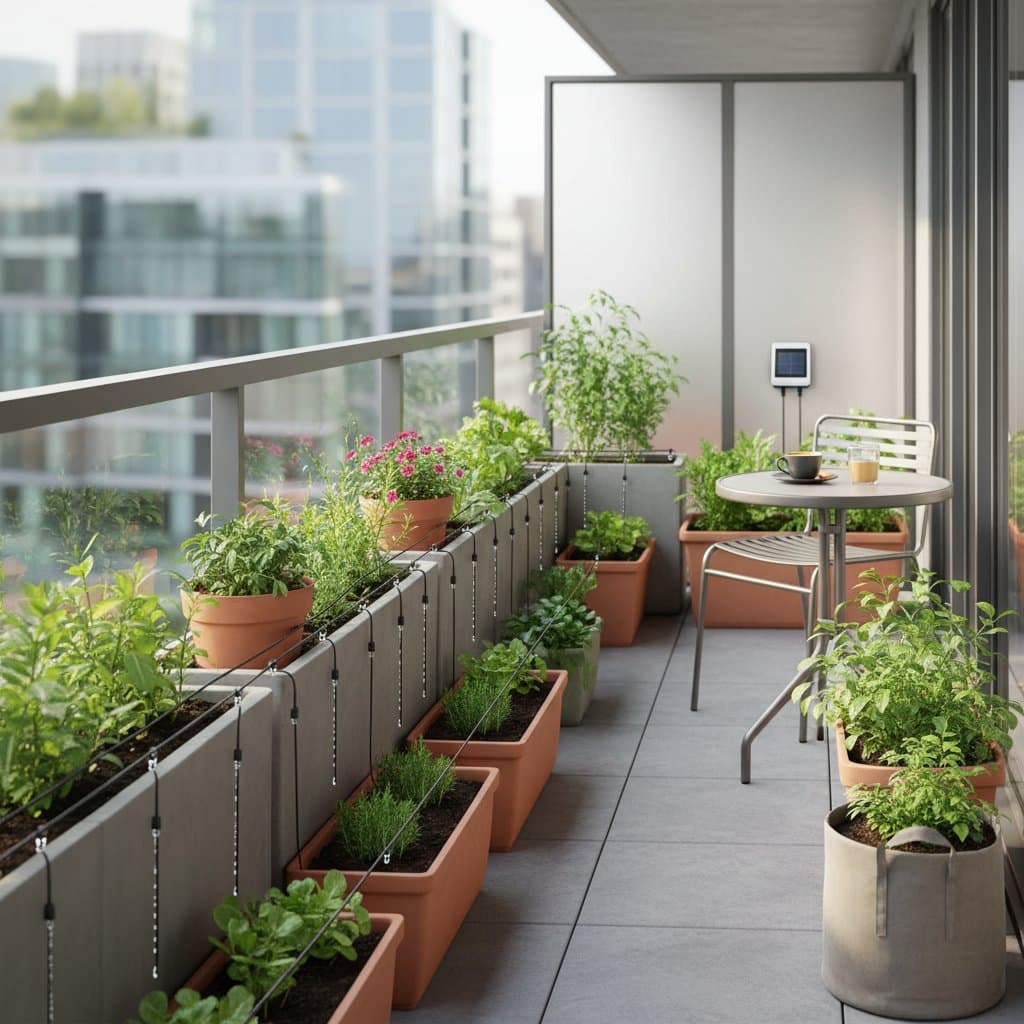
Automated Watering for Balcony Gardens: Using Drip Tape During Travel
Balcony gardens bring vitality to urban living, yet travel often disrupts their care. Returning to wilted foliage and parched soil disrupts the pleasure these spaces provide. A drip tape system offers a dependable solution, delivering precise moisture to plant roots automatically.
This method mimics natural rainfall by releasing water slowly through embedded emitters. It suits confined areas like balconies, where space limits traditional irrigation. Readers gain insights into drip tape fundamentals, assembly requirements, and ongoing care to sustain healthy plants without constant attention.
Understanding Drip Tape for Container Plants
Drip tape consists of a flat, flexible hose with pre-installed emitters that distribute water evenly along its length. For balcony use, select tape with emitters spaced 6 to 12 inches apart to match the density of potted plants. This spacing ensures each container receives adequate hydration without excess runoff.
The system operates at low pressure, typically 8 to 10 psi, to prevent emitter damage and promote efficient water use. In urban settings, it connects to a standard faucet or gravity-fed reservoir, adapting to various setups. Benefits include reduced evaporation, targeted root zone watering, and compatibility with timers for scheduled operation.
Essential Tools and Materials
Assemble the following components to construct a functional drip tape setup. Source them from local hardware stores, garden centers, or online suppliers specializing in irrigation products.
- Drip tape: Opt for 5/8-inch width with 0.5 to 1 gallon per hour emitter flow rates.
- Fittings kit: End caps, straight connectors, elbow joints, and adapters linking tape to supply lines.
- Water timer: Battery-operated or solar models compatible with outdoor faucets for automated cycles.
- Pressure regulator: Adjustable unit maintaining 10 psi to safeguard system integrity.
- Inline filter: 150-mesh screen to block sediment and mineral buildup in water lines.
- Distribution tubing: 1/2-inch polyethylene line for routing water from the source to planters.
- Securing hardware: Hose clamps, zip ties, or stakes to anchor lines against wind or movement.
- Cutting tools: Sharp scissors or a utility knife for precise trimming of tape and tubing.
- Backup reservoir: 5-gallon bucket or elevated container for non-pressurized, gravity-based feeding.
Prepare a workspace with a bucket for testing connections and towels to manage any initial drips.
Step-by-Step Installation Guide
Position planters on your balcony and plan the water path from source to endpoints. Begin with the faucet or reservoir as the central hub.
- Attach the pressure regulator and filter to the faucet outlet using threaded connectors. Tighten by hand plus a quarter turn to avoid over-stressing seals.
- Connect the mainline tubing to the filter, routing it along railings or walls with zip ties every 2 feet for stability.
- Cut drip tape to fit each planter's perimeter, ensuring emitters align near plant bases. Punch holes in tubing for tape insertion using a fitting tool.
- Insert tape ends into connectors and secure with clamps. Plug the far end of each tape run to contain flow.
- Install the timer on the faucet, programming it for short daily sessions, such as 20 to 30 minutes, based on plant needs and local climate.
- Test the full system by running water for 5 minutes. Observe for leaks, even distribution, and proper drainage from pots.
Adjust emitter positions if coverage appears uneven. For multi-planter arrays, use manifolds to branch lines evenly.
Safety Considerations
Prioritize precautions to protect both the system and users during setup and operation. These measures minimize risks in outdoor environments.
- Disconnect water supply before modifying any lines to prevent sudden bursts.
- Verify regulator function to maintain safe pressure levels and avert tape ruptures.
- Position timers in sheltered spots or enclose them in waterproof housings to resist rain exposure.
- Fasten all tubing firmly to eliminate tripping hazards or unintended dislodgement by pets or guests.
- Drain reservoirs and lines before winter to avoid freeze-induced cracks in components.
Follow these practices to ensure reliable performance year-round.
Troubleshooting Common Issues
Occasional glitches arise in drip systems, but most resolve with basic diagnostics. Address them promptly to sustain plant health.
- If emitters clog, flush lines backward with a vinegar solution to dissolve minerals, then rinse thoroughly.
- For low flow, inspect the filter for blockages and replace if mesh shows wear.
- Uneven wetting signals air locks; bleed lines by opening ends until steady flow resumes.
- Timer failures often stem from dead batteries; test manually and reprogram as needed.
- Leaks at joints require re-tightening or new fittings; apply plumber's tape for threaded seals.
Document issues in a log to identify patterns, such as seasonal sediment increases.
Ongoing Maintenance Practices
Sustained efficiency demands routine checks and cleaning. Integrate these tasks into monthly garden routines.
- Run a full flush through the system monthly, using clean water to expel accumulated debris.
- Examine tape for wear, including splits or emitter failures, and patch or replace affected segments.
- Disassemble and rinse the filter biweekly, scrubbing gently to restore flow capacity.
- Organize spare parts in a dry, accessible kit, labeling each for quick retrieval.
- Recalibrate timer after disruptions like storms or extended absences to confirm accurate scheduling.
These steps extend equipment life to multiple growing seasons, often three or more with proper care.
Cost Breakdown and Time Investment
A starter drip tape installation for a modest balcony ranges from $40 to $90, scaling with coverage area.
- 50-foot drip tape roll: $15 to $25.
- Timer, regulator, and filter bundle: $25 to $45.
- Tubing, fittings, and fasteners: $10 to $20.
Assembly requires 1.5 to 3 hours, depending on planter count and layout complexity. Daily involvement drops to seconds for checks, while water savings offset initial outlay over time.
Professional Assistance Options
DIY suits most urban balcony configurations, but complex scenarios benefit from expert input.
Seek a professional irrigation technician when dealing with:
- Building-wide water lines needing backflow prevention devices.
- Extended layouts requiring zone valves for balanced pressure.
- Integration with shared utility systems in multi-unit dwellings.
Request from pros a detailed schematic of the installation, inventory of components with specifications, and hands-on training for adjustments and upkeep. Such guidance prevents inefficiencies and ensures compliance with local codes.
Implement and Expand Your System
Launch with a single container to build familiarity. Monitor performance over a week to fine-tune settings.
- Assess your balcony layout and procure materials scaled to initial needs.
- Assemble and test the core setup indoors if possible, then deploy outdoors.
- Run trial cycles, measuring soil moisture to optimize run times for your plants' varieties.
As confidence grows, scale to additional pots, incorporating lessons from the pilot. This approach yields lush, resilient greenery that endures absences, fostering a seamless blend of travel and tending in city life.