
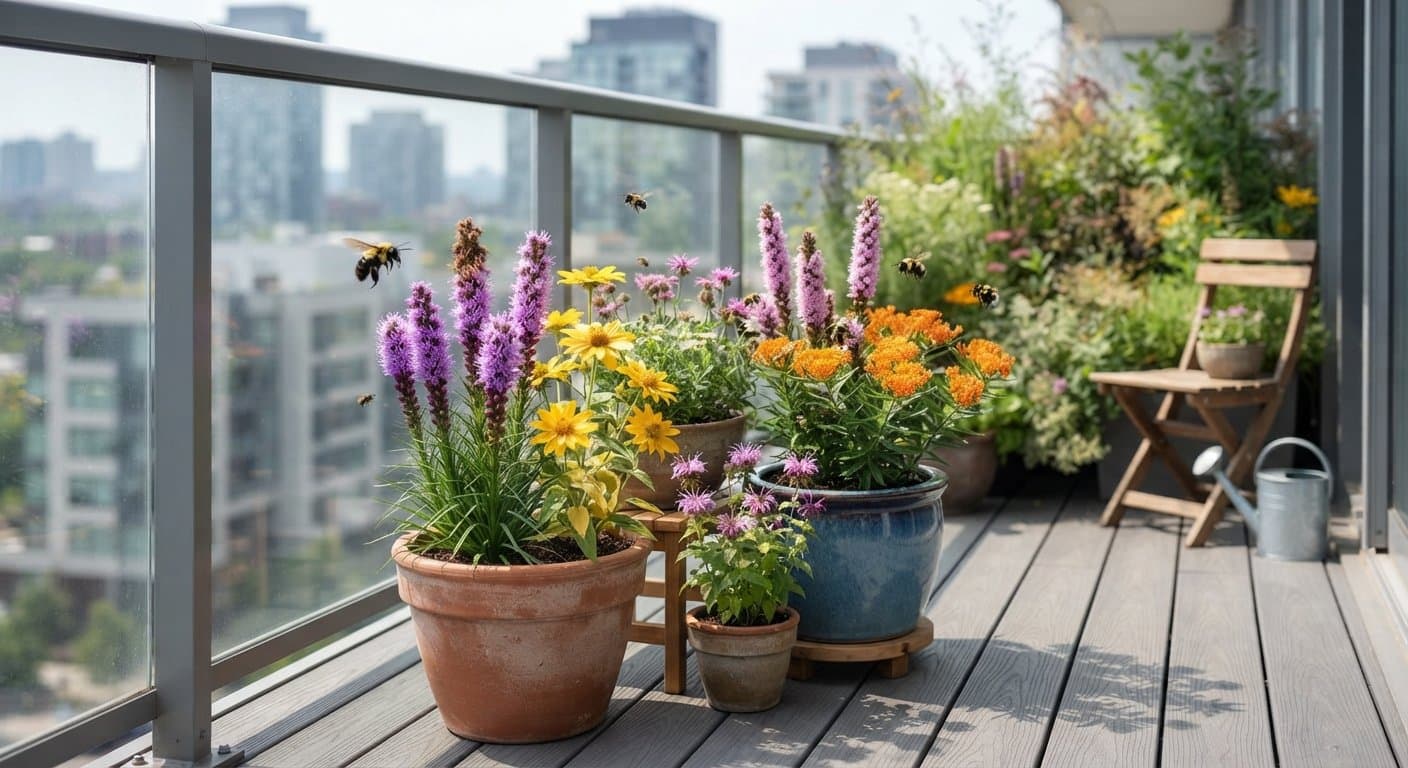
Small Balcony Gardens That Support Local Bees
A balcony, doorstep, or sunny windowsill can support bees when you choose the right native plants. A few containers with carefully selected species provide nectar, pollen, and resting spots without overwhelming limited space. The key lies in matching plants to your specific conditions and arranging them for easy access.
Understanding Pollinator Needs in Urban Settings
A pollinator garden supplies food and shelter for bees throughout their active season. In small urban spaces, a cluster of pots achieves this goal when plants bloom at different times and match local growing conditions.
Native plants evolved in your region and typically match local soil, weather patterns, and pollinator preferences. Contact a regional native plant nursery or cooperative extension office for current recommendations. New York City gardeners should focus on species native to the Northeast.
Three elements matter most for bee support: varied flower shapes that accommodate different bee species, continuous blooms from spring through fall, and a chemical-free environment. Three to five containers create more foraging opportunities than a single pot while remaining manageable.
Essential Supplies
Prepare your materials before selecting plants. Containers need drainage holes, and you must identify a stable location where pots cannot fall or create hazards.
Required items include:
- Three to five containers, each at least 12 inches wide and deep for most perennials
- Quality potting mix formulated for container growing
- Watering can with a narrow spout for precise application
- Hand trowel and protective gloves
- Native plants matched to your light conditions and region
- Saucers or trays to protect surfaces beneath pots
Garden soil compacts in containers and restricts drainage. Review building regulations before mounting planters on railings or positioning containers near edges.
Site Assessment
Observe your chosen location throughout a full day. Full sun provides at least six hours of direct sunlight. Part shade receives fewer hours of direct light, while shade areas receive minimal direct exposure. These distinctions guide plant selection.
Note wind patterns, heat reflection from nearby surfaces, and water access. Elevated balconies dry out faster than ground-level gardens, and strong winds can topple lightweight containers. Select heavier pots or secure them according to building requirements.
Plant Selection Strategy
Choose three to five native species with staggered bloom periods. This approach ensures steady flower availability while maintaining visual interest. Match plant mature size to container dimensions, since some native species spread aggressively or grow too tall for balcony conditions.
Northeast gardeners might consider these options:
- Wild bergamot produces clusters of lavender flowers and thrives in sunny locations
- Purple coneflower forms sturdy stems suitable for larger containers in full sun
- New England aster delivers late-season blooms when planted in appropriately sized pots
- Golden alexanders provides early spring flowers in sunny or partly sunny spots
- Blue wood aster adapts to partly shaded conditions
These examples require verification against your specific location. Confirm each plant's native range, mature dimensions, and light requirements through local sources. Avoid cultivars with modified flower structures, as these often provide reduced pollen or nectar access compared to species forms.
Container Preparation
Position empty pots in their final locations before adding soil. Fill containers with potting mix, leaving several inches of space below the rim. This gap prevents overflow during watering.
Plant each specimen at the same depth it occupied in its nursery container. Firm the mix gently around roots, then water thoroughly until drainage appears at container bottoms. Never block drainage holes with solid materials, as this creates waterlogged conditions.
Strategic Arrangement
Position containers close enough to appear as a unified planting while allowing air circulation between pots. Place taller specimens toward the back when viewed from indoors. Maintain clear access to flowers from stable positions.
Grouped containers help bees locate resources more efficiently than scattered individual pots. Include one shallow water source nearby if maintenance allows. A dish filled with clean stones or marbles provides landing spots without deep water hazards.
Ongoing Care Routine
Test soil moisture by inserting a finger into the top inch. Water when this layer feels dry, applying water slowly until it reaches root zones and excess drains freely. Hot or windy conditions increase watering frequency, but avoid rigid schedules that ignore actual soil conditions.
Track which plants attract the most visitors and which dry out fastest. Simple notes on your phone or in a garden journal help refine future plant choices and positioning decisions.
Safety Considerations
Wear gloves during soil handling and plant installation. Lift heavy containers with assistance or in smaller increments. Avoid narrow ledges and elevated positions where containers could fall onto people below. Verify that balcony installations comply with building codes and use appropriate hardware for weight requirements.
Eliminate pesticide use, including products marketed as natural options, unless a qualified expert identifies a specific problem requiring treatment. Chemical applications expose bees to harmful substances. Empty standing water from deep saucers regularly to prevent mosquito breeding.
Investment and Time Requirements
A basic setup with three containers, potting mix, and starter plants typically costs between sixty and one hundred eighty dollars. Prices vary based on container materials, plant sizes, and local nursery rates. Reusing clean containers reduces expenses. Prioritize sturdy pots and healthy native plants over decorative elements.
Expect one to two hours for site evaluation, container filling, and planting activities. Add brief daily checks for moisture levels during the growing season. Larger plants or balconies with limited access may require additional time.
Common Issues and Solutions
Midday wilting indicates either dry soil or waterlogged conditions. Check moisture levels before watering. Persistent wetness suggests drainage problems or blocked holes.
Limited bee activity may result from non-native plants, incorrect light conditions, or establishment periods. Relocate pots to brighter, sheltered positions if species requirements indicate sun needs. Allow several weeks for plants to settle before evaluating success.
Overgrown containers require attention to mature plant dimensions. Divide or transplant perennials when roots fill available space, or substitute smaller native alternatives suited to container growing.
Cluttered appearance improves by removing empty containers, unused tools, and struggling plants. Maintain the bee garden as a compact grouping of three containers and store supplies indoors when not in use.
Seasonal Maintenance
Remove weeds manually during regular watering sessions. Inspect foliage for damage or disease symptoms. Remove affected plant parts while preserving healthy stems and seed heads through winter months where building rules permit. Many native bees nest in undisturbed soil, so avoid complete mulching. A small area of exposed soil in wider containers may support nesting needs.
Professional Consultation
Contact local native plant nurseries, cooperative extension services, or experienced horticulturists when plants fail repeatedly despite appropriate light and drainage. Provide container dimensions, sunlight measurements, watering schedules, and photographs of affected plants. Building load concerns or attachment questions require consultation with building management or qualified structural professionals.
Getting Started
Identify one suitable location, measure available space, and assess light patterns before purchasing plants. Locate a regional source for native species, then begin with three containers and plants representing different bloom periods. Maintain water availability, eliminate pesticide use, and monitor plant performance throughout the season.