
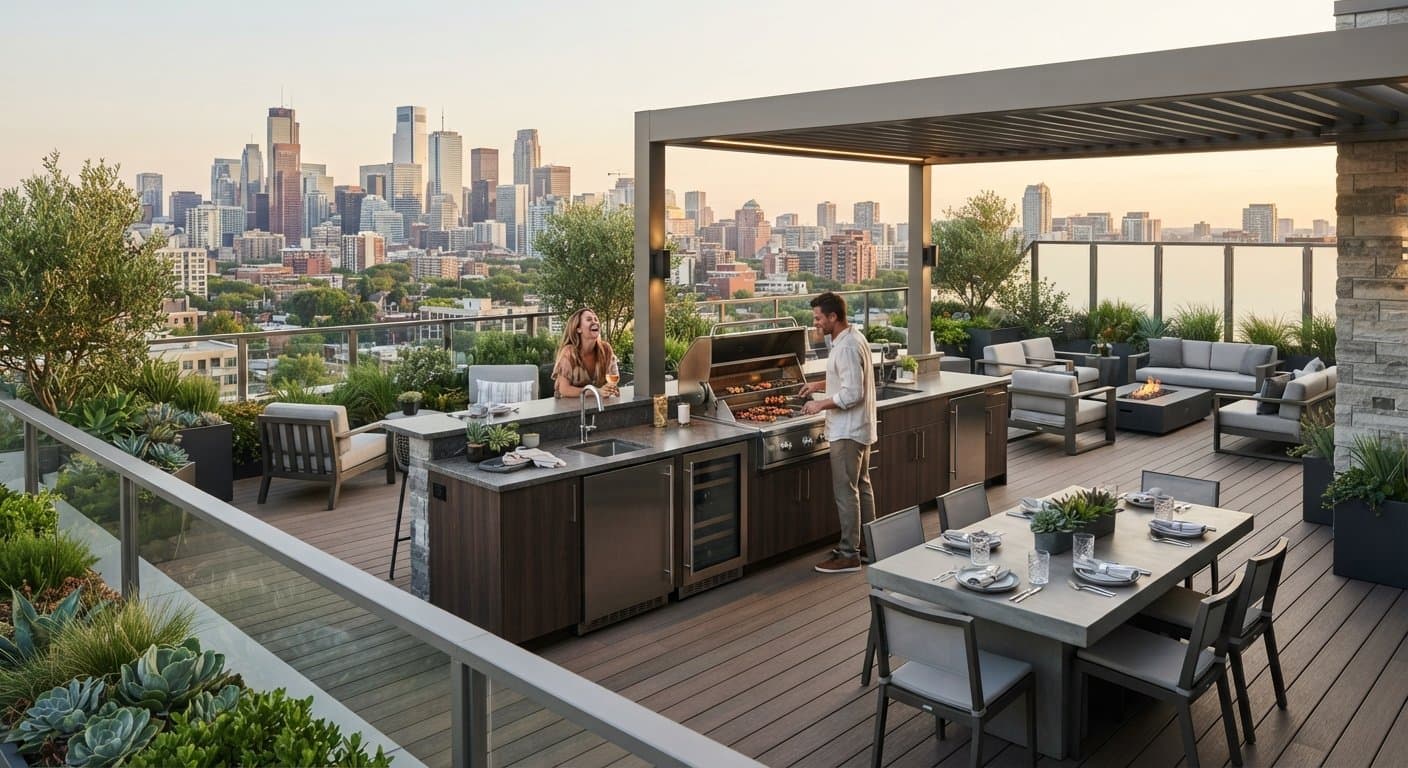
Rooftop Kitchens: The Urban Upgrade Everyone Wants
A rooftop kitchen can turn an underused terrace into a practical place to cook, eat, and gather. The goal is to create a setup that suits your building, protects the roof, and stays easy to maintain. Start by checking what the structure and building rules allow, then plan the cooking zone, utilities, shelter, and storage around the way you actually entertain.
Overview
A rooftop kitchen is an outdoor cooking area built on a roof terrace or shared rooftop. It may be as simple as a portable grill and prep cart, or as complete as a fitted counter with a sink, refrigerator, and permanent cooking appliances.
Rooftops bring special constraints. Weight, wind, drainage, access, fire safety, and neighbors all affect the design. A compact, well-planned layout often works better than a large kitchen that blocks movement or needs complicated utility work.
Before buying equipment, confirm that the roof can support the proposed loads and that the building permits the installation. In a condominium or rental building, get written approval from the property manager or board. Local rules can govern grills, gas lines, electrical work, noise, and rooftop access.
Tools and Materials
Stage basic supplies before measuring or sorting the space. For a first planning session, gather:
- Tape measure, pencil, and graph paper
- Phone or camera for documenting roof conditions
- Weather resistant storage bins for temporary supplies
- Outdoor rated furniture and appliance specifications
- A list of building rules, utility locations, and emergency contacts
These materials help you record useful details without starting construction. Do not drill into the roof, parapet, or exterior wall to test an idea. A roofing professional or building engineer should identify safe attachment points and approved installation methods.
Steps
1. Confirm the Roof Can Support the Plan
Ask the building manager for roof plans, posted load limits, and rules for cooking equipment. A structural engineer can assess concentrated loads from appliances, counters, planters, and groups of guests. A filled planter or stone counter can weigh far more than it appears, especially when several heavy items sit in one area.
Check who is responsible for the roof membrane, the waterproof layer that keeps water out of the building. Permanent work may affect warranties or require a licensed contractor. If the building cannot confirm capacity, pause the design until a qualified professional reviews it.
2. Measure Access and Working Space
Measure the terrace, doorways, stairs, and any elevator route used to bring equipment upstairs. Note fixed features such as drains, vents, doors, railings, and mechanical equipment. Leave clear access to all of them.
Sketch a simple floor plan. Mark a cooking zone, prep surface, serving area, and seating area. Keep a clear walking route between the door and seating, with enough room for people to pass without brushing hot cookware. Follow local accessibility and fire rules for required clearances.
3. Choose a Cooking Setup
Match the equipment to building rules and your cooking habits. A portable electric grill may suit a small terrace where open flame is not allowed. A permitted gas grill can serve frequent cooks, but a permanent gas connection needs professional installation and inspection.
For a small setup, a grill, a prep cart, and a covered storage cabinet can be enough. A larger kitchen may include a sink or undercounter refrigerator, but those additions require safe electrical or plumbing work. Never use a charcoal grill or fuel burning appliance indoors, in an enclosed room, or in a space where its exhaust can collect.
4. Plan Utilities and Drainage
Identify the nearest approved power, water, and gas connections before selecting appliances. Outdoor outlets need protection appropriate to their location, and electrical equipment must be rated for outdoor use. A licensed electrician can confirm circuit capacity and install safe connections.
Do not route a hose, extension cord, or gas line across a walkway. Avoid sending cooking grease, food scraps, or cleaning chemicals into roof drains. If the design includes a sink, ask a licensed plumber how wastewater will be handled under local codes.
5. Create Shelter and Shade
Wind can tip lightweight furniture, carry embers, and make a grill difficult to use. Choose stable furniture, secure loose cushions when not in use, and place cooking equipment where wind does not push smoke toward doors or neighboring windows.
A shade umbrella, canopy, or screen may need approval and wind rated hardware. Do not attach an awning or privacy screen to the building without permission. Keep fabric, plants, and other combustibles well away from the grill, following the appliance manual and applicable safety rules.
6. Add Storage and Lighting
Use weather resistant cabinets or lidded containers for tools, serving pieces, and clean linens. Store fuel only where building rules and the manufacturer permit it. Keep fire extinguishing equipment accessible, and do not hide it behind furniture or supplies.
Install outdoor rated lighting so you can see the cooking surface, steps, and door. A motion sensor light can make access easier, while a task light helps with prep. Have an electrician install hardwired fixtures. Use only outdoor rated, properly protected plug in products.
7. Test the Layout Before Committing
Set out chairs, a table, and a temporary prep cart in the planned positions. Walk through the route with a tray, open doors, and check that appliance lids can lift without hitting a wall or railing. This quick test can reveal crowding before you spend money.
Invite a few household members to sit and move around the space. Make adjustments before ordering built in cabinetry or counters. Keep frequently used tools near the cooking zone, while serving dishes belong closer to the table.
Safety Tips
Rooftop cooking needs extra attention because wind and limited access can complicate an emergency. Read each appliance manual and keep the manufacturer clearance requirements. Never leave a hot grill unattended, and keep children and pets away from the cooking zone.
- Keep exits, roof access doors, drains, and fire equipment clear.
- Use appliances outdoors only, and never bring a grill into an apartment or enclosed rooftop room.
- Turn off fuel and power as directed after cooking.
- Keep a suitable fire extinguisher nearby, and learn how to use it.
- Secure furniture, umbrellas, and storage lids against gusts.
- Stop using equipment if you smell gas, see damaged wiring, or notice smoke entering the building.
If you smell gas, avoid switches and flames. Leave the area and contact the gas provider or emergency services from a safe location. Do not try to locate a leak yourself.
Budget and Time
Costs depend on roof access, appliance choice, utility work, and building requirements. A modest portable setup can cost a few hundred dollars for a grill, cart, and basic storage. A fitted kitchen with counters, plumbing, electrical work, and permitted gas service can cost several thousand dollars or more.
The largest cost drivers are structural review, roof protection, utility connections, and hauling equipment through a building. Get separate written estimates for design, installation, and any roof work. Ask contractors to explain how they will protect the membrane and preserve drainage.
A portable layout can often be planned and staged over a weekend, once approvals are in place. Permanent utility work may take longer due to permits and building coordination. Avoid setting a construction schedule until the property manager and relevant professionals confirm the requirements.
Troubleshooting
Smoke Blows Toward the Building
Move the grill only if the new position meets its clearance rules and building policy. Check whether a wind screen is permitted, and avoid enclosing the cooking area. A different appliance may be a better fit if wind repeatedly disrupts safe cooking.
The Terrace Feels Crowded
Remove one piece of furniture before buying smaller versions of everything. A folding table or stackable chairs can free floor space between meals. Keep the cooking and serving surfaces separate when possible, so guests do not gather around the hot grill.
Storage Gets Wet or Dirty
Check cabinet seals and lids, then move paper goods and textiles indoors. Choose corrosion resistant hardware and outdoor rated storage. Do not block drains with cabinets, rugs, or storage bins.
Neighbors Raise Concerns
Review building rules and talk with management before changing the setup. Smoke, noise, and shared access are common sources of conflict. Adjust cooking hours according to building policy, choose lower smoke cooking methods, and keep the route to common areas clear.
When to Call a Pro
Hire a structural engineer when you are adding heavy equipment, masonry, large planters, or fixed counters. Contact a licensed electrician for new circuits, outlets, or hardwired lights. Use a licensed plumber for a sink, and a qualified gas contractor for any permanent gas connection.
Call a roofing professional before fastening anything to the roof or moving equipment across a sensitive membrane. Ask each contractor for proof of licensing and insurance, the required permits, and a written description of roof protection. If a contractor cannot explain how water will still reach the drains, do not approve the work.
Maintenance
Clean the grill after use according to its manual, and let it cool before covering it. Wipe prep surfaces with products suitable for the material. Remove grease and food debris promptly, and never rinse them toward a roof drain.
Check storage doors, appliance cords, fasteners, and furniture for wear. Look for standing water after rain, and report slow drainage or damage to building management. Bring cushions and small accessories indoors during severe weather.
Keep a short maintenance list inside a cabinet or household folder. Include appliance instructions, contractor contacts, approval documents, and a note about where the main shutoffs are located. Clear records help you respond quickly when something needs repair.
Seasonal Reminders
Before the first outdoor meal of a season, inspect the grill, clean the cooking surface, and confirm that the fuel or electrical connections look sound. Check the forecast for strong wind, rain, or heat that could make rooftop cooking unsafe. Secure or bring inside loose items when weather changes.
When you stop using the kitchen for a stretch, clean and dry equipment before covering it. Store removable cushions, utensils, and small appliances indoors. Follow the manufacturer instructions for disconnecting fuel and protecting equipment from cold or moisture.
Smart Storage Moves
Weather resistant cabinets work best when mounted on platforms that keep them off the roof membrane. Place frequently used items at eye level and seasonal pieces higher or lower. Label containers so you can find tools quickly without digging through everything.
Your Next Steps
Start with a conversation with your building manager about load limits and approval requirements. Measure your space and sketch a simple layout before shopping. Test the arrangement with temporary furniture, then bring in licensed professionals for any permanent work. A well-planned rooftop kitchen adds value to your home and creates a reliable outdoor gathering space for years to come.