
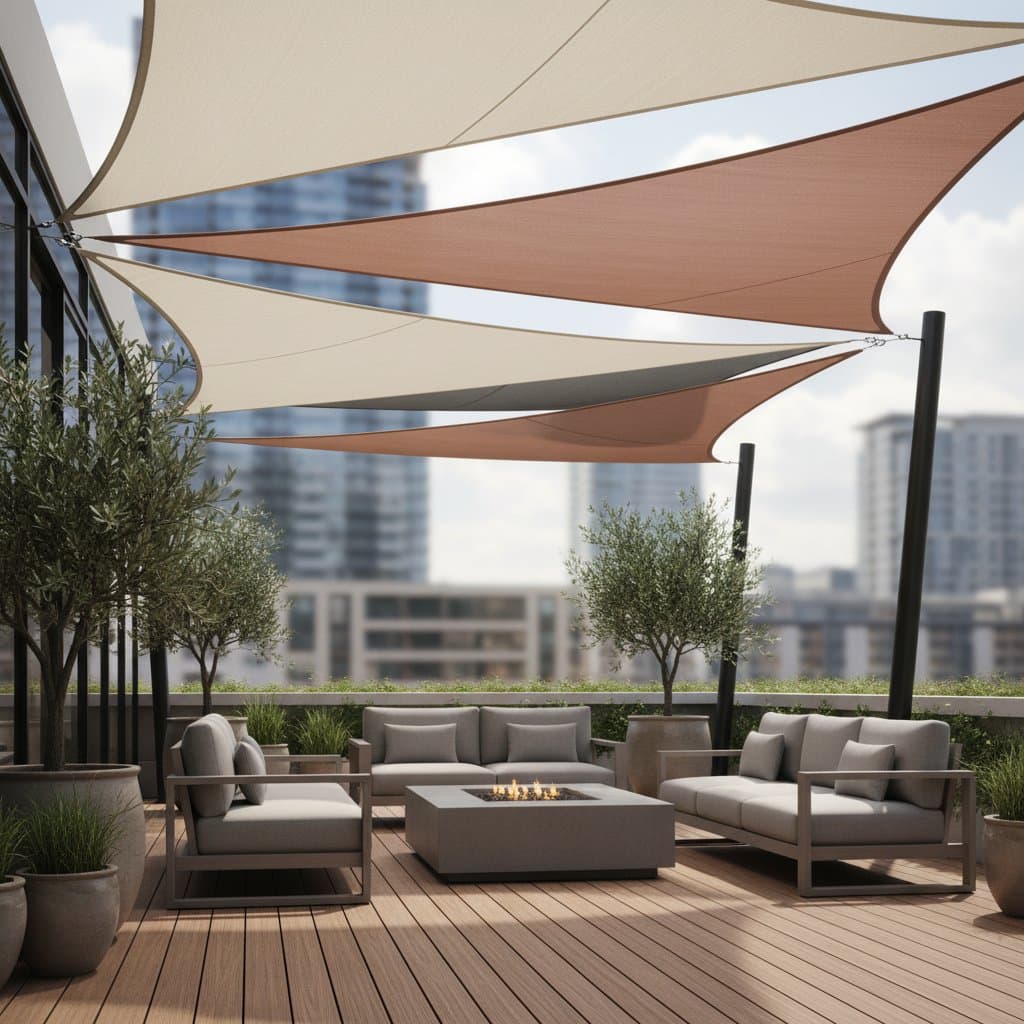
Sculptural Shade Sails: A Cool Solution for Urban Decks
Urban dwellers often seek outdoor spaces that blend modern aesthetics with practical sun protection. Sculptural shade sails achieve this balance by transforming decks into shaded retreats. These tensioned fabric structures not only block harsh sunlight but also introduce artistic elements that enhance visual appeal.
This guide explores the essentials of shade sails, including material selection, installation techniques, and ongoing care. Readers gain insights into creating comfortable, stylish outdoor areas that withstand urban conditions.
Overview
A shade sail consists of a tensioned fabric panel secured at three or more points to deliver targeted shade. The design draws inspiration from a ship's sail, allowing the fabric to curve gracefully under tension. This flexibility distinguishes shade sails from fixed awnings, as they adapt to wind and light patterns.
In compact urban environments, shade sails perform several key roles. They mitigate heat buildup and glare, delineate functional zones, and introduce organic shapes amid rigid architecture. High-quality sails block up to 95 percent of direct sunlight, contingent on fabric weave and pigmentation.
Key Benefits
- Temperature Reduction: Strategic placement lowers deck surface temperatures by 15 to 20 degrees Fahrenheit, fostering extended use during peak heat.
- UV Safeguards: Select fabrics with UPF 50+ ratings to minimize skin damage risks during prolonged exposure.
- Aesthetic Versatility: Overlapping or angled configurations enable personalized patterns that complement deck layouts.
- Ease of Adjustment: Detachable designs facilitate seasonal removal or post-storm repositioning.
- Cost Spectrum: Basic kits for small areas begin at $50, escalating to $500+ for expansive, bespoke installations.
Essential Tools and Materials
Preparation ensures efficient installation. Assemble these items to complete a modest setup within hours.
Required Tools
- Tape measure extending to 25 feet or more.
- Power drill equipped with bits for masonry and wood.
- Adjustable wrench for securing fittings.
- Stable ladder or platform for elevated work.
- Safety goggles and heavy-duty gloves.
Necessary Materials
- Fabric Selection: Opt for UV-resistant polyethylene or high-density polyester that permits airflow. In gusty locations, mesh variants reduce wind resistance.
- Hardware Components: Employ stainless steel turnbuckles, eye bolts, and snap hooks to withstand corrosion.
- Anchoring Systems: Secure with 4x4 pressure-treated posts or robust wall brackets designed for substantial loads.
- Tension Elements: Utilize marine-grade cable or rope with a minimum 150-pound breaking strength for reliable support.
Installation Process
Step 1: Design the Layout
Draw a scale diagram of the deck, identifying secure attachment sites. Position sails away from reflective surfaces like glass or vents to prevent heat rebound. Triangular sails require three points; quadrilateral ones need four. Angle one corner downward by 5 to 10 degrees to promote water runoff.
Step 2: Precise Measurements
Calculate distances between anchors with accuracy. Account for 10 to 12 inches of additional length per edge to accommodate tension hardware. Use chalk lines to indicate drilling or post locations on surfaces.
Step 3: Secure the Anchors
For wall or beam mounts, pre-drill holes and fasten eye bolts using corrosion-resistant screws. Freestanding posts demand 24-inch-deep excavations filled with quick-setting concrete; allow 24 hours for curing prior to tensioning. Verify each anchor's stability under load to prevent movement.
Safety Consideration: Confirm attachments into load-bearing structures, avoiding superficial elements like trim boards.
Step 4: Mount the Fabric
Unfold the sail on a flat surface, then connect each corner to corresponding hardware via clips. Gradually tighten turnbuckles in a crisscross pattern to achieve uniform tension. The result yields a taut surface with minimal wrinkles and a subtle resilience to touch.
Step 5: Final Adjustments
Inspect from multiple viewpoints to ensure balanced curvature. Elevate the center slightly to form a natural catenary arc, directing drainage to the lowest edge. Re-tension after one hour, as initial settling occurs.
Safety Guidelines
Position sails clear of abrasive edges, heat sources, or electrical lines to avert damage or hazards. In high-wind zones, prioritize permeable fabrics and reinforced corners. Detach or slacken sails ahead of storms, as gusts generate significant uplift. Don protective gloves throughout to guard against abrasions from ropes or fittings.
Common Issues and Solutions
Sagging After Moisture Exposure
Retighten all turnbuckles uniformly or elevate the drainage corner by 2 to 3 inches. Ensure consistent slope to channel water away.
Tears at Attachment Points
Reinforce with sewn webbing or metal plates. Inspect for excessive pull that strains seams.
Inconsistent Shade Distribution
Modify anchor elevations or employ layered smaller sails for adaptable coverage. This approach refines light filtration.
Hardware Corrosion
Substitute with 316-grade stainless steel components. Steer clear of galvanized options in coastal or humid settings.
Care and Storage Practices
Well-maintained shade sails endure 5 to 10 years. Wash biannually with diluted mild detergent and a soft-bristle brush, followed by a complete rinse. Air-dry fully before reuse to prevent mildew.
For off-season storage, dismantle and fold loosely to avoid permanent folds. Place in a cool, dry space with good ventilation, eschewing sealed containers. Upon spring reinstallation, examine hardware for wear, including fractures, oxidation, or base instability.
Cost and Timeline Estimates
Investment Breakdown:
- Entry-level triangular kit: $50 to $100.
- Multi-sail medium deck array: $150 to $400.
- Tailored or heavy-duty options: $400 and beyond.
Effort Projections:
- Layout and measurement: 30 minutes.
- Anchor preparation: 1 to 2 hours.
- Fabric attachment and tuning: 30 to 45 minutes.
Professional assistance incurs $100 to $200 in labor fees, guaranteeing compliance with safety codes on elevated or complex decks.
Adapting to Seasons
Shade sails extend usability beyond summer. Spring installations filter intense glare while preserving ventilation. Fall setups moderate lowering sun angles, prolonging comfortable evenings.
Conduct biweekly checks on tension lines and fabric integrity during peak seasons. Seal minor edge frays using a controlled heat source to halt progression. In prone-to-wind areas, integrate snap-release mechanisms for swift removal.
Professional Intervention Criteria
Engage certified experts for:
- Attachments into masonry, plaster, or metal exteriors.
- Elevated decks where sails could amplify wind effects.
- Spans exceeding 20 feet.
Request verification of tension capacities and post dimensions. A standard 10-by-10-foot sail imposes over 200 pounds of force per corner under duress.
Styling Ideas for Compact Decks
Diagonal or tiered sail arrangements maximize vertical interest on limited surfaces. Pairing triangles at varying heights promotes dynamic shading and circulation.
Select neutral tones such as beige, soft gray, or light sage to maximize heat reflection. Deeper hues offer denser shade at the cost of warmth retention.
For seclusion, lower an edge toward adjacent views, forming a subtle screen. Integrate low-voltage lighting along perimeters with non-abrasive clips to safeguard the material.
Pitfalls to Sidestep
- Excessive Tension: Over-tightening risks anchor distortion or fabric rupture; retain slight flexibility.
- Neglected Drainage: Level installations pool water; incorporate mandatory tilt.
- Unchecked Fasteners: Tension shifts loosen connections; inspect weekly initially.
- Suboptimal Positioning: Full blockage dims spaces; target 60 to 70 percent coverage for balanced light.
Implementing Your Shade Sail
Begin by measuring the deck and pinpointing viable anchors. Select shapes aligned with spatial needs, such as triangles for sleek profiles or rectangles for broad shelter. Initiate with a single unit to master tension dynamics.
Post-installation, observe afternoon light shifts. The resulting shaded canopy cools surroundings and infuses serenity, elevating urban outdoor living into an artistic haven.