
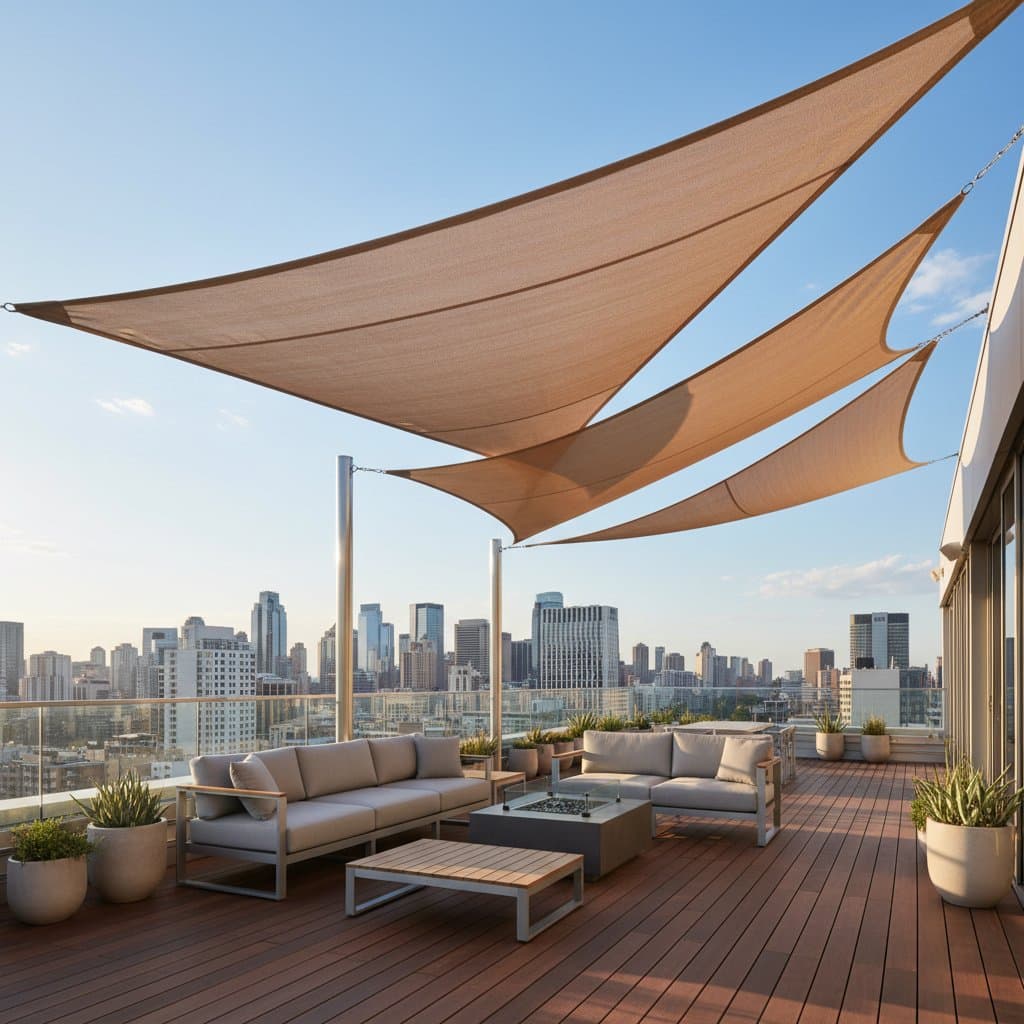
Why Shade Sails Cool Urban Decks Effectively
Urban decks often become uncomfortably hot by midday. The wooden surfaces retain heat, seating areas feel scalding, and the surrounding air intensifies the discomfort. Shade sails address this issue by providing overhead fabric coverage that blocks direct sunlight and reduces surface temperatures quickly. Proper installation can lower deck temperatures by 15 to 20 degrees Fahrenheit, allowing full enjoyment of the outdoor space.
Overview of Shade Sails
A shade sail consists of a durable, tightly woven fabric panel secured to at least three anchor points, such as posts, walls, or beams. The fabric filters ultraviolet rays and scatters sunlight, creating a shaded area that remains open to breezes and views. This design contrasts with traditional options like large umbrellas or solid-roof structures, which can obstruct sightlines and restrict airflow.
In dense urban environments, where buildings amplify heat and limited space demands efficiency, shade sails offer targeted relief. They integrate seamlessly without consuming valuable floor area or compromising the deck's aesthetic appeal. The result is a noticeable improvement in usability and comfort.
Essential Tools and Materials
Most installations require basic household tools. Assemble the following items:
- Shade sails in appropriate sizes, typically 8 to 16 feet per side, to match the deck dimensions
- Mounting hardware including pad eyes, turnbuckles, and snap hooks for secure connections
- Sturdy anchor points, such as posts or existing structural elements, capable of withstanding tension
- A drill, wrench, and measuring tape for precise work
- Rope or stainless steel cable to facilitate tension adjustments
- A stable ladder or step stool to access installation heights
- Protective gear like gloves and safety glasses
Verify that each attachment point supports a minimum of 100 pounds of force. The taut fabric generates significant pull, particularly during windy conditions, so robust anchors prevent structural failures.
Installation Steps
Follow these steps to set up a shade sail system efficiently.
-
Measure the target area. Select a frequently used section, such as the lounging or dining zone. Record dimensions in feet and observe sun paths at various times. Ensure at least three feet of space between the sail's edges and adjacent surfaces to promote ventilation.
-
Identify anchor locations. Designate three or four attachment points with a non-square configuration to encourage water drainage. Incorporate a subtle slope by positioning one corner higher and another lower, which also minimizes fabric sagging.
-
Evaluate structural integrity. Attach hardware only to reinforced elements, including building frames, metal railings, or 4x4 posts embedded at least two feet into concrete. Steer clear of insecure spots like fence rails or slender poles.
-
Secure the hardware. Pre-drill holes for pad eyes or eye bolts, then fasten them firmly without excessive force. Connect turnbuckles or snap hooks to allow for future tension fine-tuning.
-
Fix the sail in place. Attach each corner using cable or rope. Apply tension incrementally, working around the perimeter in a clockwise manner, until the fabric lies flat with no more than one inch of slack.
-
Verify performance. Position yourself beneath the sail during peak sun hours to assess coverage and air movement. After a light rain, inspect for pooling; if present, increase tension on the lowest corner by one inch. A firm surface enhances durability and resists damage.
Key Safety Considerations
Prioritize caution throughout the process.
- Use gloves and eye protection during drilling and cable handling.
- Avoid positioning yourself directly below a tensioned turnbuckle.
- Maintain a minimum height of eight feet from the ground to the sail to mitigate risks from hot surfaces.
- Select anchor sites away from electrical lines and low-hanging branches.
The Science Behind Shade Sails
The effectiveness stems from the fabric's composition. High-density polyethylene, a common material, blocks up to 95 percent of UV radiation, thereby diminishing heat radiation onto the deck and reducing skin burn risks. The permeable weave permits air circulation, preventing heat accumulation beneath the canopy. As the sun moves, the shade pattern adjusts naturally, providing dynamic cooling throughout the day.
Lighter fabrics reflect sunlight more efficiently but require frequent cleaning to maintain appearance. Darker options absorb some light yet excel at glare reduction. Experiment with fabric samples to determine the best match for your deck's ambiance and performance needs.
Cost and Time Estimates
A standard 12-foot triangular shade sail ranges from 60 to 90 dollars. Additional expenses for hardware and posts total 40 to 80 dollars, varying by material quality. A DIY project takes three to four hours if anchor points exist; professional services run 200 to 400 dollars, covering precise drilling, alignment, and reinforcements.
Maximize savings by leveraging existing features like balcony supports or roof edges. Invest in stainless steel components for longevity, as they withstand urban pollutants and moisture better than alternatives.
Ongoing Maintenance Practices
Shade sails demand minimal routine care. Perform these tasks every few weeks:
- Hose down the surface to clear debris, dust, and pollen.
- Inspect connections for signs of corrosion or loosening.
- Adjust turnbuckles if sagging exceeds two inches.
- Dismantle the sail ahead of severe weather to avoid strain on the fabric.
For storage, roll the fabric loosely in a protected, dry location. To treat mildew, prepare a solution of one cup mild detergent in two gallons of water, apply with a soft brush, rinse thoroughly, and dry completely before reuse.
Common Issues and Solutions
Excessive flapping indicates imbalanced tension. Release each corner partially, then retighten sequentially with uniform adjustments.
Inadequate shading suggests angle misalignment; modify one anchor height by six to 12 inches for better redirection.
Dripping water signals fabric degradation. Quality sails endure five to 10 years with proper care, depending on environmental factors.
Enhancing Deck Functionality
Integrate shade sails with practical storage solutions to optimize cooling. Enclose pillows and mats in a weatherproof deck box during off-hours to limit heat retention. Opt for reflective surfaces on trays and pale-hued planters that deflect rather than trap sunlight. Install slim shelving or hooks in the shaded region for beverages, accessories, or gardening tools. Elevating items from the deck floor reduces visual clutter and boosts airflow.
Indicators for Professional Assistance
Consider hiring an expert if your deck involves complex structures, such as multi-level designs or shared building elements. Professionals ensure compliance with local codes, handle heavy reinforcements, and address wind-prone urban sites. They also provide warranties on installations, offering peace of mind for larger or custom projects.
Steps to Implement Your Shade Solution
Take these actions to prepare:
- Measure the deck and diagram potential anchor positions.
- Select a sail that shades at least 60 percent of the primary activity area.
- Procure stainless steel hardware and assemble tools prior to starting.
With shade sails, urban decks evolve from seasonal challenges into year-round havens, blending comfort, style, and practicality seamlessly.