
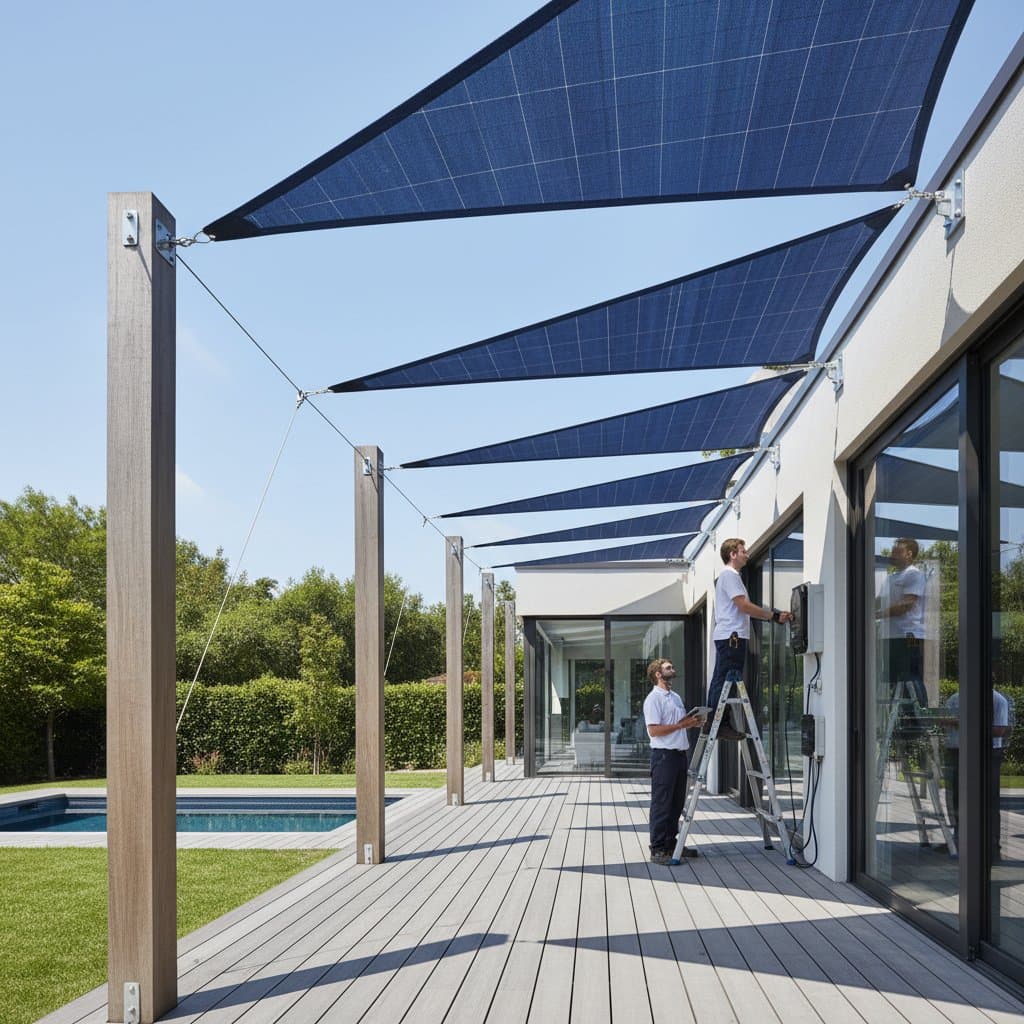
Smart Solar Shade Sails: Power and Protection for Decks
Decks serve as vital outdoor spaces that deserve reliable shade and functionality year-round. Standard shade sails offer basic sun protection, yet smart solar shade sails provide advanced benefits. These structures filter sunlight to create cooler areas while capturing energy to produce electricity, transforming a simple deck into an efficient, sustainable retreat.
Overview
A solar shade sail consists of a durable fabric canopy secured across anchor points, integrated with photovoltaic panels on its surface. This design blocks harmful UV rays and reduces ambient temperatures beneath it, much like traditional sails. Simultaneously, the embedded panels convert sunlight into usable electricity, which powers devices, charges batteries, or integrates with home systems. The result combines aesthetic appeal with practical energy savings, without compromising the deck's open-air feel.
Tools and Materials
Gather these essentials before starting:
- A smart solar shade sail kit matched to your deck size, typically spanning 10 to 20 feet
- Mounting hardware including stainless steel eye bolts, turnbuckles, and pad eyes for secure attachment
- A drill equipped with a masonry bit for anchoring into brick or concrete
- A wrench set and stable ladder to facilitate tightening and reaching high points
- A weatherproof junction box to house electrical connections
- A voltage meter for verifying power generation
- Safety gear such as gloves and protective eyewear
Allocate at least two hours for the installation process. Enlist a helper to assist with alignment and ensure safety during setup.
Steps
-
Measure the deck area. Identify three or four anchor points to form a taut triangle or square configuration. Position the sail at a 20- to 30-degree angle to promote water runoff.
-
Install hardware. Drill pilot holes into sturdy surfaces like wooden beams or metal posts. Secure with stainless steel bolts to resist corrosion over time.
-
Attach the sail. Connect each corner of the fabric to the hardware and adjust the turnbuckles uniformly. Achieve a smooth, tensioned surface free of wrinkles.
-
Connect the solar line. Route the output cable from the sail's junction box to an inverter or battery storage unit. Conceal the wiring along railings or posts to protect it from exposure.
-
Test the system. Employ the voltage meter to measure output from the panels. Investigate connections if voltage falls below 12 volts in compact setups.
-
Secure and tidy. Cut away surplus cable length, secure loose ends, and eliminate any fabric slack that could flutter in breezes.
Safety Tips
Install the sail only on dry surfaces to avoid slips and falls. Operate power tools away from active electrical lines, and always verify circuits with the meter first. In gusts surpassing 40 miles per hour, detach or slacken the sail to avert damage. Examine anchors biannually for signs of rust or structural weaknesses.
Troubleshooting
Tighten each turnbuckle by one full rotation if the sail develops sags. For reduced power generation, cleanse the panel surface using mild soap and water; accumulated debris like dust or pollen can impair efficiency by as much as 15 percent. Adjust one edge upward by six inches if water collects on the fabric, enhancing drainage.
Budget and Time
Entry-level single-panel sails begin at approximately two hundred dollars. Multi-panel systems incorporating battery storage range from eight hundred to twelve hundred dollars. Homeowners with basic tools often finish the task in four to six hours. Engaging a licensed electrician for electrical integration incurs an additional one hundred to two hundred dollars, guaranteeing adherence to safety codes.
Maintenance
Clean the fabric with a soft cloth monthly to preserve its condition. Inspect cables following intense rain or snowfall events. Promptly replace any damaged wiring. Solar panels maintain strong performance for ten to fifteen years, after which output gradually decreases. In regions prone to severe frost or storms, dismantle and store the sail indoors during winter months.
Smart Storage Moves
Designate an outdoor bin for holding replacement hardware, cleaning supplies, and spare cables. Organize items in labeled plastic containers for swift springtime reassembly. Coil wires without tight bends to avoid material fatigue. Select a sheltered, dry location, such as beneath a deck bench, for storage.
When to Call a Pro
Consult a licensed electrician for integrations with your home's primary electrical circuit or larger solar setups. Request confirmation of load limits and proper grounding. If deck supports exhibit rot or instability, hire a carpenter to reinforce the structure prior to installing tensioned components.
Making It Happen
Begin with a single sail to energize low-demand items like LED string lights or mobile device chargers. Monitor energy production over a week to evaluate effectiveness. Scale up the system if initial results prove promising, and refresh the fabric periodically to sustain both efficiency and visual appeal.