
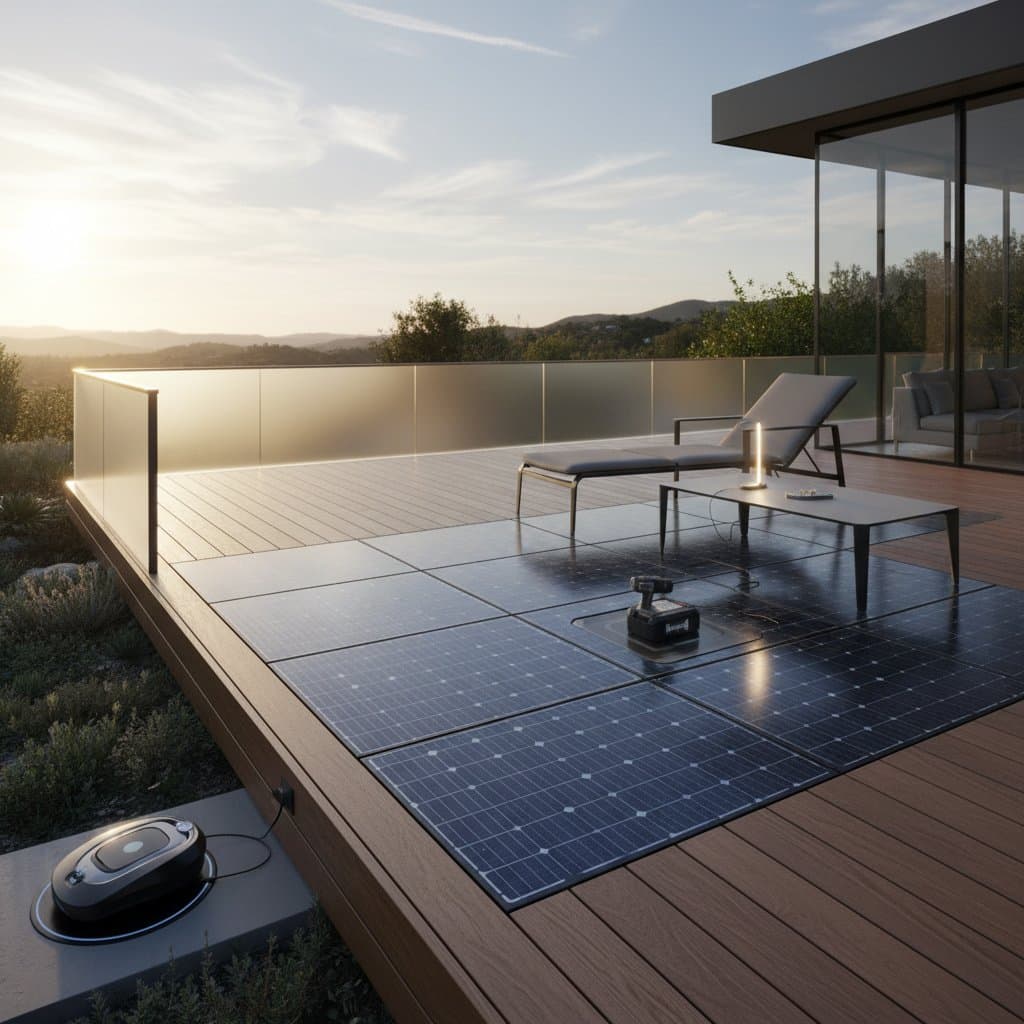
Understanding Solar Pavers
Solar pavers represent an innovative fusion of photovoltaic technology and outdoor flooring. These specialized tiles embed solar cells within durable, weather-resistant surfaces that mimic traditional pavers in appearance. Homeowners install them on decks, patios, or walkways to capture sunlight and generate electricity for nearby use.
Each paver functions as a modular unit, typically measuring 12 by 12 inches, with built-in wiring that connects to form a grid. This setup allows the deck to serve dual purposes: a functional outdoor space and a subtle energy producer. Manufacturers design them to withstand foot traffic, varying weather conditions, and everyday wear.
How Solar Pavers Generate Power
Solar pavers operate through embedded monocrystalline or polycrystalline solar cells that convert sunlight into direct current electricity. When sunlight strikes the cells, it excites electrons to create a flow of energy, which the paver's internal circuitry directs to connected wires. An inverter then transforms this direct current into alternating current suitable for household appliances.
The system connects multiple pavers in series or parallel configurations to optimize output based on deck size and sunlight exposure. For instance, a standard paver produces about 10 to 20 watts under ideal conditions, scaling up as more units join the array. Shading from trees or structures reduces efficiency, so site assessment proves essential before installation.
Efficiency ratings for these pavers range from 15 to 20 percent, comparable to rooftop panels but adapted for horizontal surfaces. Output varies with location, orientation, and seasonal sunlight, yet even partial coverage yields meaningful energy for low-demand outdoor needs.
Key Benefits of Installing Solar Pavers
Solar pavers offer environmental advantages by reducing reliance on grid electricity and lowering carbon footprints. They generate clean power on-site, potentially offsetting energy costs for deck features such as string lights, fans, or charging stations. Over time, this integration supports sustainable living without visible solar infrastructure.
Aesthetically, these pavers blend seamlessly with deck designs, available in colors and textures that match stone, concrete, or wood finishes. Durability ensures long-term performance, with many models carrying 25-year warranties on power output. Installation on existing decks requires minimal disruption, preserving the space's original layout.
Financially, incentives like tax credits and rebates make adoption more accessible. For urban homeowners, they provide a practical way to incorporate renewables into limited outdoor areas, enhancing property value through energy-efficient upgrades.
Preparing for Installation
Before beginning, evaluate your deck's sunlight exposure using tools like solar path finders or apps to estimate daily output. Measure the area to determine paver quantity, aiming for south-facing sections to maximize efficiency. Consult local building codes, as some regions require permits for electrical additions.
Gather materials including pavers, wiring kits, inverters, and mounting hardware. Professional assessment helps if the deck needs reinforcement for added weight, though most pavers weigh similarly to standard tiles. Plan the layout to avoid high-traffic zones initially, allowing gradual expansion.
Safety Tips During Installation
Wear protective gloves when handling any glass-containing tiles to prevent cuts. Position wiring tools on dry, stable surfaces to avoid slips or electrical hazards. Refrain from walking on areas with exposed wiring until connections secure fully.
Steer clear of high-pressure washers during setup, as they may dislodge seals and compromise waterproofing. Clearly label all circuits upon completion to simplify future maintenance and inspections. A small deck project typically requires two people and completes in one day, while larger ones benefit from professional electrical support.
Budget and Timeline Considerations
Anticipate costs of $25 to $40 per square foot for a complete installation, encompassing pavers, wiring, and inverters. For a 120-square-foot deck, the total investment ranges from $3,000 to $4,800. These figures account for materials and labor, with variations based on location and complexity.
Opting for DIY installation reduces expenses by approximately one-third, provided familiarity with electrical work exists. Engaging professionals guarantees adherence to local regulations and preserves manufacturer warranties. Most projects span one to two days, depending on deck size and preparation needs.
Seasonal voltage checks and light cleaning represent the primary ongoing tasks, performed once per season to maintain peak performance.
Troubleshooting Common Issues
If a tile fails to produce power, inspect the connector for accumulated dirt or moisture. Clean it gently with a soft brush and reseat the cable to restore connection.
Uneven lighting across the system often stems from inconsistent tile orientation. Verify that all panels face the same direction, as misaligned angles diminish overall output.
Water pooling on the surface signals potential clogged weep holes beneath the base. Clear these with a narrow brush to ensure proper drainage and prevent damage.
An inverter overload warning indicates excessive tiles per circuit. Address this by dividing zones or installing an additional inverter to balance the load.
Routine checks like these sustain system efficiency and safety without extensive intervention.
Maintenance Best Practices
Solar pavers demand minimal upkeep to operate effectively. Clean surfaces every few weeks using mild soap and water, employing a soft brush for pollen or dust removal. Avoid abrasive pads, which can scratch the protective coating.
Inspect wiring annually for signs of corrosion or loose connections, tightening clips as necessary. Replace any cracked tiles immediately to safeguard adjacent wiring from exposure. Keep spare tiles stored indoors for quick, minute-long swaps.
Professional inspections every few years confirm structural integrity, especially in harsh climates. These habits extend the system's lifespan and optimize energy yield.
Steps to Integrate Solar Pavers into Your Deck
Begin with a pilot area by replacing tiles in a sunny deck corner to evaluate performance firsthand. Monitor output over a month to confirm suitability for your setup.
Expand gradually, zone by zone, integrating new tiles into existing circuits without dismantling prior installations. This modular approach minimizes disruption and allows adjustments based on initial results.
As your deck powers its own lighting and devices, observe the shift from passive outdoor area to active energy contributor. This transformation enhances sustainability, reduces utility bills, and elevates everyday enjoyment of your space.