
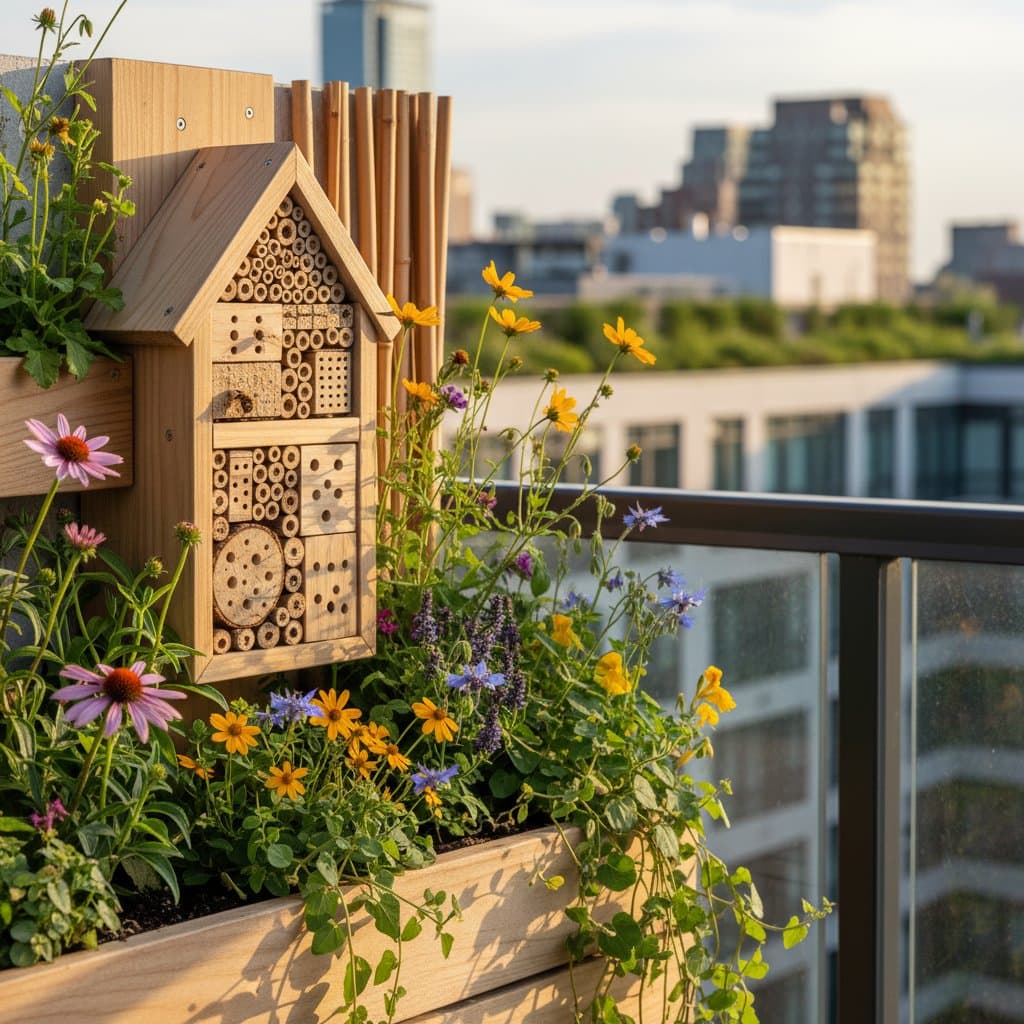
Introduction to Micro Bee Hotels
Urban living challenges pollinators with limited natural habitats amid concrete landscapes. Solitary bees, essential for city gardens, seek hollow stems and protected crevices for nesting. A micro bee hotel addresses this need by offering compact, artificial shelters that mimic natural sites.
These structures support biodiversity without demanding much space. Balcony dwellers can install one to draw in mason bees, leafcutters, and other species. The result includes healthier plants through improved pollination and a subtle contribution to urban green initiatives.
Materials and Preparation
Gather basic supplies to begin construction. Select untreated wood for the frame, such as a small plank or repurposed crate measuring about 8 by 8 inches. Collect nesting tubes from bamboo, reeds, or rolled cardboard, each 4 to 8 inches long and 1/4 to 1/2 inch in diameter.
Tools include a saw for cutting, drill for holes if using wood blocks, nails or screws, waterproof glue, and wire or brackets for mounting. Source native plants like lavender or thyme for nearby placement. Ensure all materials remain chemical-free to protect emerging bees.
Step 1: Prepare the Nesting Tubes
Cut tubes to uniform lengths, ensuring ends remain open. For bamboo or reeds, clean interiors gently to remove debris. Bundle 20 to 30 tubes together, varying diameters to appeal to different bee species.
Secure the bundle with twine or tape at intervals. Avoid compressing too tightly, as bees require easy access. Test stability by shaking; the bundle should hold without loosening.
Step 2: Build the Basic Structure
Form a frame from wood scraps, creating a box approximately 6 inches deep. Drill holes into softwood blocks if substituting for tubes, spacing them 1/8 inch apart in rows. Attach the tube bundle or drilled block to the back panel inside the frame.
Reinforce joints with glue and screws for durability. Leave the front fully accessible for bee entry. Sand rough edges to prevent injury to insects or handlers.
Step 3: Assemble the Frame
Construct a small box or repurpose a wood crate. Fasten the back panel securely using nails or screws. Maintain an open front for access.
Bind the tubes firmly to prevent movement. Apply waterproof glue or insert small wedges for stability. Incorporate a short overhanging roof, slanting slightly downward, to deflect rain and provide shade.
Step 4: Mount the Hotel
Secure the hotel with a bracket or wire to a wall, fence, or railing. Position it level and firm against wind sway. Solitary bees favor stable locations.
On upper floors, affix it to balcony railings near flowering herbs or blooms. Bees forage within 300 feet, or 90 meters, so proximity to food sources encourages use.
Step 5: Add Nearby Food Sources
Nesting alone suffices not; pollinators require nectar and pollen. Position potted plants such as lavender, chives, coneflower, thyme, or native wildflowers adjacent to the hotel.
Eliminate all pesticides and herbicides. Such chemicals harm larvae or taint gathered pollen, undermining the habitat's purpose.
Common Issues and Solutions
No Bees Appear
Relocate to a brighter, sunnier position or introduce additional blooming plants. Bees orient toward floral abundance.
Mold in Tubes
Enhance ventilation and minimize dampness. Discard affected tubes and extend the roof overhang or angle the structure to channel water away.
Blocked Holes Remain Sealed
Larvae may fail to develop, or adults perish. After one season, extract and replace tubes to curb parasite accumulation.
Birds Damage Entrances
Install a wire mesh guard, positioned at least 1 inch from the face. This deters pecking while permitting bee passage.
Ongoing Care
Regular upkeep ensures the hotel remains effective.
- Examine biannually, in early spring and late fall, for mold, fractures, or infestations.
- Extract tubes sealed with mud, leaves, or resin, which house larvae. Store in a cool, dry container until spring emergence, then return or release nearby.
- Clear unoccupied holes using a pipe cleaner or fine wire, handling debris with care.
- Refresh components every two to three seasons, as wood degrades and parasites proliferate.
- Sustain floral variety, sequencing plants for nectar availability from spring to autumn.
Storage Practices
For multiple hotels, label each by site and installation date. Rotate locations to disrupt parasite cycles.
Place filled tubes in a perforated plastic bin, maintaining temperatures between 35 and 50 degrees Fahrenheit, or 1.5 to 10 degrees Celsius. This range preserves larvae in dormancy.
Keep spare tubes in a moisture-proof container. Inspect for damage like splits or wear, replacing as needed before reuse.
How Micro Bee Hotels Benefit Pollinators
Cities strip away the dead wood, stems, and soil solitary bees rely on for shelter. Artificial nests replicate these features, prompting swift colonization under ideal conditions.
A female bee provisions multiple cells, depositing an egg with pollen in each, then capping with natural sealants. Larvae overwinter inside, hatching in warmer months to pollinate.
One modest hotel sustains over 50 bees annually. This activity enhances yields in container gardens, leading to abundant flowers and fruits by summer.
Expanding Your Efforts
After initial success, experiment with designs. Incorporate varied materials, such as dense logs for drilling, thick paper rolls, or clay saucers for mason bees.
Track usage patterns to identify preferences. Replicate effective setups in subsequent years, contributing observations to citizen science efforts.
Connect with local horticulture groups for material exchanges or synchronized planting. Such collaboration preserves bee genetic variety across urban areas.
Essential Techniques
- Ensure tubes reach at least 4 inches in depth for larval development.
- Swap out compromised tubes promptly to avoid pest entry.
- Blend bamboo, drilled wood, and paper for diverse species appeal.
- Prevent excess heat with roof shading; larvae perish above optimal ranges.
- Space hotels at least 10 feet apart in confined areas to reduce parasite risks.
- Log emergence dates and seal counts via photos for progress assessment.
Implementation Guide
Assemble your initial hotel in a single afternoon using a 6-inch wood block, bamboo segments, basic tools, and a sheltered spot. Position near blooms, protect from wet conditions, and update elements routinely.
Introduce additional units in varied exposures to determine bee favorites. Maintain records of flowering periods and occupancy. Exchange insights with nearby gardeners or digital forums.
Providing secure nests bolsters ecosystem resilience and garden output. Observe the gradual uptick in vitality through richer blossoms and ripening produce.
Begin today: Collect wood, tubes, and fixtures, then erect a modest haven. Witness urban nature revive through quiet industry.