
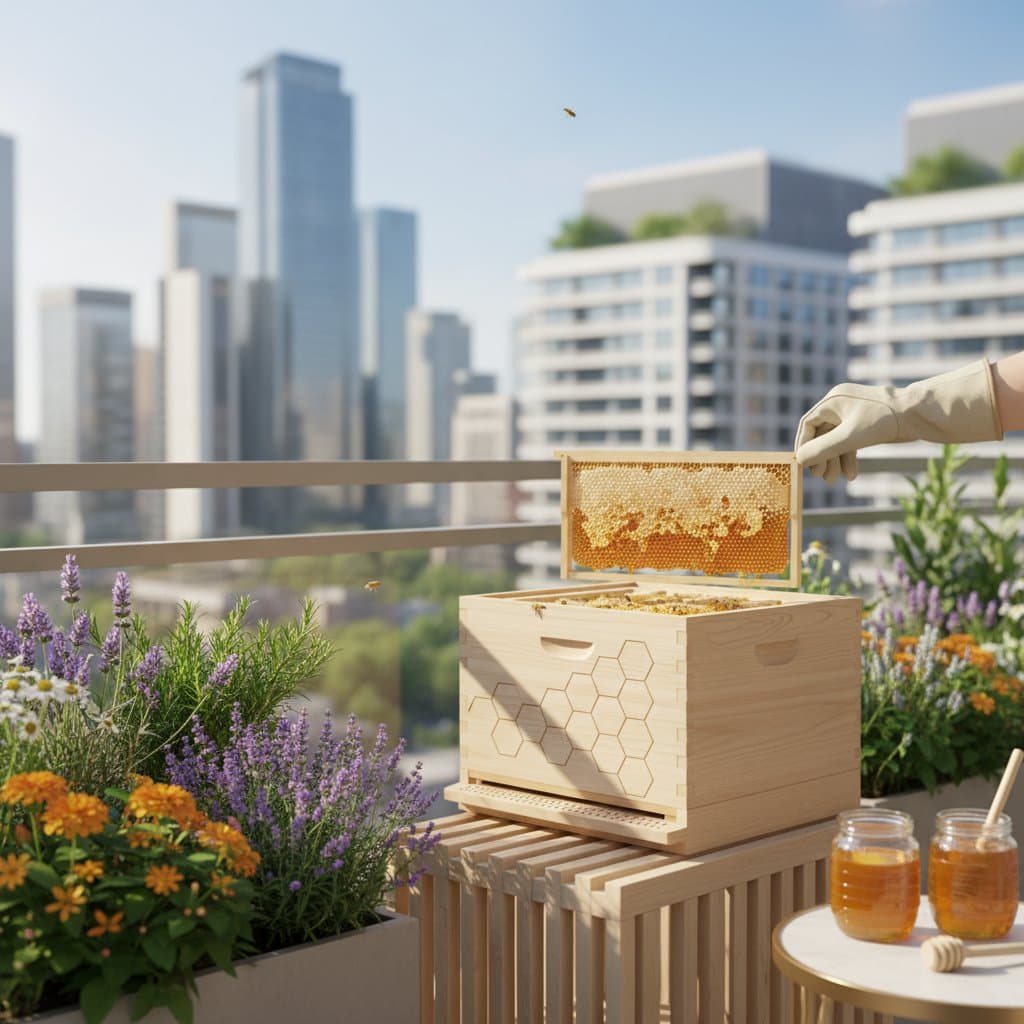
Unlock Urban Honey from Balcony Mini Hives
City dwellers often lack access to green spaces, yet balcony beekeeping offers a practical solution. These compact hives allow individuals to raise bees directly outside an apartment door, providing pollination benefits, a serene environment, and fresh honey sourced from local flora. This approach brings elements of rural life into urban settings without requiring extensive land.
The following guide details balcony beekeeping fundamentals, including safe setup procedures and colony maintenance strategies. Readers will discover equipment suitable for limited areas, methods to address neighbor concerns and safety protocols, and techniques for honey extraction that preserve hive health.
Essential Tools and Materials
Begin with a modest collection of supplies to establish a functional hive. Select items designed for confined spaces to ensure stability and ease of management.
- Mini hive box, consisting of one medium super or two small boxes measuring approximately 20 inches by 16 inches.
- Frames, numbering eight to ten per box, to support comb development.
- Bee suit or jacket equipped with a veil for comprehensive protection.
- Gloves and smoker to soothe bees during routine inspections.
- Hive tool and soft brush for frame manipulation and gentle bee removal.
- Feeder along with sugar syrup for supplemental nutrition during nectar shortages.
- Drip tray or protective mat positioned beneath the hive to collect wax and debris.
- Shallow water dish filled with pebbles to provide a safe hydration source.
- Weather-resistant cover to shield the hive from rain and intense sunlight.
Acquire a starter package containing one queen and roughly three pounds of worker bees from a reputable local supplier. Verify that the stock is free from diseases to promote a healthy start.
Safety Considerations
Prioritize protective measures whenever interacting with the hive, regardless of the task's brevity. Full gear minimizes sting risks, while preparedness addresses potential allergic reactions.
Maintain a first aid kit in close proximity, stocked with antihistamines and an epinephrine injector if medically advised. Inform neighbors of your plans in advance and share honey yields to foster positive relations. Install a dedicated water source to prevent bees from seeking moisture in communal areas like pools or pet dishes.
Refrain from using strong fragrances or lotions near the hive, as these can agitate bees. Conduct inspections only in stable weather conditions, avoiding wind or storms that heighten defensiveness. Bees typically remain calm unless provoked; consistent, deliberate actions encourage peaceful handling.
Budget and Time Investment
Initial setup for a balcony hive ranges from $250 to $400, varying by supplier and quality. The following outlines key expenses:
- Hive box and frames: $100
- Bees and queen: $150
- Protective suit, gloves, and smoker: $100
- Honey extractor rental or manual press: $50
Ongoing maintenance costs approximately $50 to $100 annually, covering sugar syrup, mite treatments, and minor replacements. Dedicate 30 to 45 minutes weekly to inspections and feeding tasks. Many beekeepers harvest a small amount in the first year, though waiting until the second season allows the colony to establish reserves.
Repurpose collected wax and propolis for value-added products such as candles or balms, extending the hive's benefits beyond honey production.
Seasonal Management Strategies
Early Season Preparation
Supplement with sugar syrup until local flowers provide ample nectar. Monitor for queen presence and initial brood patterns to confirm colony progress. Introduce a pollen patty if natural sources prove insufficient.
Mid-Season Expansion
Add an additional box when existing frames approach capacity. Observe for swarming indicators, including queen cell formation or overcrowding, and intervene promptly. Extract capped frames during peak nectar flow to secure the season's harvest.
Late-Season Adjustments
Contract the hive configuration and clear surplus honey boxes to consolidate resources. Provide heavier syrup if winter stores appear inadequate. Apply mite treatments and check for moisture-related issues like mold.
Winter Protection Measures
Apply light insulation using foam panels or burlap to retain warmth. Angle the hive forward slightly to facilitate condensation drainage. Limit hive openings to essential feeding, preserving internal temperatures.
Seeking Professional Assistance
Certain challenges warrant consultation with experienced beekeepers or local extension services. Reach out if observations include:
- Foul odors from brood areas or larvae with a chalky appearance.
- Prolonged bee clustering outside the hive during moderate temperatures.
- Abrupt declines in hive population.
- Reports from neighbors of repeated stings or bees accessing building vents.
Experts can perform thorough inspections, introduce a new queen, or relocate the colony as needed. Request detailed records of their findings to inform future management decisions.
Key Principles for Success
Balcony beekeeping thrives with a compact, secure setup and consistent attention. Ensure bees receive adequate sunlight, water, and unobstructed flight paths. Weekly checks maintain colony vitality and community harmony.
Commence with a single hive to build expertise before considering expansion. Practice restraint in harvesting to secure winter provisions for the bees.
Urban honey reflects the unique bouquet of city landscapes, infused with notes from linden trees, clover patches, or rooftop gardens. Each jar captures the essence of proximate pollinator activity.
Steps to Launch Your Balcony Hive
Select a sunny, sheltered balcony spot with clear takeoff zones for bees. Assemble your equipment and source healthy bees from trusted providers. Follow seasonal guidelines diligently, starting with safety protocols and neighbor outreach. With patience, your setup will yield fresh honey and support local ecosystems, enriching urban living.