
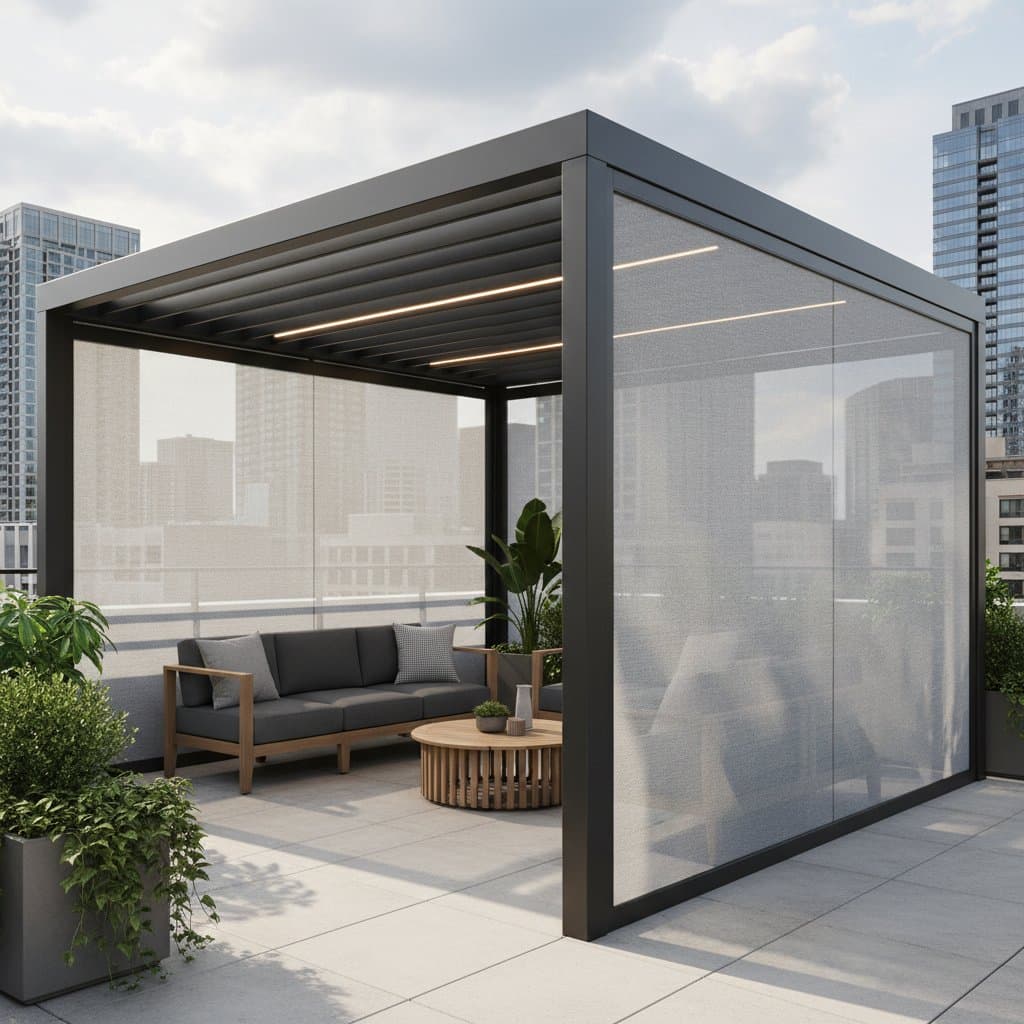
Step 5: Adjust and Secure
Once the screens are in place, fine-tune their positioning for optimal performance. For roll-down or curtain-style screens, operate them several times to verify smooth movement without snags. Install tiebacks or weights at the bottom edges to minimize flapping in moderate winds, ensuring the fabric or panels remain taut yet flexible.
Permanent panels require precise alignment to avoid stress on the frame. Use a reliable level tool to check each panel's position, adjusting brackets or fasteners incrementally. Aim for uniform gaps of no more than one-quarter inch between panels and the pergola structure; this prevents water infiltration and maintains a clean aesthetic. Secure all connections with corrosion-resistant screws, tightening them firmly but not excessively to avoid damaging the wood or metal.
Step 6: Finish with Details
Enhance the functionality and visual appeal by incorporating practical accessories. Attach sturdy hooks along the pergola beams for suspending potted plants, which add greenery and diffuse light naturally. String lights or solar lanterns can drape from the top rails, creating ambient illumination for evening use without overwhelming the space.
These additions not only soften the potentially stark appearance of solid screens but also promote a layered design. Consider placing hooks at intervals of 18 to 24 inches to distribute weight evenly and prevent sagging over time. Test the setup under light loads before full use to confirm stability.
Safety Tips
Prioritize caution during installation and daily use to protect yourself and others. Never climb directly onto pergola beams, as they may shift under weight; instead, position a stable, wide-base ladder on level, firm ground away from edges. Avoid leaning ladders against fabric panels, which can tear or stretch under pressure.
When working with metal screens, maintain a safe distance of at least 10 feet from overhead electrical lines to prevent accidental contact. For all installations, ensure hanging cords, tiebacks, or chains remain short and secured, eliminating potential tripping hazards in high-traffic areas. Wear protective gear, including gloves and eye protection, especially when handling sharp edges or drilling into wood.
If your pergola is elevated, such as on a rooftop, incorporate guardrails or temporary barriers around the work area. Consult local building codes for any height-related restrictions, and consider enlisting a spotter for tasks above six feet.
Troubleshooting
Common issues with pergola screens arise from environmental factors, but most can be resolved with basic tools and attention.
Screen sagging: This often results from stretched cables or degraded cords over time. Inspect connections and tighten adjustable tensioners, or replace cords with UV-resistant nylon alternatives rated for outdoor use. Maintain slight tension in fabrics—enough to create a gentle drape without pulling seams apart—for longevity and appearance.
Wind flapping: Excessive movement can wear out attachments quickly. Reinforce corners with heavy-duty grommets spaced every 12 inches, then secure using bungee cords or snap hooks that allow flexibility. For high-wind areas, opt for weighted hems that anchor the bottom edge without restricting airflow.
Water pooling: Horizontal or sloped screens may collect rainwater if not angled properly. Ensure a minimum slope of one inch per linear foot toward drainage points, such as gutters or the ground below. Regularly clear debris like leaves from seams to facilitate natural runoff.
Uneven shade: Inconsistent light filtering can disrupt comfort. Strategically orient materials: position opaque panels toward direct afternoon sun to block glare, while sheer or mesh sides face prevailing breezes for ventilation. Experiment with combinations, such as alternating solid and translucent sections, to balance shade and openness throughout the day.
Maintenance
Regular upkeep preserves the screens' condition and extends their service life, typically five to ten years with proper care. Schedule thorough cleaning one to two times per season, depending on exposure to pollen, dust, or urban pollution.
For wood panels, begin by wiping surfaces with a soft cloth dampened in mild soapy water, avoiding harsh chemicals that could strip finishes. Rinse thoroughly with a hose on low pressure, then apply a fresh coat of outdoor sealant annually in dry weather to guard against moisture and UV damage.
Metal mesh screens benefit from a simple rinse using a garden hose to dislodge dirt; follow up by inspecting joints for early signs of rust, such as discoloration. Apply a rust-inhibiting spray if needed, and lubricate moving parts like hinges with silicone-based oil to ensure smooth operation.
Fabric options require gentle handling: use a soft brush to remove loose dust and debris, then spot-treat stains with a solution of mild detergent and water. Always air-dry completely in a shaded area before rolling or folding to prevent mildew growth. For stubborn grime, test a fabric-safe cleaner on an inconspicuous area first.
After every major storm, examine mounting hardware for looseness or damage. Replace any rusted bolts or bent brackets promptly, using galvanized or stainless steel alternatives. Tighten joints by hand or with a screwdriver, stopping short of over-torquing to preserve thread integrity.
Storage
Removable screens warrant careful storage during inclement weather or extended periods of non-use to avoid deterioration. Disassemble systematically, starting from the least accessible panels to prevent damage to others.
Roll fabric panels loosely around a clean PVC pipe or dowel, securing the ends with fabric ties to eliminate deep creases that could weaken fibers. For wood or rigid metal panels, stack them vertically in a sheltered shed or garage, separating layers with cardboard or foam spacers to avoid scratches.
Maintain a dry environment by elevating stored items off the ground and covering with breathable tarps. Label each component clearly—such as 'East Side Fabric' or 'South Panel Brackets'—to streamline reassembly. Dedicate clear plastic bins for smaller parts like cords, hooks, and fasteners, organizing by pergola section for efficiency.
Before storing, perform a quick clean and inspect for wear. This practice not only protects materials but also makes seasonal transitions quicker and less frustrating.
Budget and Time
Implementing pergola screens offers scalable privacy solutions that fit various budgets and schedules. Break the project into phases, such as starting with one or two sides, to manage costs and effort.
Material cost range:
- Fabric or bamboo roll-up screens: 25 to 60 dollars per panel, ideal for renters due to easy removal.
- Metal laser-cut panels: 90 to 150 dollars each, providing durable, modern aesthetics with custom patterns.
- Wood lattice sections: 40 to 80 dollars per 4-by-8-foot panel, offering a natural look that blends with garden settings.
Installation time:
- Fabric screens: 1 to 2 hours for covering two sides, suitable for solo DIY with basic tools.
- Fixed panels: 3 to 5 hours, best with an assistant to handle lifting and alignment.
Maintenance cost: Under 30 dollars annually for supplies like sealants, detergents, and replacement cords, far less than full replacements.
In rental or shared urban spaces, prioritize tension-mounted or clip-on designs that require no permanent alterations. These options deliver immediate privacy benefits while respecting lease terms and neighbor boundaries.
Seasonal Reminders
Adapt screen usage to weather patterns for maximum comfort and protection. During summer, retract or roll up panels on still days to maximize airflow and reduce heat buildup beneath the pergola.
In fall and winter, deploy screens early to shield against chilling winds and driving rain, helping retain warmth from nearby heaters or fire pits. For snowy regions, remove heavy fabrics to prevent ice accumulation that could strain attachments.
Post-storm checks are essential: examine tiebacks and cords for fraying or knots after heavy rain, replacing compromised items with marine-grade rope for resilience. On rooftops, secure base posts with sandbags filled to 50 pounds each or heavy planters to counter wind uplift; test stability by gently tugging before storms.
For ground-level backyard pergolas, verify soil anchors remain embedded at least 18 inches deep, re-securing with concrete if erosion occurs. These habits ensure screens remain reliable year-round.
When to Call a Professional
Certain scenarios demand expert intervention to ensure safety and compliance. Engage a licensed contractor if the pergola frame shows signs of leaning, cracking, or shifting when screens are attached, as this indicates structural concerns.
Professional help is also advisable for integrations involving shared walls, railings, or adjacent buildings, where permits may be required. Opt for pros on permanent setups like motorized roll-down systems that involve wiring for automation.
When consulting, inquire about specific features: load-bearing capacities for winds up to 50 mph or snow loads of 20 pounds per square foot; materials with high corrosion resistance, such as powder-coated aluminum for salty coastal air; and engineered drainage channels to direct water away from foundations.
A professional assessment, often costing 100 to 200 dollars for an hour-long visit, can identify hidden issues and avert expensive fixes, particularly in exposed rooftop installations.
Key Takeaways
Pergola screens deliver essential privacy while preserving the invigorating flow of breezes, making outdoor spaces more livable. Select materials based on your site's orientation and sunlight patterns to optimize both function and form.
Consistent cleaning and inspections safeguard against wear, ensuring long-term performance. The result is a serene retreat that filters out prying eyes and urban clamor without compromising fresh air or natural light.
Your Next Steps
Begin by measuring your pergola's dimensions accurately, identifying priority sides for privacy based on neighbor proximity or street views.
Select a single material type to test, such as a versatile fabric screen, before expanding to full coverage.
Proceed with installation using appropriate brackets, tools, and safety measures, including eye protection and stable footing.
These incremental actions build a customized outdoor oasis, transforming your space into a tranquil extension of home where relaxation comes naturally.