
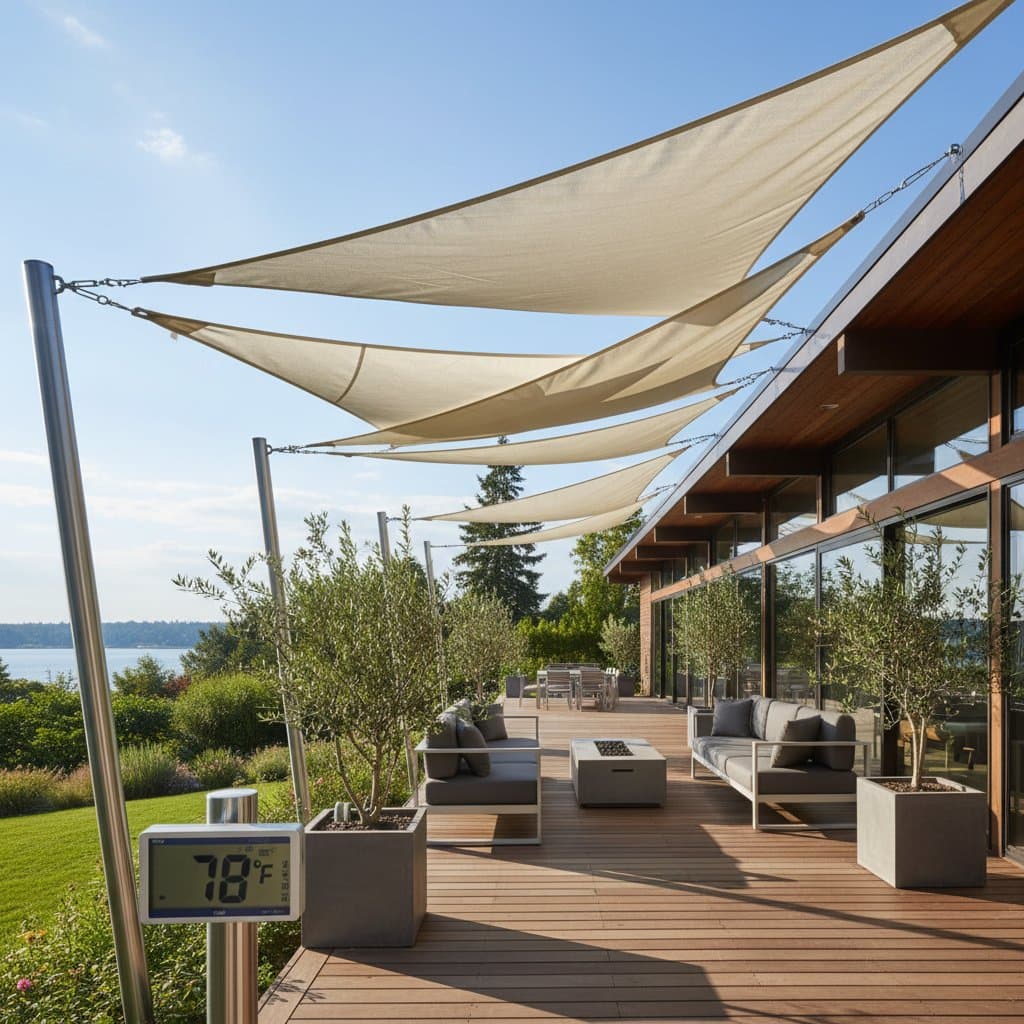
Final Installation Checks
After securing the shade sail, perform these essential verifications to ensure performance and safety.
6. Verify Drainage and Airflow
Test the sail's water management by spraying it with a garden hose. Observe the runoff pattern to confirm water flows away from gathering areas. If pooling occurs in the center or corners, raise one attachment point by adjusting the cable or rope, creating a gentle slope of at least two percent. This prevents water damage to the fabric and underlying surfaces.
Stand beneath the installed sail and move around to assess airflow. A well-designed setup allows gentle breezes to pass through while blocking direct sunlight and glare. If the area feels stagnant, consider adding small vents or selecting a more permeable fabric to maintain ventilation without sacrificing shade.
7. Trim Excess and Secure Finishes
Once tension is set, carefully cut any surplus rope, wire, or cable using heavy-duty shears, leaving about two inches for safety margins. Seal cut ends with heat-shrink tubing or marine-grade tape to prevent fraying over time.
Cap the tops of support posts with weatherproof covers to shield against moisture ingress and rust formation. After one week of exposure to normal conditions, reinspect all joints and connections for any subtle shifts. Tighten as needed to maintain structural integrity.
Essential Safety Guidelines
Prioritize safety to protect users and prolong the lifespan of your shade sail system.
- Maintain a minimum clearance of eight feet between the sail's lowest edge and any walking or seating surfaces to avoid head injuries.
- Secure attachments only to robust structures such as concrete footings, sturdy walls, or reinforced beams; steer clear of fragile elements like wooden fence posts or roof gutters.
- Dismantle sails prior to severe weather events or when sustained winds surpass 40 miles per hour to mitigate tearing or collapse risks.
- Conduct thorough inspections of all hardware at least twice each season, focusing on signs of corrosion, wear, or loosening fasteners.
- Opt exclusively for stainless steel or hot-dipped galvanized components to resist rust and avoid unsightly stains on adjacent surfaces.
These practices not only comply with building standards but also ensure reliable performance year after year.
Common Troubleshooting Solutions
Address issues promptly to keep your shade sail functioning optimally.
Sagging or Loose Fabric
A drooping sail reduces effectiveness and aesthetic appeal. Begin by turning each turnbuckle one full rotation clockwise to increase tension evenly across all corners. If the problem persists, evaluate anchor points and adjust their positions to achieve a sharper tension angle, ideally between 30 and 45 degrees from horizontal. This restores tautness without over-stressing the material.
Water Pooling After Rain
Excessive moisture can weaken seams and promote mold growth. Elevate the lowest corner by six to eight inches using adjustable brackets or longer cables, establishing a consistent slope for efficient drainage. Test with simulated rain to verify the adjustment directs water toward downspouts or permeable ground.
Tears or Frayed Edges
Minor damage from debris or birds can escalate if ignored. Apply industrial-strength, UV-resistant fabric tape over small tears, pressing firmly to seal the area. For extensive rips exceeding six inches, detach the sail and consult a professional repair service for reinforced stitching with matching thread, ensuring the fabric regains its original strength.
Wind-Induced Noise or Fluttering
Excessive flapping signals uneven tension or loose fittings. Inspect and tighten all connections, including shackles and eye bolts, then verify equal pull at each corner using a tension gauge if available. Adding wind deflectors or selecting a heavier fabric weight can further minimize vibrations in gusty conditions.
Corroded or Rusted Hardware
Salt air or humidity accelerates metal degradation. Remove rust with a wire brush and apply a protective coating, but replace any components showing pitting deeper than one millimeter to prevent failure. Routine cleaning with vinegar solutions can extend the life of marginal parts.
Cost Breakdown and Timeline
Shade sails offer an economical path to enhanced outdoor comfort, often outperforming pricier alternatives like pergolas.
- Fabric Options: Standard HDPE sails range from $40 for a 10-by-10-foot basic model to $200 for larger, high-UV-rated versions with reinforced edges.
- Hardware Packages: Expect $25 per sail for essentials like turnbuckles, D-rings, and cables.
- Support Elements: Posts and concrete bases total $50 to $100, depending on height and soil type.
- Labor Estimate: A single sail takes four to six hours with two adults; factor in additional time for measuring and site preparation.
DIY enthusiasts can outfit a standard deck for under $400, including tools. Custom configurations or hiring installers may elevate expenses to $1,200, but the return includes reduced air conditioning needs and preserved outdoor furnishings from sun exposure.
Budget-Saving Strategies
Select lighter-colored fabrics to maximize heat reflection, easing thermal load on the material. Bypass low-end polyester, which degrades quickly; invest in durable HDPE for up to ten years of service with minimal upkeep. Bulk purchasing hardware or repurposing existing posts further trims costs without compromising quality.
Ongoing Maintenance Practices
Regular care preserves the sail's appearance and functionality, extending its useful life significantly.
- Biannual Cleaning: Twice yearly, apply mild dish soap with a soft-bristled brush to remove dirt and pollen. Hose off thoroughly and allow complete air drying before reapplying tension to avoid shrinkage or mildew.
- Hardware Monitoring: Every few months, lubricate turnbuckles with silicone spray and tighten as necessary. Swap out any cracked, bent, or fatigued elements immediately to avert accidents.
- Seasonal Removal: In off-seasons, loosen all tensions, fold the fabric carefully, and store in a shaded, dry location to shield from prolonged UV and moisture exposure.
- Post Protection: For steel supports in humid or coastal areas, apply an annual coat of rust-inhibiting primer and paint. Wooden posts benefit from weatherproof sealants to prevent rot.
- Post-Storm Adjustments: After high winds, recheck anchors for displacement and retension the fabric gradually, starting from the center outward.
Consistent attention prevents minor issues from becoming costly repairs.
Effective Storage Techniques
Proper storage during downtime safeguards against environmental damage.
- Always rinse and fully dry sails before packing; residual dampness invites bacterial growth and odors.
- For expansive sails, roll them loosely around a PVC pipe rather than folding to distribute stress evenly across seams and hems.
- Mark each piece with tags indicating dimensions and installation spot for seamless spring setup.
- Employ mesh or canvas storage bags to permit air circulation, avoiding sealed plastic that traps condensation.
A compact deck storage unit or weatherproof bin accommodates two to three sails comfortably. Organize hardware in compartmentalized boxes, inventorying items like bolts and clips to streamline future assemblies.
Indicators for Professional Assistance
While DIY suits many projects, certain complexities warrant expert intervention.
- Expansive or Multi-Sail Arrays: Professionals use load calculators to balance tensions and predict wind loads, ensuring stability across interconnected designs.
- Overhead or Wall-Mounted Fixtures: Drilling into roofs or fascias requires precision to avoid water intrusion or weakening the building envelope.
- Bespoke Metal Supports: Custom welding of base plates and brackets provides superior anchorage compared to off-the-shelf options.
- Challenging Site Conditions: On sloped or irregular ground, structural engineers optimize angles for uniform tension and drainage.
When engaging services, verify credentials through shade sail-specific portfolios. Insist on premium materials like marine-grade stainless steel and breathable HDPE fabrics certified for long-term UV resistance.
Seasonal Maintenance Schedule
Align checks with weather shifts to maintain peak condition.
Spring Activation
- Torque anchor bolts to manufacturer specifications using a wrench.
- Deep-clean fabric upon reinstallation to eliminate winter debris.
- Install fresh shackles if originals show wear.
- Use a level to confirm posts remain vertical and firmly embedded.
Fall Deactivation
- Thoroughly wash and air-dry all components.
- Release tensions uniformly to ease fabric removal.
- Fit protective caps over post tops.
- Examine cables and turnbuckles, noting any for offseason replacement.
These routines, performed in spring and autumn, fortify the system against seasonal extremes.
Enhancing Daily Deck Enjoyment
With shade sails in place, your outdoor space transforms into a versatile retreat. Diffused sunlight creates inviting patterns, encouraging extended use from morning coffee to evening dinners. Greenery flourishes in the moderated light, while fabric hues influence ambiance: neutral tones evoke serenity, bold shades energize social occasions.
Furniture endures longer without harsh rays, and the open design fosters natural cooling, slashing reliance on fans or misters.
Project Launch Guide
Embark on your shade sail installation with these steps.
- Site Assessment: Measure coverage needs and track sun paths hourly to optimize placement.
- Material Selection: Prioritize HDPE for airflow and durability, paired with corrosion-resistant hardware.
- Execution and Testing: Secure anchors solidly, apply even tension, and simulate rain to validate drainage.