
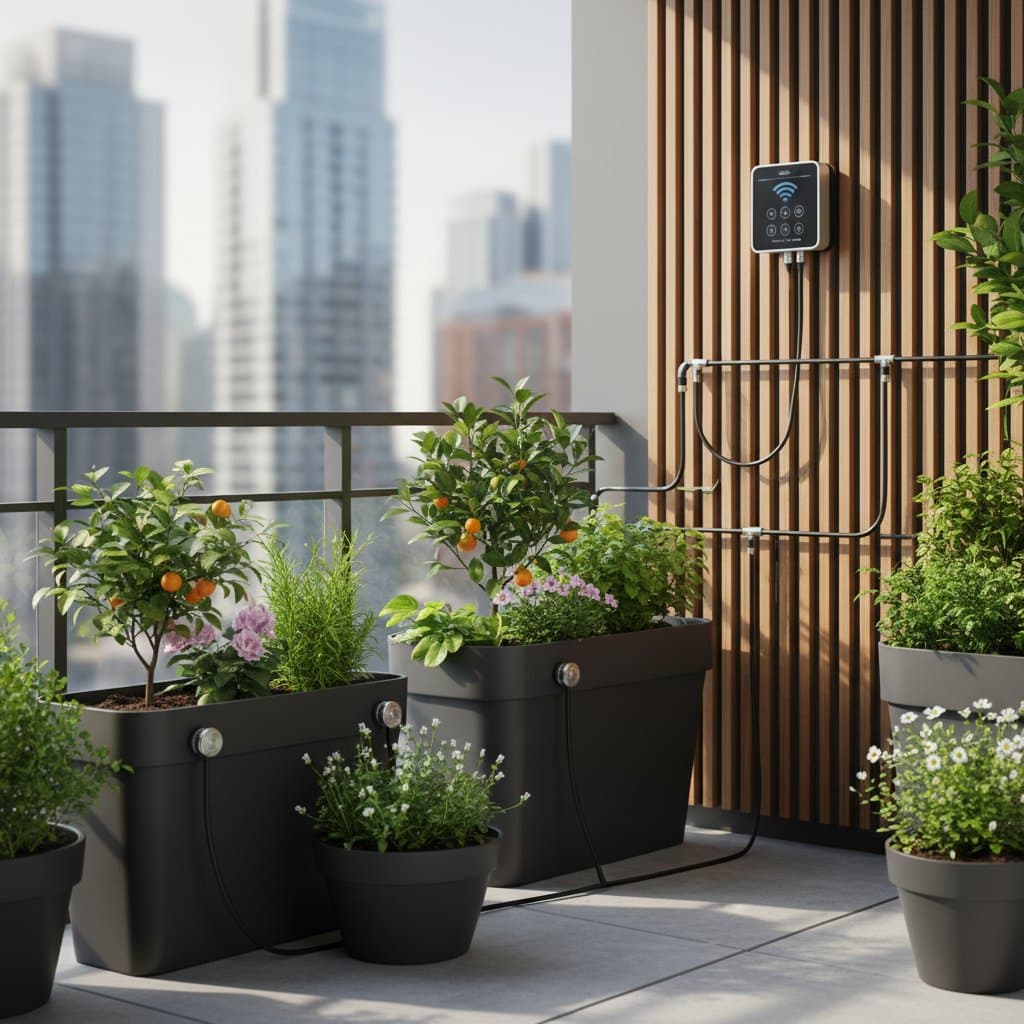
Effortless Drip Irrigation for Thriving Balcony Gardens in 2025
Balcony gardens begin with enthusiasm yet often struggle as watering turns into a relentless task. Fluctuating weather, demanding schedules, and inconsistent sunlight make maintaining healthy pots a challenge. Smart drip irrigation provides a reliable solution that requires minimal intervention. This guide explores the functions of smart drip technology, safe installation methods, and ongoing maintenance strategies to support vibrant urban greenery throughout the season.
System Overview
A smart drip irrigation system supplies water in precise, low-volume doses straight to plant roots. It incorporates narrow tubing, emitters, and a controller that modifies output according to soil moisture levels or weather forecasts. This approach minimizes runoff, eliminates dry patches, and promotes robust root development.
Balcony setups benefit particularly because potted soil dries out more quickly than in-ground beds. Such systems reduce water usage by as much as 50 percent relative to manual methods and alleviate the burden of tracking individual plant requirements.
Essential Tools and Materials
Basic components suffice for assembly, often available in complete kits or as individual pieces.
- A smart controller compatible with Wi-Fi or Bluetooth connectivity
- Drip tubing with a 1/4-inch (0.6 cm) diameter suited for container use
- Emitters delivering 0.5 to 2 gallons per hour
- Stakes and connectors to anchor tubing firmly
- Backflow preventer and filter to ensure water purity and system protection
- Scissors or a dedicated tubing cutter
- Optional moisture sensor for precise automation
Prepare a bucket and towel to manage any potential leaks during installation.
Installation Steps
Step 1: Design the Layout
Inventory your containers and assess the hydration demands of each plant type. Herbs typically require less water than greens or blooms. Draw a simple diagram indicating tubing paths to each pot, ensuring adequate airflow and sunlight access.
Step 2: Link to the Water Supply
Secure the backflow preventer and filter to your balcony spigot. These elements safeguard plants and prevent contamination of household plumbing. In the absence of a direct faucet, employ a compact submersible pump paired with a reservoir.
Step 3: Install the Primary Tubing Line
Measure and cut tubing to span the area. Fasten it to walls or railings using clips spaced every 12 inches (30 cm). Steer clear of tight angles that could impede water movement.
Step 4: Position the Emitters
Punch holes in the tubing at each pot's base and insert emitters. Select rates according to container dimensions:
- 0.5 gallon per hour for compact herb pots
- 1 gallon per hour for standard medium-sized vessels
- 2 gallons per hour for oversized containers
Step 5: Integrate the Smart Controller
Position the controller proximate to the water source or reservoir. Link it to your network via the accompanying application. Establish a watering timetable or integrate a moisture sensor for hands-free operation.
Step 6: Test and Refine
Activate the system for a 10-minute cycle. Inspect for leaks, uneven distribution, or overlooked areas. Reposition emitters or tweak flows to achieve uniform hydration across all pots.
Key Safety Considerations
Shut off the water supply prior to any cutting or joining of tubing. Position electrical components distant from pooled water. Select controllers and plugs rated for outdoor environments.
Common Issues and Solutions
Should flow cease in a line segment, inspect the filter for obstructions as the initial step. Soak clogged emitters in vinegar for 10 minutes to restore function. For signs of excess moisture in a plant, opt for an emitter with reduced output.
Minor leaks at joints often result from incomplete connections; press fittings securely or substitute damaged parts. Signal interruptions with the controller may necessitate relocation nearer to the router or adoption of a Bluetooth alternative.
Ongoing Maintenance and Off-Season Care
Flush lines monthly by detaching end caps and running fresh water for two minutes to remove sediment. Swap filters every three to four months.
As the growing season concludes, disassemble the setup, coil the tubing without kinks, and store in a shaded, dry location. Verify emitter integrity upon spring reactivation.
Cost and Time Investment
Kits for small balconies, accommodating 10 to 15 emitters, range from $50 to $70. Advanced smart controllers cost $60 to $100 based on capabilities. Novices complete setup in one to two hours.
Adapting to Seasonal Changes
Monitor soil moisture daily during heat waves until the programmed schedule stabilizes. Halve watering durations in mild or wet conditions to avoid root decay.
Professional Assistance
Consult a licensed plumber for shared water lines or structural plumbing alterations. Professionals ensure compliant installation of valves and preventers.
Implementing Your Balcony Irrigation Plan
- Gauge your space and tally the pots.
- Select a kit aligned with your configuration and plant count.
- Install and test this week, then adjust the routine for optimal results.
Consistent vitality and reduced wilting signal successful integration. This technology sustains your elevated garden with efficiency, freeing time for appreciation of cityscapes.