
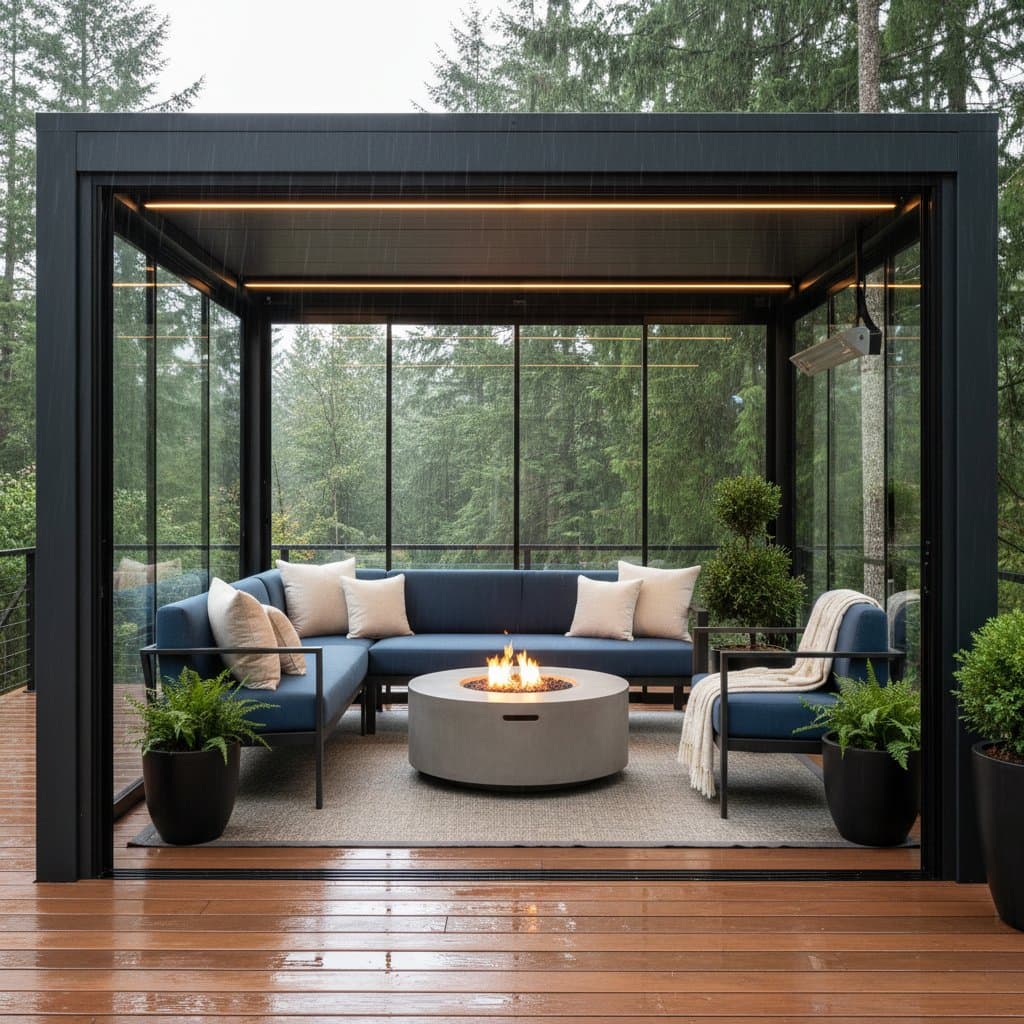
Transform Decks into Weatherproof Outdoor Retreats
A deck provides enjoyment on clear days, yet rain or cold weather often drives users indoors. A weatherproof deck addresses this issue by converting an open platform into a safeguarded outdoor area suitable for relaxation, cooking, or gatherings regardless of conditions. This guide outlines methods to enhance the deck using accessible materials, effective shelter solutions, and ongoing care practices that ensure comfort throughout the year.
Understanding Weatherproof Decks
A weatherproof deck withstands moisture, wind, and temperature fluctuations effectively. It maintains a dry surface, protects furnishings, and promotes ventilation to avoid mold development. Weatherproofing safeguards the structure as an investment while enhancing usability. Options range from basic applications like sealers and shading elements to comprehensive installations such as pergola pod systems that function as enclosed outdoor spaces.
Consider the local climate when planning upgrades. In regions with heavy rainfall, prioritize waterproof barriers and drainage. Areas prone to intense sun require UV-resistant coatings and shaded structures. These adaptations extend the deck's lifespan and increase its versatility for seasonal activities.
Essential Tools and Materials
Most weatherproofing tasks require standard tools available at hardware stores. Assemble the following before beginning:
- Deck-specific cleaner and a sturdy scrub brush for thorough surface preparation.
- Exterior-grade wood sealer or waterproofing stain; plan for one gallon per 250 square feet (approximately 23 square meters) of deck area.
- Caulk gun loaded with outdoor-grade silicone sealant for sealing joints.
- Paint roller, brush, or sprayer for even application of sealers.
- Protective equipment including gloves, safety goggles, and a dust mask to ensure safe handling.
- Pergola or enclosure kit for overhead protection, if desired.
- Exterior-rated anchors and screws to secure additions firmly.
For projects involving walls, screens, or curtains, measure the deck dimensions in feet and record the ceiling height. Accurate measurements prevent fitting issues and ensure structural integrity.
Step-by-Step Weatherproofing Process
Follow these steps to achieve a durable, weather-resistant deck. Each phase builds on the previous one for optimal results.
Step 1: Clean and Inspect Thoroughly
Remove all debris with a broom or leaf blower. Apply deck cleaner and scrub vigorously to eliminate dirt, mildew, and old finishes. Allow the surface to dry completely for at least 24 hours. During inspection, identify cracks, loose boards, or protruding nails; repair or replace damaged elements to create a solid base for further treatments.
Examine the understructure for rot or insect damage, particularly in humid climates. Tighten any loose hardware and sand rough spots to promote adhesion of sealers.
Step 2: Apply Sealant to All Surfaces
Select a high-quality waterproofing stain or clear sealer suited to the wood type. Use a roller or sprayer for uniform coverage on the deck floor, railings, and steps. Apply two coats for enhanced protection, allowing each to dry according to product instructions, typically 4 to 6 hours between coats. Don protective gear throughout, and restrict access to the area until fully cured to avoid slips or exposure to chemicals.
Test the sealer on a small, inconspicuous area first to confirm compatibility and desired finish. Reapply annually in high-exposure areas to maintain the barrier against elements.
Step 3: Seal Gaps and Joints Securely
Load the caulk gun with silicone sealant and apply it along board seams, post bases, and the junction where the deck connects to the house. Smooth the sealant with a wet finger or tool for a clean finish. This step prevents water infiltration that could lead to warping or decay over time.
Focus on high-risk areas like end grains and fastener holes. Allow sealant to cure for 24 hours before exposing to moisture.
Step 4: Install Overhead Shelter Options
Enhance protection with a pergola, retractable canopy, or full pod enclosure to deflect rain and harsh sunlight. A freestanding pergola featuring adjustable louvers offers flexibility and ranges in cost from $800 to $2,500 based on dimensions and materials. Enclosed pods with sliding glass or polycarbonate panels provide a semi-indoor atmosphere, effectively blocking wind while allowing natural light.
Secure installations to withstand wind loads; consult local building codes for permits if adding permanent structures. Integrate motorized options for ease of use in varying weather.
Step 5: Optimize Drainage Systems
Verify that water drains away from the home foundation. Reposition downspouts if necessary, or excavate a shallow gravel-filled trench along the deck edge to channel runoff. Proper drainage reduces pooling, which accelerates wear and creates slippery conditions.
Incorporate subtle slopes during repairs, aiming for a 1/8-inch drop per foot toward the outer edge. Regular checks prevent long-term issues like erosion or foundation damage.
Step 6: Select and Arrange Furnishings
Opt for furniture constructed with weather-resistant materials such as teak, aluminum, or synthetic wicker. Choose cushions filled with quick-dry foam and select rugs certified for outdoor durability. Illuminate the space with string lights or low-voltage LED fixtures mounted under railings for ambient evening glow.
Arrange elements to maximize flow and comfort, grouping seating around focal points like a fire pit. Incorporate storage solutions to keep accessories organized and protected.
Key Safety Considerations
Avoid open flames or unvented heaters beneath overhead structures to prevent fire hazards. Install and test all electrical outlets with ground-fault circuit interrupter (GFCI) protection. Wear shoes with non-slip soles during cleaning and sealing activities. Refrain from working on damp surfaces to minimize fall risks.
Secure loose items during storms and inspect anchors periodically. Educate household members on safe usage, especially around railings and elevated areas.
Common Issues and Solutions
Peeling or Flaking Finish: This often results from underlying moisture. Lightly sand the affected area, ensure complete dryness, and apply fresh sealer.
Puddles or Standing Water: Introduce additional slope or install drainage channels to redirect flow efficiently.
Mold or Mildew Appearance: Clean with a diluted bleach solution, rinse thoroughly, and allow full air drying in sunlight.
Address issues promptly to avoid escalation. Document changes for future reference.
Ongoing Maintenance Practices
Reapply sealant to wooden surfaces every two to three years, adjusting based on exposure levels. Perform monthly wipes with mild soap to clear accumulated grime. Store removable items like cushions in sealed bins or dedicated deck boxes during off-seasons. For metal components, inspect joints for rust and apply touch-up paint as required.
Schedule annual professional inspections for complex structures. These routines preserve appearance and functionality, extending the deck's service life significantly.
Cost and Time Estimates
A fundamental sealing project requires $100 to $200 in materials and spans one weekend. Incorporating a pergola or pod enclosure elevates costs to $1,000 to $3,000, yet provides extended usability across weather conditions. The investment yields a versatile area comparable to an indoor room extension without equivalent construction expenses.
Factor in labor if hiring assistance, and compare supplier quotes for bulk savings on materials.
Adapting to Seasons
During warmer periods, adjust louvers or panels to facilitate airflow and prevent overheating. In colder months, seal enclosures and utilize compact, outdoor-rated electric heaters. Prioritize moisture checks on cords and outlets before electrical use.
Prepare seasonally by winterizing with covers and tarps, then refreshing in spring for renewed vibrancy.
Indicators for Professional Assistance
Seek expert help if the deck shows extensive structural damage, such as widespread rot or unstable supports. Professionals handle complex installations like electrical integrations or large-scale enclosures safely. They also ensure compliance with local regulations, providing warranties on workmanship.
Consult contractors for custom designs that align with specific site challenges, like uneven terrain or high winds.
Achieving Lasting Outdoor Enjoyment
A weatherproof deck transforms routine spaces into enduring retreats that enrich daily life. Implement these strategies to foster a resilient environment ready for any season. Regular attention yields years of reliable use, blending indoor comforts with the outdoors seamlessly.