
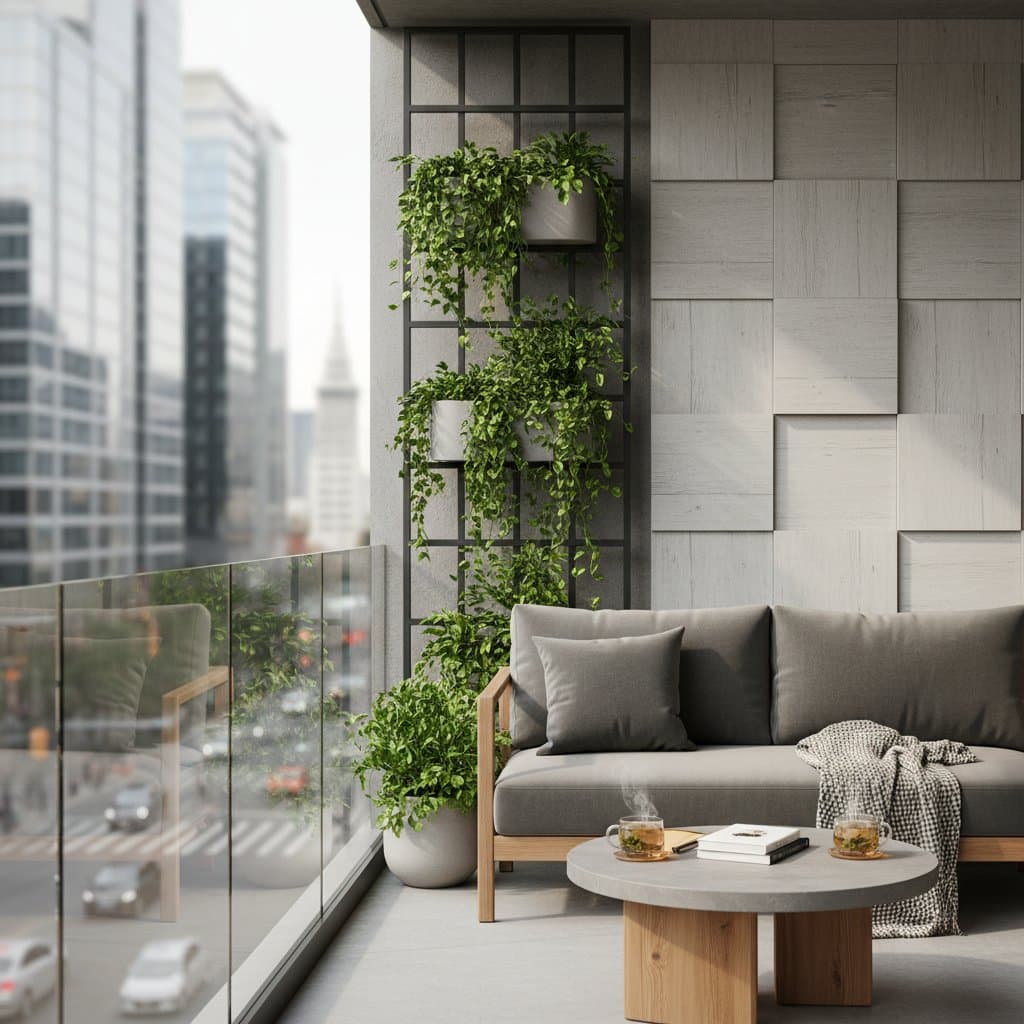
How Acoustic Panels Halve Balcony Noise in Urban Environments
Urban balconies offer fresh air, natural light, and skyline views. However, open railings that welcome breezes also permit intrusive street sounds. Sirens, traffic horns, and pedestrian chatter often disrupt relaxation or outdoor dining. Fortunately, acoustic panels provide an effective solution to diminish noise while preserving openness.
This guide details the function of acoustic panels, their adaptation for exterior use, and practical installation methods. Readers gain knowledge on superior materials for noise control, secure attachment techniques, expense projections, and ongoing care requirements.
Understanding Acoustic Panels
Acoustic panels consist of dense or fibrous boards designed to absorb sound waves and minimize echoes. Commonly employed in recording studios and office spaces, these panels adapt well to outdoor balconies through the use of durable, weatherproof compositions and robust fixation systems.
The primary objective for balcony applications involves reducing external noise levels by 30 to 50 percent, contingent upon coverage extent and material thickness. For instance, a boisterous street dialogue may diminish to a faint murmur. Consequently, the area attains a more serene atmosphere, and conversations proceed without elevated volumes.
Essential Tools and Materials
Installation of balcony acoustic panels requires fundamental tools and intermediate do-it-yourself abilities. Assemble the following components prior to commencement:
- Acoustic panels: Four to six units suitable for exterior conditions, each measuring approximately 2 feet by 4 feet. Opt for options like polyester fiber, mineral wool, or perforated metal encasing acoustic foam.
- Mounting hardware: Stainless steel screws, wall anchors, and support brackets.
- Weatherproof covering: Heavy-duty canvas or marine-grade vinyl for additional protection.
- Measuring tape: Essential for precise measurements and alignments.
- Drill with appropriate bits: Required to fasten panels securely.
- Safety equipment: Gloves, safety goggles, and a dust mask, particularly if trimming panels.
- Sealant: Silicone caulk to weatherproof drilled openings.
Typical material expenses range from $200 to $400, varying with balcony dimensions and panel quantity necessary for railing or wall coverage.
Installation Process
Proceed through these structured steps to affix acoustic panels to a balcony in a secure and aesthetically pleasing manner.
-
Assess dimensions. Gauge the length and height of railings or walls susceptible to sound intrusion. Incorporate an additional few inches per dimension to facilitate panel overlaps, thereby sealing potential acoustic gaps.
-
Plan panel arrangement. Determine vertical or horizontal orientation. Vertical configurations suit tall railings or slender walls effectively. Horizontal arrangements span broader surfaces with reduced seam interruptions.
-
Indicate attachment locations. Employ a pencil to denote bracket or screw positions. Maintain level markings to ensure a professional appearance.
Safety consideration: Inspect the balcony substrate prior to drilling. Refrain from penetrating load-bearing elements or hidden wiring. -
Install support brackets. Create pilot holes and embed anchors for concrete or masonry surfaces. Fasten brackets using screws to achieve a firm hold.
Safety consideration: Utilize eye protection during masonry drilling to guard against flying particles. -
Secure the panels. Position each panel onto the brackets and tighten fixings. Verify straightness after every few installations. For fabric-encased panels, ensure taut application prior to final securing.
-
Apply edge sealing. Dispense silicone caulk along junctions between panels and structural elements. This measure occludes minor fissures that permit sound penetration.
Safety consideration: Operate in well-ventilated spaces to mitigate exposure to sealant vapors. -
Evaluate performance. Retreat to a distance and assess auditory changes. Observe reductions in traffic and vocal intensities. Address any residual openings with supplementary fabric or foam as required.
Key Safety Precautions
Exterior noise mitigation involves proximity to edges and elevations. Adhere to these protocols:
- Employ a stable ladder accompanied by an assistant for elevated work.
- Position electrical cords distant from moisture-prone areas.
- Don gloves to prevent skin contact with irritants in mineral wool.
- Review condominium or building regulations regarding facade modifications.
Common Issues and Resolutions
Should noise attenuation prove inadequate, implement these corrective actions:
-
Issue: Panels loosen post-installation.
Resolution: Reinforce brackets and inspect for worn screws. Substitute with extended stainless steel variants if necessary. -
Issue: Persistent sound leakage.
Resolution: Incorporate an additional weatherproof layer or insert acoustic foam into crevices. Noise frequently exploits edges and abutments. -
Issue: Condensed moisture on panels.
Resolution: Establish a 1-inch (2.5 cm) separation from the wall to enhance ventilation. This promotes evaporation and averts fungal or rust development. -
Issue: Fading due to solar exposure.
Resolution: Coat with ultraviolet-resistant finish or select deeper-toned fabrics that withstand bleaching.
Cost and Timeline Estimates
A compact balcony spanning 8 feet by 6 feet demands roughly one afternoon of effort. A duo of workers completes the task in four hours. Expenditures for materials fluctuate from $200 for standard polyester units to $600 for premium mineral wool variants featuring metallic reinforcements.
Economical alternatives encompass recycled polyethylene terephthalate panels, which exhibit strong moisture resistance and minimal sealing needs. Prioritize quality in fixation components to withstand gusts and avert dislodgement.
Ongoing Maintenance Practices
Sustained efficacy of exterior acoustic panels relies on routine attention:
- Quarterly cleaning. Employ mild detergent and water for surface wiping. Eschew high-pressure cleaning to preserve material integrity.
- Post-storm evaluations. Examine for displaced hardware or fabric rips. Promptly retighten and mend defects.
- Periodic fabric treatments. Apply a fabric protector spray biennially to repel water ingress.
- Timely replacements. Discard and substitute panels exhibiting saturation or microbial growth to safeguard adjacent units.
Consistent maintenance extends panel longevity to multiple years, preserving balcony tranquility.
Professional Installation Considerations
Balconies adjoining shared walls or enduring intense urban clamor benefit from expert evaluation. Acoustics specialists deploy decibel meters to identify vulnerabilities and recommend optimal densities and positions. Request specifics on:
- Projected decibel reductions.
- Comprehensive waterproofing and fixation strategies.
- Coverage warranties for environmental stresses.
Such services typically range from $500 to $900, delivering enhanced sealing and precision that boosts attenuation by 10 to 15 percent.
Optimizing Balcony Serenity
With panels installed, envision the balcony as a partially shielded enclosure. Integrate absorbent elements like outdoor rugs and padded seating to dampen residual echoes. Broad-leaved vegetation, such as palms or ferns in containers, disperses lingering sounds effectively.
Maintain adaptability via detachable panels on clips or rails. This arrangement permits full exposure during calm periods and enclosure amid heightened activity, maximizing comfort year-round.